





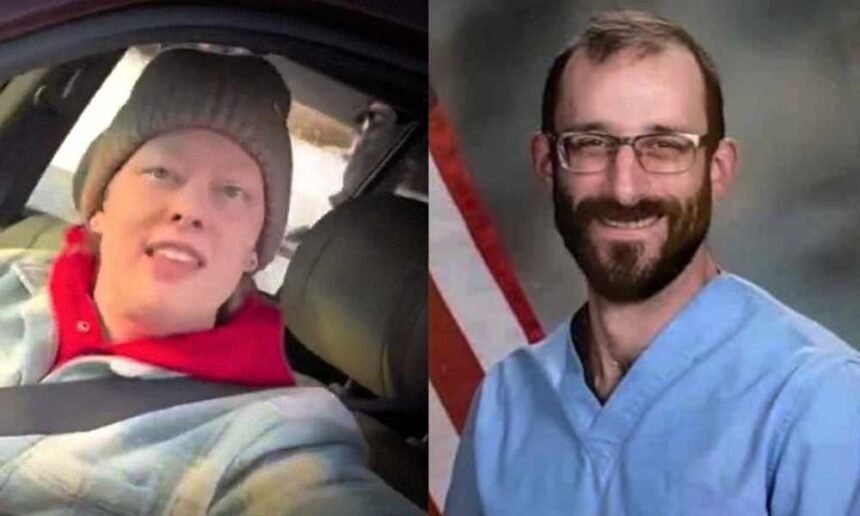
Nearly six months after federal immigration officers shot and killed Renee Good and Alex Pretti on the streets of Minneapolis, one question continues to hang over the cases: Where is the accountability?
So far, no one has been arrested. No federal officer involved in either shooting has been publicly charged. And state investigators in Minnesota say they have been left fighting for access to evidence as federal agencies continue to control key pieces of the investigations.
The Trump administration’s immigration crackdown, the lack of movement is not surprising. They argue the message was sent from the very beginning: federal officers involved in aggressive enforcement actions would be protected from serious consequences.
Just one day after Good was killed, Vice President JD Vance defended the officer involved, saying the agent was protected by “absolute immunity” because “he was doing his job.”
White House adviser Stephen Miller soon echoed that message, telling ICE officers they had “federal immunity in the conduct of their duties.”
Critics say that approach created a dangerous incentive — one where federal agents could act aggressively without fear of accountability.
The controversy only grew after another ICE shooting in Minneapolis left Venezuelan immigrant Julio Cesar Sosa-Celis wounded, followed one week later by the killing of Pretti outside a doughnut shop.
Federal officials described Pretti as a “domestic terrorist” and said the officers involved acted in self-defense. But the lack of transparency surrounding the shooting has fueled demands for answers.
Normally, controversial police shootings trigger a coordinated investigation involving federal and local authorities. That happened after the murder of George Floyd, when federal and state prosecutors pursued separate cases against former Minneapolis police officer Derek Chauvin.
But legal experts argue the same level of urgency has not been applied here.
Instead, Minnesota officials say they were pushed aside.
After Good was killed, the FBI initially worked alongside Minnesota’s Bureau of Criminal Apprehension (BCA). But according to Hennepin County Attorney Mary Moriarty, state investigators were later removed from the investigation and denied access to crucial evidence.
Even Good’s vehicle — a key piece of evidence in the shooting — was taken by federal authorities before state investigators could fully examine it.
That left Minnesota officials in a difficult position: trying to determine whether state laws were broken while lacking access to evidence controlled by the federal government.
The Justice Department also faced criticism over its handling of the cases. According to reports, federal officials declined to immediately open a criminal investigation into Good’s death and instead examined other issues surrounding the incident.
That decision reportedly frustrated some officials, with several federal prosecutors and an FBI agent resigning in protest.
A similar pattern unfolded after Sosa-Celis was shot.
Minnesota investigators initially responded to the scene, but officials say they were later cut out of the process. Instead of immediately focusing on the actions of the ICE agent involved, federal prosecutors initially pursued charges against Sosa-Celis — charges that were later dropped after questions emerged about the officer’s account of what happened.
By the time Pretti was killed, state officials say federal agencies had already restricted access to the scene, leaving them without basic information about the shooting, including the identities of the officers involved.
The result has been a frustrating stalemate.
Federal agencies say investigations are ongoing. The Department of Homeland Security has opened internal reviews, and the Justice Department eventually announced a civil-rights investigation into Pretti’s death.
But critics argue the administration has given little reason to believe those investigations will be truly independent.
They point to statements from DHS describing Good’s death as an act of self-defense and accusing her of using her vehicle as a weapon — language they say suggests the agency has already reached conclusions.
The criticism extends to the structure of the investigations themselves. Some officials involved in reviewing the cases have faced questions about their experience handling complex law-enforcement misconduct investigations.
Meanwhile, Minnesota officials are trying to move forward without federal cooperation.
State and local authorities, along with Good’s family, have filed lawsuits demanding access to evidence held by federal agencies. Good’s family is also fighting to have her vehicle returned so it can be independently examined.
A judge recently ordered the federal government to provide materials connected to Good’s shooting in a separate legal case, potentially opening the door for more information to become available outside federal channels.
Minnesota investigators are also reviewing publicly available evidence, including videos recorded by bystanders.
Moriarty has said the BCA is carefully examining the footage and expects the investigation to move forward soon. After that review, prosecutors will decide whether they have enough evidence to bring state charges against any officers involved.
The office has already taken action in the Sosa-Celis case, filing state charges against the ICE agent involved in that shooting.
That case could become a major test of the Trump administration’s argument that federal immigration officers are effectively shielded from state prosecution.
Legal experts say that claim is far from settled. States have historically prosecuted federal officials when they believe state laws were violated.
But even if Minnesota prosecutors move forward, the path will likely be complicated. Federal officers have powerful legal protections, and any prosecution could trigger a major fight between state and federal authority.
For now, nearly six months after Good and Pretti were killed, their families are still waiting for answers.
The federal government says the investigations are continuing.
Legal experts say the bigger question is whether those investigations are actually meant to uncover the truth, or simply protect the people involved.