









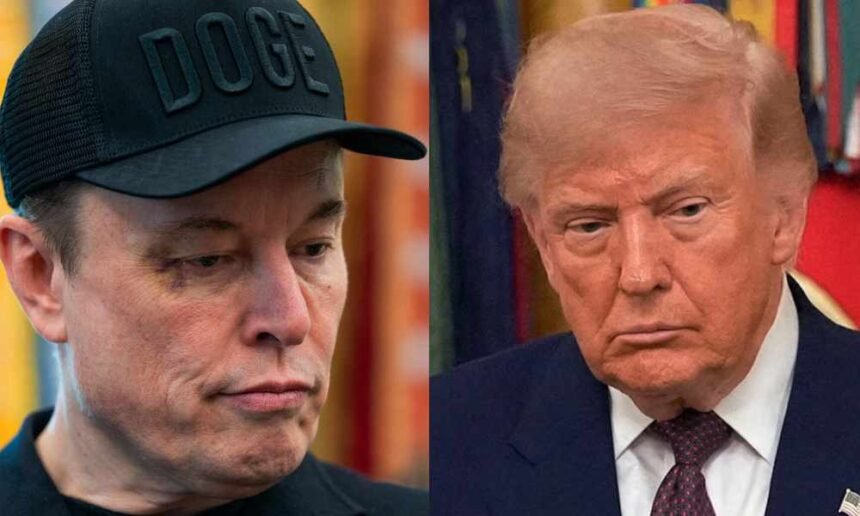
The Department of Government Efficiency (DOGE), the controversial initiative created by President Donald Trump and championed by Elon Musk, shut down operations on July 4 after months of sweeping federal cuts, mass employee departures, canceled programs, and fierce backlash from critics who argued the effort disproportionately hurt vulnerable Americans.
Created with the promise of eliminating waste, fraud, and government excess, DOGE quickly became one of the most disruptive forces inside the federal government. Republicans called it a long-overdue cleanup of Washington bureaucracy. Critics saw it as a reckless assault on public services, one that left working Americans paying the price while billionaires walked away with even bigger tax breaks.
In a farewell message posted on X, DOGE said its official mission had ended but claimed the fight against government waste would continue.
“While the formal mission of DOGE has come to an end, the mission to eliminate waste, fraud, and abuse will continue,” the department wrote.
The shutdown came exactly as Trump’s original executive order intended. On his first day back in office, Trump renamed the U.S. Digital Service as the U.S. DOGE Service and gave the organization broad access to federal agency records, software systems, and technology infrastructure.
The face of the operation was Musk, who became the public symbol of Trump’s effort to dramatically shrink the federal government.
Musk, who contributed hundreds of millions of dollars toward Trump’s 2024 campaign effort, served as a special government employee and reported directly to the president during DOGE’s early months. But the alliance eventually collapsed into a public feud after Musk criticized Trump’s “One Big Beautiful Bill Act.”
By then, DOGE had already left a major mark on the federal workforce.
According to the Office of Personnel Management, the number of federal employees declined by more than 272,000 after Trump returned to office, driven by a hiring freeze and large-scale workforce reductions.
Nearly 140,000 employees accepted the administration’s deferred resignation program, allowing them to receive pay and benefits before officially leaving government service.
The largest reductions came at agencies including the Department of Defense, Treasury Department, Agriculture Department, Veterans Affairs, and Interior Department. More than 48,000 Pentagon employees and more than 23,000 Treasury employees left under the program.
DOGE celebrated the cuts as evidence of success, claiming it had saved $214 billion through canceled contracts, asset sales, reduced grants, lease cancellations, workforce reductions, and efforts to eliminate improper payments.
But critics argued the so-called “savings” came at a steep price.
Opponents accused Trump and Musk of targeting programs that millions of Americans rely on, arguing that cuts to government agencies threatened services for low-income families, veterans, workers, and other vulnerable communities.
Public Employees for Environmental Responsibility executive director Timothy White also criticized the administration’s deferred resignation program, arguing it cost taxpayers billions despite being promoted as a cost-saving measure.
“Ironically, this unreasonably costly mass idling of civil servants was done in the name of ‘government efficiency,’” White wrote.
DOGE’s aggressive approach also sparked legal challenges. Some federal employees who were fired were later reinstated after court battles, while other reductions were delayed or blocked.
One of the earliest targets was the Internal Revenue Service. DOGE sought access to sensitive taxpayer information, raising concerns among critics who warned that private financial data could be exposed or misused.
By May 2025, Musk and several other prominent DOGE figures had left the administration, including advisers Steve Davis and Katie Miller, as well as DOGE general counsel James Burnham.
But the influence of DOGE did not disappear completely.
Several former DOGE officials remain in government positions, including Gavin Kilger, who serves as chief data officer at the Pentagon, and Sam Corcos, who became chief information officer at the Treasury Department.
Edward Coristine, the programmer known by the nickname “Big Balls,” also moved into a government role at the National Design Studio, an initiative overseen by Airbnb co-founder Joe Gebbia that was tasked with improving federal agency websites.
For Trump and Musk, DOGE was supposed to represent a historic transformation of Washington. Instead, it became one of the most divisive chapters of Trump’s presidency — celebrated by Republicans as a war on waste and condemned by critics as a campaign of cuts that hurt the people government was meant to serve.