







Donald Trump spent months framing the conflict with Iran as a defining test of strength. Now the early version of the deal meant to end it reads less like a victory lap and more like a list of concessions the president agreed to up front.
The United States and Iran have signed an initial agreement to end the war, reopen the Strait of Hormuz, ease sanctions, and restart nuclear negotiations—while kicking the hardest questions down the road and giving Iran immediate economic relief.
And depending on who you ask, that’s either diplomacy… or a very expensive pivot.
The agreement calls for Tehran to dilute its stockpile of highly enriched uranium under international monitoring, while the U.S. moves to waive sanctions that had restricted Iran’s ability to sell oil. That means Iran’s economy gets breathing room right away, including restored access to global oil markets.
In plain terms: Iran gets cash flow now. The U.S. gets more talks later.
The deal reportedly takes effect immediately after signatures from both sides, according to Pakistani Prime Minister Shehbaz Sharif, who helped mediate the agreement. A final 60-day negotiating window has now been opened to hammer out a long-term nuclear framework.
But the key detail is what’s missing: a completed resolution. Instead, Washington is betting on future negotiations while already easing pressure on Tehran.
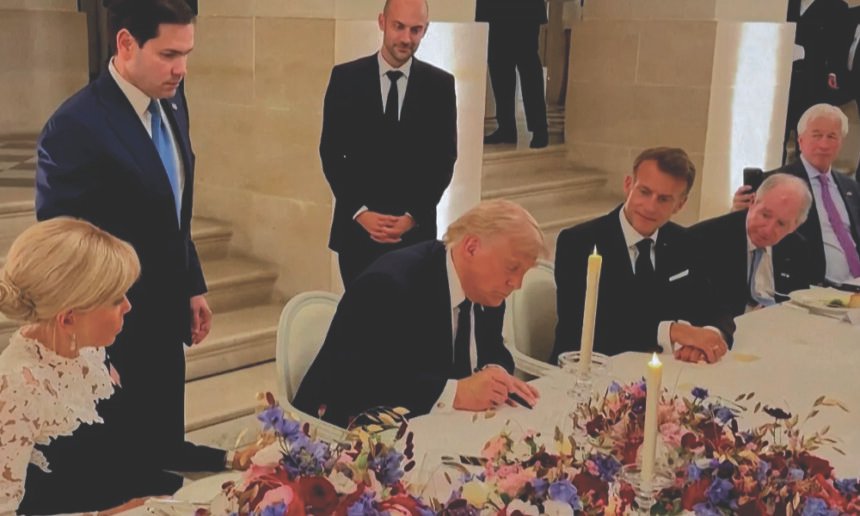
Trump signed the agreement alongside French President Emmanuel Macron in a high-profile moment at Versailles—because if you’re going to pause a war, you might as well do it in a palace built for historic treaties. Iranian President Masoud Pezeshkian signed a parallel version in Tehran.
The optics were grand. The substance, critics say, is more complicated.
Even before the ink was dry, the deal was shrouded in confusion. Officials refused to release full text for days, while selectively describing terms to reporters under anonymity. What has emerged from both sides’ drafts largely overlaps: ceasefire conditions, sanctions waivers, oil market reopening, and a roadmap for future nuclear talks.
But the sequencing is where things get controversial.
The U.S. appears to be lifting—or at least waiving—key sanctions early in the process, allowing Iran to resume oil exports immediately. That includes reopening the Strait of Hormuz, a critical global energy corridor that had been effectively disrupted during the conflict.
For context: before the war, roughly a fifth of global oil trade moved through that passage. Its partial shutdown sent energy prices soaring worldwide and rippled into food and transportation costs.
Now it’s being reopened. In return, Iran agrees to “downblend” enriched uranium under International Atomic Energy Agency monitoring and return to negotiations over its nuclear program.
That’s the trade as it stands. Economic relief now, nuclear constraints later.
The deal also includes language affirming Lebanon’s territorial integrity amid Israel’s ongoing military presence there, a provision that immediately raised tensions given Israel’s rejection of withdrawal demands tied to the conflict.
The White House has defended the agreement as a practical step toward de-escalation. Trump himself called it “very strong,” while also leaving the door open to restarting military action if negotiations fail.
Economically, the agreement is already being described as a major shift. Iran could regain access to tens of billions in oil revenue, estimated at over $46 billion annually in recent years, with China likely to remain a key buyer.
The sanctions relief, even if framed as temporary waivers, effectively restores a revenue stream Washington had previously used as its main point of leverage.
The agreement also envisions long-term reconstruction support for Iran, potentially reaching hundreds of billions of dollars, according to intermediaries involved in the talks. Gulf states are expected to play a role in financing, though regional tensions and recent attacks during the conflict make that uncertain.
For now, much of the deal hinges on trust, monitoring, and political survival on both sides.