






Donald Trump spent months hyping his confrontation with Iran as a historic show of strength. His allies promised victory. His media cheerleaders demanded escalation. His administration sold Americans on the idea that this war would force Tehran to the table and deliver a major foreign policy win.
Instead, Trump has walked away with little more than a ceasefire and a pile of angry conservatives asking what exactly America gained from all of this.
And the most revealing part? The criticism isn’t coming from Democrats. It’s coming from Trump’s own side.
The newly released details of Trump’s memorandum of understanding with Iran have triggered a remarkable backlash across conservative media, with some of the president’s most reliable allies openly questioning whether he got played.
Fox personalities and right-wing pundits who spent months backing Trump’s Iran strategy are suddenly sounding less like cheerleaders and more like disappointed investors realizing they bought into a bad deal.
One commentator admitted being “very skeptical” of the agreement. Another complained it “doesn’t feel like a victory.” Others argued that the United States “lost the most” and that Iran may actually be in a stronger position than before.
Think about how bad things have to be for Trump’s media allies to start saying that out loud.
These are the same circles that spent months portraying the conflict as a necessary demonstration of American power. Now they’re looking at the final product and asking the obvious question:
What exactly did Trump accomplish?
According to multiple reports, the agreement would reopen the Strait of Hormuz, helping restore global shipping routes and ease economic pressure. It would also establish a staggering $300 billion reconstruction framework for Iran.
The Wall Street Journal editorial board bluntly described the agreement as a retreat.
The New York Post concluded that the deal leaves things largely where they were before the conflict began. The following day, the paper went even further, arguing that Iran received significant concessions while America got virtually nothing in return.
When Rupert Murdoch’s media empire starts sounding like Trump’s opposition research team, you know something has gone wrong.
The frustration among Trump’s hawkish supporters is especially intense because many of them spent the last several weeks urging him to abandon the fragile ceasefire and resume military operations.
Instead, reality appears to have intervened.
The administration is now confronting what critics have argued from the beginning: this conflict failed to achieve its stated objectives while creating massive humanitarian and economic consequences along the way.
The war destabilized an already volatile region. Energy prices surged. Global markets felt the shockwaves. Civilians across the region paid the price.
And now, after all that, Trump is trying to sell a deal that even his own supporters are struggling to defend.
What’s particularly damaging for Trump is that this may only be the beginning. The hardest negotiations haven’t even happened yet.
The nuclear issue that supposedly justified the entire confrontation remains unresolved and has been kicked down the road. Any future talks will likely require additional compromises, additional concessions, and additional opportunities for Trump’s critics on the right to accuse him of weakness.
That’s why some conservative commentators are already looking for scapegoats.
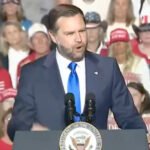
JD Vance is beginning to emerge as a convenient target. Some right-wing figures have started hinting that the vice president and other administration officials may have “let the president down” by helping craft an agreement that looks increasingly difficult to sell to Trump’s own base.
It’s a familiar pattern. When a Trump-backed project goes sideways, blame starts flowing downward.
But this deal belongs to Trump. He launched the strategy. He sold the vision. He promised results.
Now his most loyal media allies are looking at the outcome and saying the quiet part out loud: He lost.