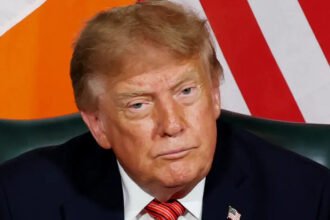








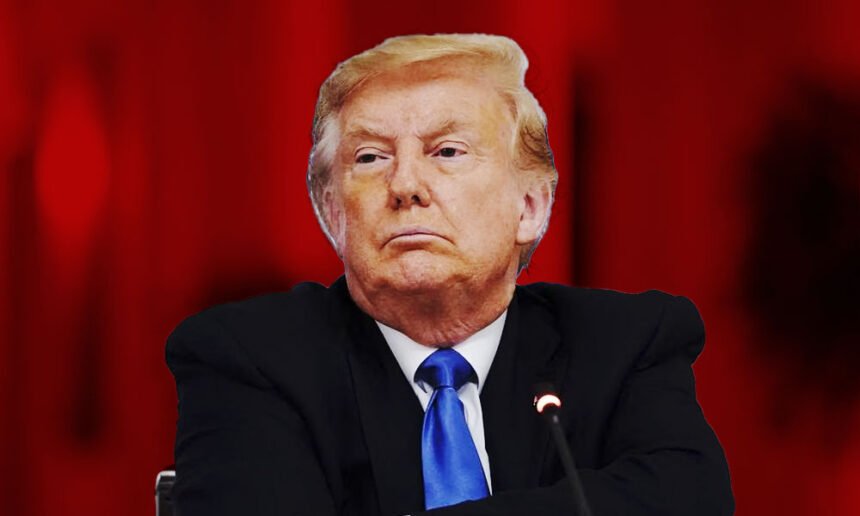
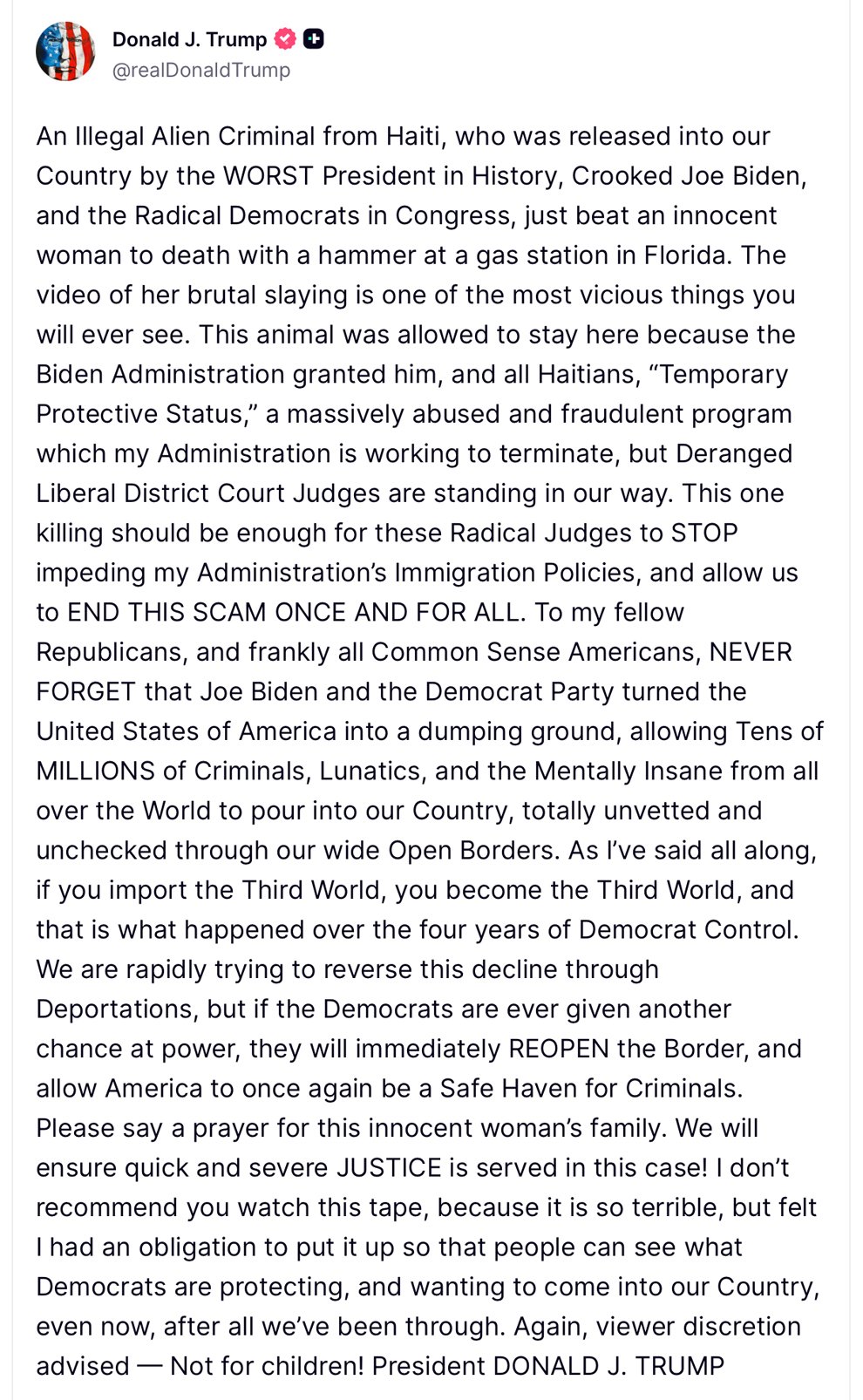
A disturbing post by Donald Trump on Truth Social Thursday is drawing widespread outrage after he shared what he claimed was graphic footage of a woman being brutally killed — while launching into a lengthy anti-immigrant tirade.
In the post, Trump alleged that the attacker was a Haitian man with Temporary Protected Status and blamed Joe Biden and Democrats for allowing the suspect into the country. He described the video as “one of the most vicious things you will ever see,” using the incident to argue for sweeping immigration crackdowns.
Trump’s message quickly escalated into a broader attack, accusing Democrats of turning the United States into a “dumping ground” and repeating familiar rhetoric about crime, immigration, and border security. He also claimed his administration is attempting to dismantle Temporary Protected Status protections but is being blocked by what he called “radical” judges.
The post included a warning about the graphic nature of the footage — while simultaneously urging followers to watch it as evidence of his claims.
Critics were immediately alarmed, not only by the violent content but by the decision to amplify it for political messaging.
Aaron Reichlin-Melnick of the American Immigration Council condemned the move, comparing it to historically racist propaganda and warning about the normalization of such tactics in political discourse.
Online commentator Polly Sigh didn’t hold back either, writing, “He’s unhinged. Bloodthirsty, depraved, and completely unhinged. My God.”
Meanwhile, author and conspiracy theory expert Mike Rothschild highlighted the stark contrast with past political norms, noting how even minor presidential missteps once sparked controversy — a far cry from the current moment.
This is not the first time Trump has targeted Haitian immigrants. During a previous debate, he pushed a widely debunked claim that Haitian migrants in Springfield, Ohio, were eating household pets — a statement that drew significant backlash at the time.
The latest incident, however, marks a new level of escalation, with critics warning that sharing graphic violence to advance political narratives risks further inflaming tensions and desensitizing the public.