





Two police officers who defended the U.S. Capitol during the January 6 attack are now suing the Trump administration to stop what they describe as a massive taxpayer-funded payout system for the very extremists who assaulted them.
Former Capitol Police Officer Harry Dunn and Metropolitan Police Officer Daniel Hodges filed a lawsuit Tuesday seeking to block the Justice Department’s new $1.8 billion “Anti-Weaponization Fund” — a controversial compensation program created as part of a settlement tied to Donald Trump’s lawsuit against the IRS.
In blistering language, the lawsuit describes the fund as a “taxpayer-funded slush fund to finance the insurrectionists and paramilitary groups” responsible for violence during the Capitol attack.
The officers argue the fund is not only unlawful, but dangerously corrupt. Under the deal, the administration agreed to create the massive compensation fund for individuals claiming they were “weaponized” or unfairly targeted by the government.
Critics say the structure creates a potentially enormous payout pipeline for Trump allies, January 6 rioters, and extremist groups loyal to the president, NBC News reports.
The lawsuit notes that the five commissioners responsible for deciding who gets paid will all be selected by Blanche himself — one of Trump’s closest former criminal defense attorneys and now the administration’s top law enforcement official.
The identities of those commissioners have not yet been announced.
And unlike ordinary civil litigation, the payout process could unfold largely behind closed doors with limited public transparency or oversight.
For Dunn and Hodges, the issue is deeply personal.
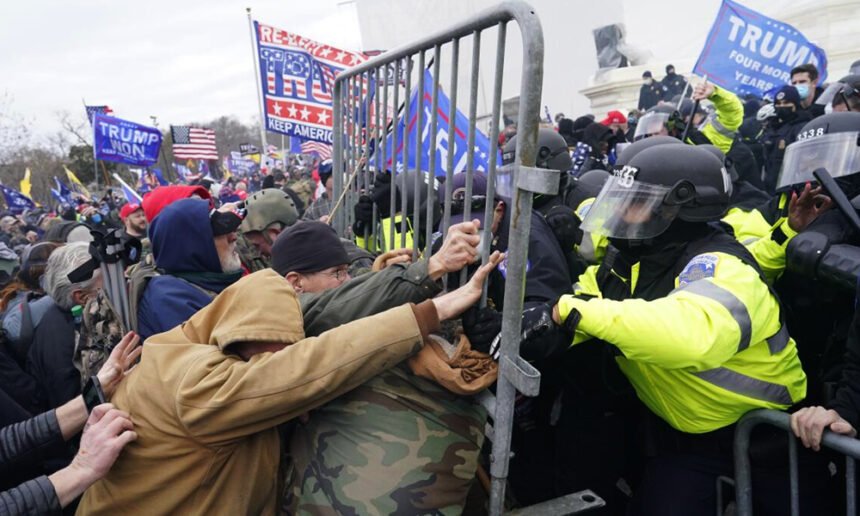
Both officers were violently attacked during the January 6 assault and later became public targets of harassment, threats, and intimidation after speaking openly about what happened that day.
Their lawsuit warns that funneling taxpayer money toward people connected to the riot could embolden future political violence and intensify threats against law enforcement officers who defended the Capitol.
The filing argues the fund could “directly finance the violent operations of rioters, paramilitaries, and their supporters” — including groups that threatened the officers’ lives.
The lawsuit also points directly to statements from Donald Trump, Vice President JD Vance, Acting Attorney General Todd Blanche, and administration official Ed Martin as evidence that the purpose of the fund is to reward January 6 participants and their allies.
“The purpose of the Anti-Weaponization Fund is obvious,” the lawsuit states. “To provide the January 6 rioters, including the Proud Boys, with the remuneration they, the President, and the President’s allies all agree they are owed.”
The political implications are explosive.
More than 140 police officers were injured during the January 6 attack after thousands of Trump supporters stormed the Capitol in an effort to stop certification of Joe Biden’s 2020 election victory.
Roughly 1,500 people were later charged in connection with the attack.
After returning to office, Trump pardoned the overwhelming majority of January 6 defendants, erasing prison sentences and criminal penalties for many participants.
Now, Dunn and Hodges argue, the administration is moving beyond pardons and toward financial rewards.
Their attorney, former federal prosecutor Brendan Ballou, warned that allowing the fund to move forward could effectively subsidize extremist groups aligned with Trump.
“If allowed to continue,” Ballou said, “it will fund insurrectionists, militias, and paramilitaries that are loyal to the president but unaccountable to the rule of law.”
“To protect their safety and our democracy,” he added, “our clients are suing to stop that from happening.”
The Justice Department has not yet publicly responded to the lawsuit.
But the legal battle is likely to intensify scrutiny surrounding Trump’s increasingly controversial “Anti-Weaponization Fund” — which critics say is starting to look less like compensation for government abuse and more like a taxpayer-financed loyalty program for the president’s political movement.