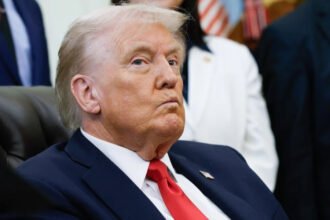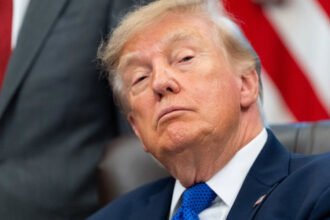





Donald Trump wanted the power to slap tariffs on practically the entire planet whenever he felt like declaring an “emergency.” The Supreme Court just told him no.
In a 6–3 decision, the conservative-majority court dismantled the legal foundation of Trump’s sweeping tariff scheme, ruling that he unlawfully imposed global levies under the 1977 International Emergency Economic Powers Act (IEEPA). That’s the law Trump claimed gave him near-limitless authority to tax imports in the name of national security.
Chief Justice John Roberts didn’t mince words.
“The president asserts the extraordinary power to unilaterally impose tariffs of unlimited amount, duration, and scope. In light of the breadth, history, and constitutional context of that asserted authority, he must identify clear congressional authorization to exercise it,” Roberts wrote for the majority.
Translation: You don’t get to invent taxing power out of thin air.
And here’s the twist MAGA world won’t like — two Trump appointees helped shut it down. Neil Gorsuch and Amy Coney Barrett joined Roberts and the court’s three liberals — Sonia Sotomayor, Elena Kagan, and Ketanji Brown Jackson — to strike the tariffs down.
The dissenters: Clarence Thomas, Samuel Alito, and Brett Kavanaugh.
The ruling could trigger serious financial fallout. The administration itself warned that billions collected from the tariffs may now have to be refunded.
“The interim effects of the Court’s decision could be substantial. The United States may be required to refund billions of dollars to importers who paid the IEEPA tariffs, even though some importers may have already passed on costs to consumers or others,” Kavanaugh wrote.
The court didn’t lay out exactly how refunds would work, but companies that paid up could seek their money back from the Treasury Department.
This decision wipes out only the tariffs imposed under the 1977 emergency law — including Trump’s 10 percent baseline tariffs and the heavier so-called “reciprocal” tariffs he unveiled on “Liberation Day” in April. It also covers tariffs aimed at Canada, China, and Mexico that were justified as tools to combat fentanyl trafficking.
Sector-specific tariffs — like those on steel and aluminum — survive.
Trump had argued that trade deficits amounted to a national security threat, giving him authority under IEEPA to act unilaterally. The rollout triggered a global stock market crash and a wave of lawsuits from small businesses that said the tariffs were crushing their operations. Two lower courts, including the U.S. Court of International Trade, already ruled he overstepped.
During oral arguments, Roberts made clear that tariffs are “taxes on Americans” — and the Constitution gives Congress, not the president, the power to impose taxes. Barrett openly questioned why close allies like Spain and France were supposedly “threats to the defense.”
For months, Trump framed the case as “life or death,” warning that striking down the tariffs would be the “biggest threat” to national security and lead to “economic disaster.”
Instead, it’s his tariff agenda that just took the hit.