




Donald Trump just took another hit in his fight to restrict mail-in voting ahead of the November midterms.
A federal appeals court on Thursday upheld a lower-court order blocking the president from implementing new Postal Service restrictions on mail ballots, finding that the changes could disenfranchise millions of voters while offering little evidence that they would actually prevent voter fraud.
A three-judge panel of the U.S. Court of Appeals for the 1st Circuit agreed with U.S. District Judge Indira Talwani, who has repeatedly blocked the Postal Service from implementing Trump’s March executive order.
The administration’s plan would impose new requirements on states and local election officials, including submitting voter information to a federal Postal Service system and complying with new ballot-envelope requirements. USPS would also be able to refuse to transmit ballots that did not comply with the new rules.
The Trump administration says the changes are necessary to protect election integrity.
But the appeals court wasn’t persuaded.
The judges wrote that there was no evidence in the record of past fraud—or an imminent threat of fraud—related to the upcoming midterm election.
They agreed with Talwani that allowing the new rules to take effect so close to the election could disenfranchise millions of voters while providing little, if any, benefit in combating fraud.
That’s a major problem for an administration that has spent years claiming that mail voting is vulnerable to widespread fraud.
Trump himself has repeatedly attacked mail-in voting, even though he has also voted by mail.
In March, he signed an executive order directing the Postal Service to develop new rules governing the delivery of mail ballots. The order sought to require states to provide USPS with voter information and to impose new federal requirements on ballot envelopes and delivery.
The administration’s legal theory is that the rules regulate the Postal Service rather than directly controlling how states conduct elections.
Solicitor General D. John Sauer has argued that the rules do not determine who is eligible to vote or dictate how states administer elections.
But the challengers say the administration is effectively trying to insert the federal government into state-run election systems without authorization from Congress.
And the courts have now repeatedly questioned whether the administration can do that.
Talwani has blocked the administration’s effort multiple times during the increasingly chaotic legal battle.
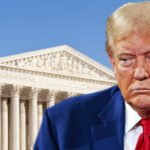
The Supreme Court previously overturned one of her injunctions on procedural grounds, ruling that the states had challenged Trump’s executive order before the Postal Service had actually finalized the rule. But the justices left open the possibility of challenging the final USPS rule itself.
That is exactly what happened next.
After USPS finalized its rule in August, states and voting-rights organizations returned to court. Talwani issued a new injunction on September 4 blocking mandatory portions of the rule from being implemented for the November 3 election.
The Justice Department then went back to the Supreme Court, asking the justices to intervene.
Before the high court could resolve that request, Thursday’s appeals court ruling upheld Talwani’s injunction.
Now the Supreme Court has another decision to make.
And time is running out.
Some states have already begun mailing ballots to voters, while others are preparing to do so in the coming days. That has made the administration’s attempt to impose an entirely new set of federal requirements just weeks before Election Day particularly complicated.
Even Republican election officials have warned the Supreme Court about the practical problems.
Seven Republican state election officials joined other election administrators in urging the justices not to allow the new rules to take effect this late in the election cycle, arguing that the changes could not be responsibly implemented before November.
The administration, meanwhile, has warned that leaving the injunction in place could create confusion as states continue preparing their ballots.
So the Supreme Court is now being asked to decide whether Trump’s administration can impose new federal requirements on mail voting just as states are already putting the 2026 election machinery into motion.
For now, the answer from the lower courts is no.
The appeals court has kept the restrictions blocked.
And with ballots already moving in some states, the Supreme Court may soon have to decide whether Trump’s mail-voting overhaul gets a green light, or remains frozen until after the midterms.