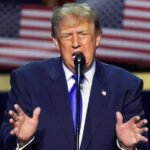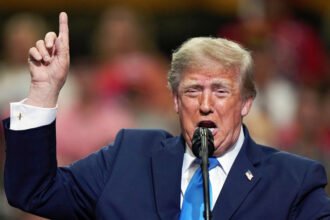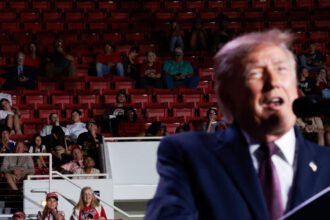









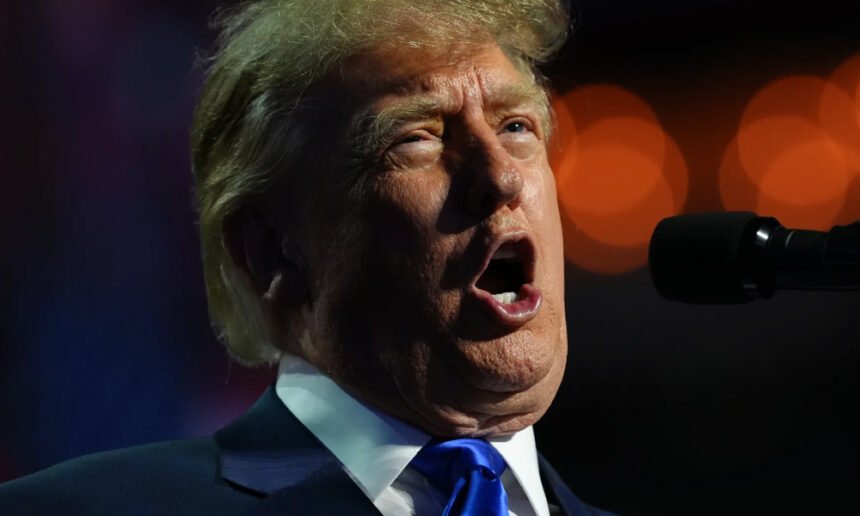
Donald Trump took the stage at the Republican Party’s “midterm convention” Wednesday night with a remarkable offer to voters: If Republicans win, he says, the government could send every adult American $5,000 —a promise that could cost taxpayers more than $1 trillion.
Trump called it the “Trump Dividend,” tying the proposed cash payments directly to Republicans retaining control of both the House and Senate in November.
“If the Republicans win, you win with us, and you get $5,000,” Trump told the crowd in Dallas. “It will be called the Trump Dividend.”
There’s just one enormous problem: Trump has not explained how he plans to pay for it—or how he could send the money without Congress authorizing the program.
At roughly 270 million U.S. adults, a $5,000 payment would cost around $1.35 trillion, according to Reuters. And the proposal’s funding and legal mechanics remain unclear.
In other words, Trump is dangling more than $1 trillion in promised checks in front of voters while leaving some of the most basic questions about the plan unanswered.
A president cannot simply decide to send money from the U.S. Treasury to hundreds of millions of people without congressional authorization and appropriated funds. The Constitution gives Congress control over federal spending.
So Trump’s $5,000 promise came with a very big asterisk: Congress would have to authorize the money.
And, so far, there is no indication that Congress has done so.
Trump made the promise during a rambling convention speech aimed at rallying Republican voters ahead of the November elections.
He repeatedly tied the proposed payment directly to the election’s outcome.
“If the Republicans win, you win with us, and you get $5,000,” he said.
Later, Trump urged voters to treat the midterms almost as though his own name were on the ballot.
“Please pretend that I’m running and get out and vote on November 3rd or sooner,” he said.
Trump compared the proposed payments to a cash distribution from a successful company to its shareholders and said the money would have to be spent in the United States. But he provided no detailed funding mechanism or explanation of how the program would be structured.
Trump has floated similar direct-payment ideas before.
Last year, he proposed a $2,000 “dividend” tied to tariff revenue and spoke about potentially sending thousands of dollars to people in the moderate- and middle-income ranges.
Those payments never materialized.
This time, the proposed number was even bigger: $5,000 for every adult citizen, at least according to Trump’s initial description of the plan.
Within hours of the announcement, Vice President JD Vance appeared to add a qualification, suggesting wealthier Americans might not receive the payments after all.
That left the proposal with plenty of unanswered questions.
Who qualifies? How would it be funded? Would Congress approve it?
And how could the administration pay for a program that could exceed $1 trillion?
Trump didn’t say.
A trillion-dollar promise with no plan attached
Broad-based federal payments are possible—but Congress has to authorize them.
During the COVID-19 pandemic, Congress approved several rounds of economic impact payments, allowing both the first Trump administration and the Biden administration to send checks to qualifying Americans.
That is very different from a president unilaterally deciding to distribute money from the Treasury.
Under the Constitution’s Appropriations Clause, money cannot be drawn from the Treasury without an appropriation made by law.
For now, Trump’s “Trump Dividend” is a campaign-season promise rather than an authorized federal program.
But Trump wanted voters to remember it.
If Republicans win, he said, “you get $5,000.”
Because when your policies aren’t working, buying voters may be the only option you have left.