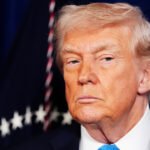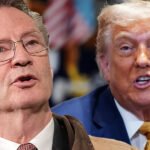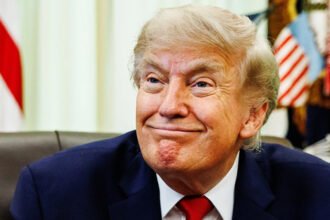








With the 2026 midterms approaching and recent polls pointing to growing headwinds for Republicans, Donald Trump is frantically turning to the politics of fear, increasingly framing the campaign in stark, existential terms as polls show Republicans facing a difficult political environment.
As Democrats gain momentum in the race for control of the House, and possibly the Senate, Trump has responded with a barrage of fear-based rhetoric.
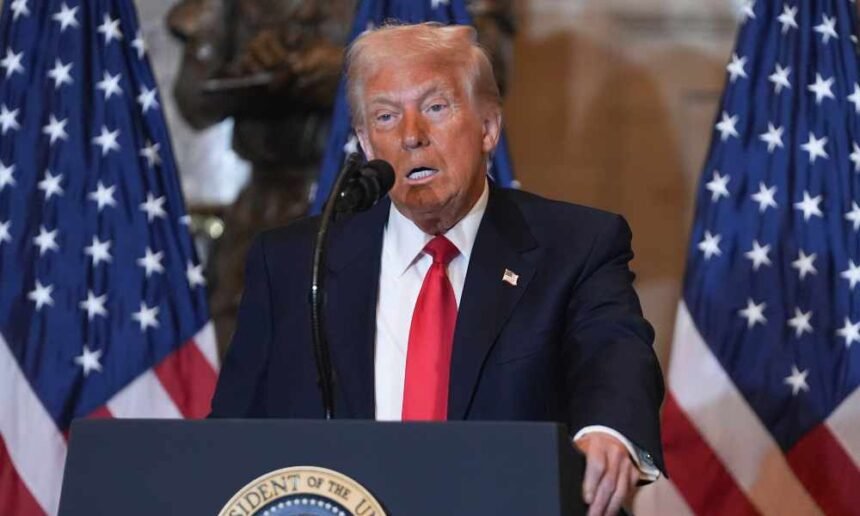
Speaking to a gathering of conservative evangelical supporters, Trump warned that Democrats’ recent primary victories represented what he called a dangerous ideological shift.
“They’re animals,” Trump said, referring to progressive candidates who have found success in Democratic primaries. “We have to stop this… horrible threat of cancer that’s permeating our country called communism.”
The remarks drew criticism from political observers. The Washington Post described the language as “dehumanizing” and compared it to the anti-communist rhetoric of the 1950s associated with Sen. Joseph McCarthy.
Trump’s rhetoric comes as new polling suggests growing challenges for Republicans ahead of November. A recent Fox News survey found Trump’s disapproval rating at 61 percent, while national generic congressional polling has shown Democrats holding an advantage.
The president also wants to distract from RealClearPolitics polls that show Democrats with the advantage in generic congressional voting, holding about a 5-point edge on Republicans.
Against that backdrop, Trump has intensified his focus on fear-mongering.
He has continued pushing Congress to pass the SAVE Act, legislation that would require additional proof of citizenship for voter registration. Critics contend it could make voting more difficult for eligible citizens.
The president has also urged Republican-led states to redraw congressional districts and has continued raising concerns about election administration, despite repeatedly failing to produce evidence supporting his longstanding claims of widespread voter fraud in the 2020 election.
Meanwhile, Democratic Sen. Elissa Slotkin warned that Trump could challenge unfavorable midterm outcomes, urging voters not to be discouraged by the possibility of contested results.
“Trump is willing to deny the results of midterms if they do not go his way…do not let this scare you: show up, vote, and fight like this country depends on you — because it does,” she said.
Meanwhile, House Republicans left Washington for the July Fourth recess without advancing several major legislative priorities, including a defense policy bill, as disagreements over election legislation continued.
Some political analysts have begun discussing hypothetical constitutional disputes that could arise if control of the House changes hands after the election. Among the scenarios being debated is whether contested races or certification disputes could delay seating newly elected members—though there is no evidence such events are imminent.
Those discussions have been fueled in part by last year’s delay in seating Rep. Adelita Grijalva following a special election, though the reasons for that delay remain the subject of political disagreement.
The broader concern among constitutional scholars is how contested election outcomes might be resolved if legal disputes reach the courts, particularly given the increasingly polarized political climate.
Trump has long rejected the results of his 2020 election defeat and has continued making unsupported claims about election fraud. He has also suggested in interviews that traditional political expectations surrounding midterm elections should not apply to his administration.
Critics argue that this rhetoric risks undermining public confidence in elections.
The debate resurfaced during a recent interview between comedian Bill Maher and Vice President JD Vance.
“Under Trump, you guys have two outcomes an election can be: Either we win, or they cheated. That s— has to stop.”
Whether voters agree with that assessment or not, one thing seems increasingly clear: with four months until Election Day, the campaign is shaping up to be as much about confidence in the electoral process as it is about the candidates themselves.
And if recent weeks are any indication, Trump intends to make that argument the centerpiece of the race.
Everyone needs to see this!
Bill Maher to JD Vance: "Here's my deal breaker for your side. Okay. Under Trump, you guys have two outcomes in an election can be. Either we win, or they cheat it. That shit has to stop. " pic.twitter.com/gRhDd7b0hz
— Ed Krassenstein (@EdKrassen) June 27, 2026