







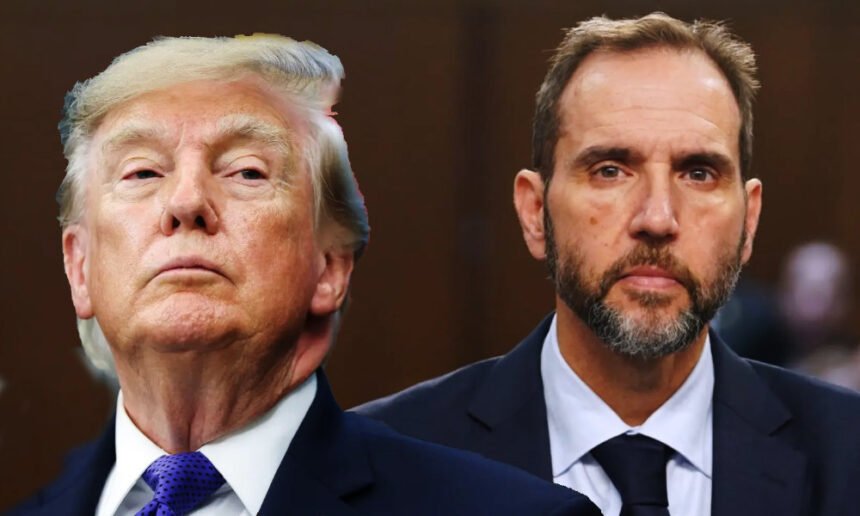
The Eleventh Circuit Court of Appeals has suddenly put the fight over whether the public can see Jack Smith’s final report on Donald Trump’s handling of classified documents at Mar-a-Lago on its calendar — for November 2, the day before Election Day.
The report’s second volume details Smith’s investigation into Trump’s alleged mishandling and retention of classified documents at his Florida estate. But the public hasn’t been allowed to see it because Judge Aileen Cannon has repeatedly acted to prevent its release, ultimately issuing a permanent injunction blocking the Justice Department from making the report public.
Now, after months of apparent inactivity, the Eleventh Circuit has suddenly moved the case forward.
And the timing is extraordinary.
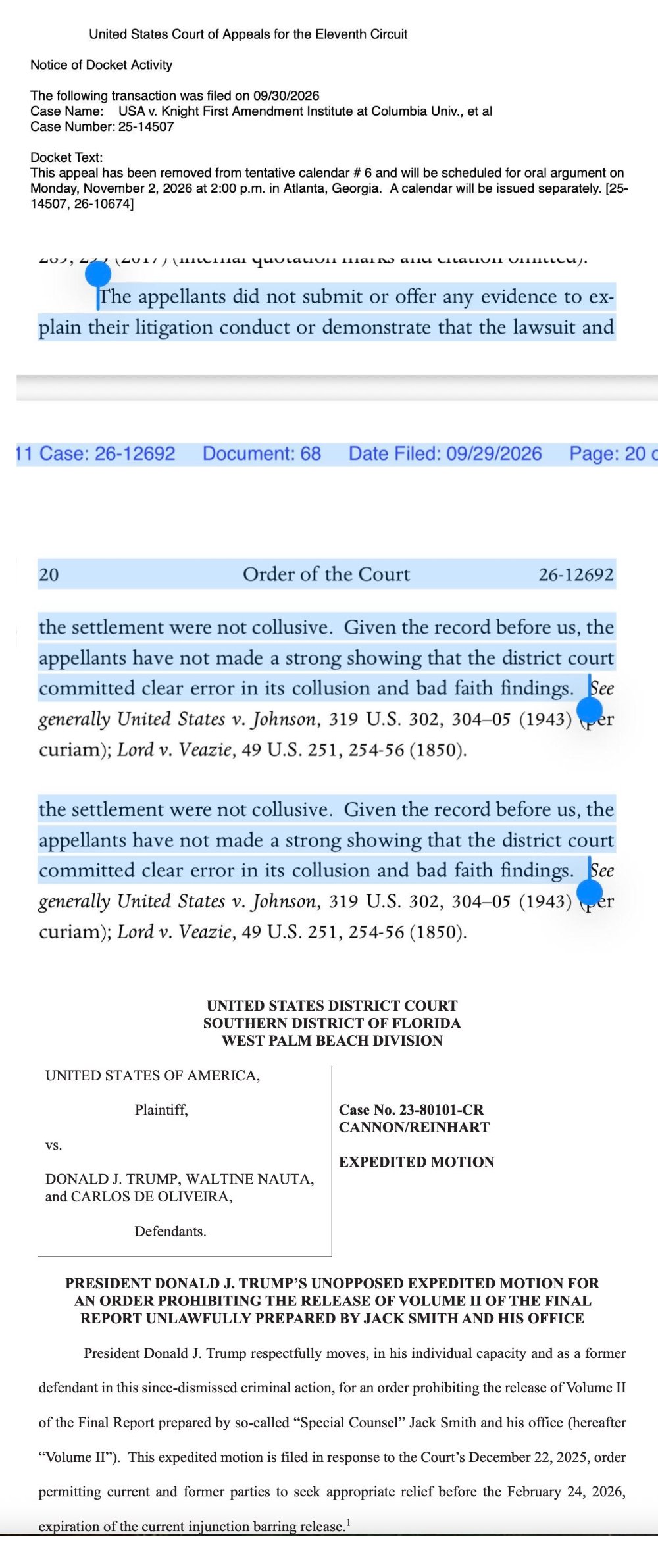
Oral arguments are scheduled for November 2, 2026 — one day before Election Day.
That’s not where this case appeared to be headed.
As recently as late September, the parties had been preparing for arguments in January 2027. The court had placed the case on tentative calendars and removed it multiple times. Then, on September 30, the Eleventh Circuit scheduled oral arguments for November 2 at 2 p.m. in Atlanta.
Suddenly, a case that appeared destined to sit until next year is going to be argued the day before voters go to the polls.
And there’s a lot more going on here than a routine dispute over court scheduling.
The report Cannon has kept from the public
Volume II is the part of Smith’s final report dealing with the classified-documents investigation.
Smith’s prosecution accused Trump of unlawfully retaining national-defense documents after leaving office, including highly classified material, and of obstructing efforts to recover them. Trump pleaded not guilty, and Cannon ultimately dismissed the criminal case in 2024 after ruling that Smith had been unlawfully appointed.
After Trump returned to the White House, the fight over Smith’s report continued.
Cannon ultimately permanently blocked the Justice Department from releasing Volume II.
She also rejected efforts by the Knight First Amendment Institute and American Oversight to intervene so they could argue that the public has a right to see the report.
That is the legal battle now before the Eleventh Circuit.
The Knight Institute and American Oversight separately sought to intervene in the case in 2025, arguing that the public has a right of access to the report under the First Amendment and common law.
The legal history that followed is almost as remarkable as the report itself.
Cannon initially refused to resolve the intervention issue for months.
The Eleventh Circuit eventually found that there had been “undue delay” in the district court proceedings and ordered the matter addressed.
Cannon then denied the intervention requests.
In February 2026, she went further, permanently blocking release of Volume II.
The Knight Institute and American Oversight appealed.
The Eleventh Circuit eventually consolidated the appeals.
And now the court has scheduled oral arguments.
According to filings reported this week, Trump and his former co-defendants have asked the Eleventh Circuit to postpone the November 2 arguments until January 2027 or later. The Knight Institute and American Oversight are opposing that request and urging the court to proceed as scheduled.
Why the timing matters
We’re not talking about an obscure procedural dispute.
We’re talking about a report prepared by the special counsel who investigated a president’s alleged retention of highly classified national-security documents.
We’re talking about a report that a federal judge has now permanently blocked from public release.
And we’re talking about an appellate court that has suddenly decided it wants to hear the fight immediately before a national election.
There’s another reason this case deserves attention.
It bears an uncomfortable resemblance to another extraordinary case that recently came before the Eleventh Circuit: Trump v. IRS.
That case involved a controversial settlement that critics characterized as creating a slush fund benefiting Trump’s January 6 supporters while providing protections involving government efforts to collect certain debts and conduct tax investigations.
A group of retired judges intervened and argued that the purported settlement was a fraud on the court.
Judge Sarah Evans Williams found evidence of collusion and bad faith and imposed sanctions.
Trump appealed and asked the Eleventh Circuit to stay those sanctions.
The court refused.
The three-judge panel also rejected the argument that Williams had clearly erred in finding collusion and bad faith.
And now another extraordinary case involving Trump is sitting on the Eleventh Circuit’s calendar.
November 2, 2026. One day before Election Day.
The fight over whether the public gets to see Jack Smith’s Mar-a-Lago report is finally going to be heard.