




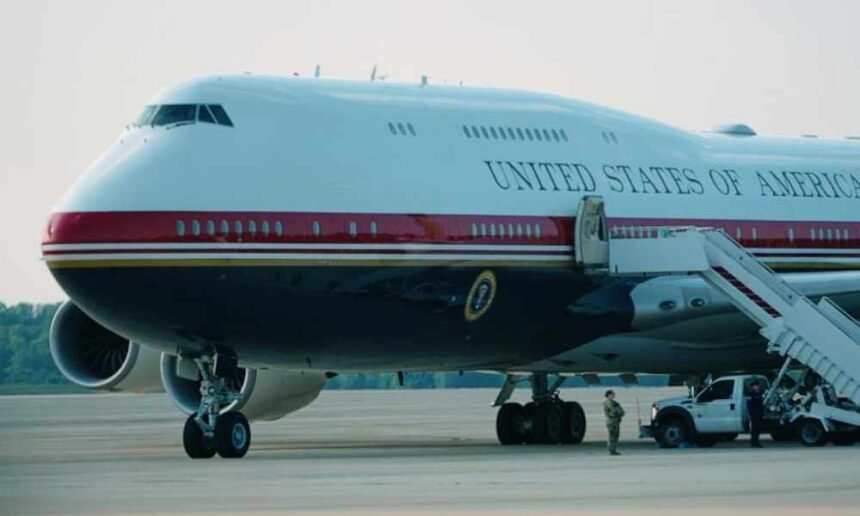
The Trump administration has dramatically escalated its confrontation with the press, sending federal agents to the homes of New York Times reporters after the newspaper published a story about security concerns surrounding Trump’s controversial Qatari-gifted Air Force One.
According to the Times, multiple journalists received subpoenas ordering them to appear before a federal grand jury in New York City. Some learned about the subpoenas when federal agents showed up at their front doors.
The move has sparked fierce criticism from press freedom advocates, who argue the Justice Department is using the power of the federal government to intimidate journalists whose reporting has embarrassed the White House.
The subpoenas, issued by U.S. Attorney Jay Clayton for the Southern District of New York, offer few details, stating only that the reporters’ testimony is being sought “in regard to an alleged violation of federal criminal law.”
The newspaper responded with a blistering condemnation.
“The appearance of federal law enforcement agents on the doorstep of news reporters should shock the conscience of any American who believes in the Constitution and the press freedom it protects,” Times attorney David McCraw said.
He called the subpoenas “nothing more than an attempt to prevent the public from knowing what is happening in their country by intimidating journalists from doing their jobs.”
The Justice Department disputes that characterization.
In a statement, the DOJ said its investigation is focused on individuals suspected of leaking classified information—not on journalists themselves—and added that it “values and appreciates” the role of a free press.
The subpoenas follow a report published Wednesday by New York Times reporters Julian Barnes, Tyler Pager, Eric Schmitt and Eric Lipton.
The article revealed that Trump departed the NATO summit aboard the older Air Force One after the Secret Service reportedly advised against using the newer Boeing 747-8 donated by Qatar.
According to the report, the aircraft lacks several advanced defensive systems carried by the current presidential plane, including anti-missile capabilities.
The $400 million jet has generated controversy since Trump accepted the gift, with critics raising ethical questions about accepting such an expensive aircraft from a foreign government while national security experts have questioned whether it is adequately equipped to serve as Air Force One during periods of heightened international tension.
Before publication, an FBI official reportedly contacted the Times and asked the newspaper to delay the story, citing national security concerns. The official also requested that the paper identify its confidential sources.
The newspaper declined.
Trump later denied that security concerns had anything to do with switching aircraft, insisting he simply chose the older Air Force One “for old times’ sake.”
The subpoenas are the latest flashpoint in Trump’s increasingly aggressive relationship with the press.
Since returning to office, his administration has filed lawsuits against multiple news organizations, restricted White House access for certain media outlets, and repeatedly accused journalists of undermining his presidency.
Trump has referred to reporters as “treasonous,” suggested at least one journalist should go to jail over reporting on the conflict with Iran, and for years has branded the media “the enemy of the people.”
The Justice Department has also recently pursued subpoenas involving reporters at The Washington Post and The Wall Street Journal, though those efforts were ultimately withdrawn after the news organizations challenged them.
Earlier this year, FBI agents searched the home of Washington Post reporter Hannah Natanson during a leak investigation tied to classified information, seizing laptops, phones and a smartwatch after she reported on the administration’s mass firing of federal employees.
While administrations from both parties have investigated classified leaks, subpoenas directed at working journalists remain relatively uncommon.
Critics argue the Trump administration is increasingly willing to deploy federal law enforcement against journalists whose reporting proves politically inconvenient.