







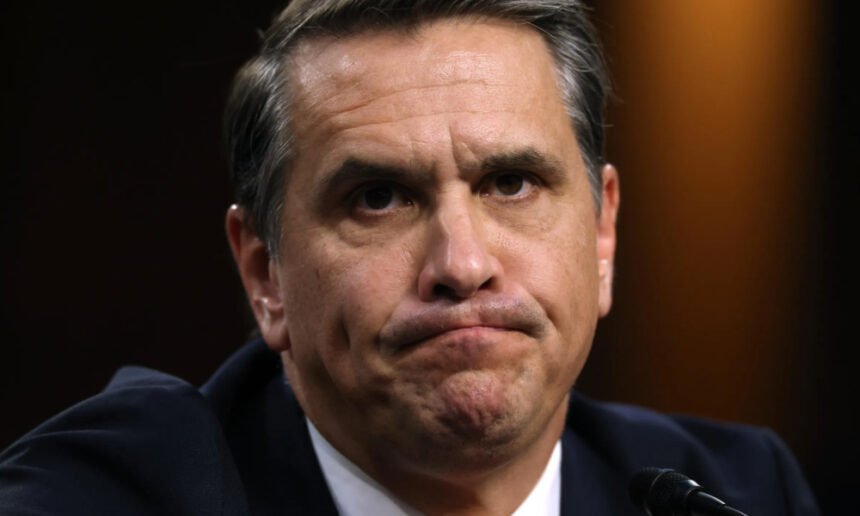
After weeks of resistance from two GOP senators, Acting Attorney General Todd Blanche has now been forced to put in writing that Donald Trump’s controversial $1.8 billion fund to compensate his political allies is officially dead.
Late Sunday, Blanche signed a formal Justice Department order rescinding the proposal, which critics warned could have opened the door to taxpayer-funded payments for Trump supporters, including some prosecuted for their roles in the January 6 attack on the U.S. Capitol.
The reversal wasn’t voluntary.
It came after Republican Sens. John Cornyn of Texas and Thom Tillis of North Carolina refused to support Blanche’s nomination until the administration formally killed the fund in writing.
For weeks, Blanche had testified that the fund wasn’t moving forward. But the senators wanted more than promises—they wanted paperwork.
Now they’ve got it.
In a statement, Blanche said the order followed “good faith discussions” with senators and committee members.
The Justice Department left little room for ambiguity.
Although Blanche had already testified under oath that the program was dead, the department said Sunday’s order was intended to eliminate “any doubt.”
The order states that no members were ever appointed to oversee the fund, no money was transferred, no claims process was created, and no payments were ever made.
“This order establishes, beyond any doubt, that there is no Fund,” the DOJ declared.
The new order also narrows another controversial part of the settlement that had granted broad protection from IRS audits to Trump and members of his family. Under the revised language, that protection applies only to tax matters covered by the original settlement and does not shield future tax returns from examination.
The fight exposed a rare public split inside the Republican Party.
Cornyn and Tillis repeatedly delayed Blanche’s confirmation, insisting the administration formally abandon the proposal before they would vote to advance his nomination.
According to Cornyn, the Justice Department was largely willing to strike a deal—but Donald Trump wasn’t.
“I think as far as Blanche and the Department of Justice, we were pretty much on the same page,” Cornyn said last week. “But then when the president got wind of it, he wasn’t willing to go along with it.”
Trump had continued defending the proposal even as negotiations were underway.
On Sunday, just hours before Blanche signed the order, Trump argued that people charged in connection with January 6 had “their lives destroyed.”
“This would be a reimbursement for the pain that they suffered,” Trump said. “A lot of people like it.”
Trump even threatened to withdraw Blanche’s nomination altogether after Republicans postponed last week’s confirmation vote, suggesting he could simply renominate him after Cornyn and Tillis leave office.
Blanche’s nomination has already drawn intense scrutiny because of his close relationship with Trump.
Before joining the Justice Department, Blanche served as Trump’s personal criminal defense attorney. After becoming acting attorney general, he quickly embraced many of Trump’s priorities, including pursuing investigations into the president’s political opponents.
His role has also come under fire in litigation surrounding Trump’s settlement with the IRS.
Last month, a federal judge blasted the agreement as an improper act of self-dealing, referred one of Trump’s attorneys for possible disciplinary action, and sharply criticized Blanche’s involvement because of his previous representation of Trump.
The administration has appealed that ruling.
With Sunday’s order, Blanche appears to have cleared one of the biggest obstacles standing between him and confirmation.
But the political damage is harder to erase.
The episode exposed deep unease, even among Republicans, over a proposal critics argued could have turned taxpayer money into a compensation fund for Trump’s political allies. And it showed that, at least this time, Trump’s own party was willing to force one of his closest loyalists to back down before handing him one of the most powerful jobs in government.