





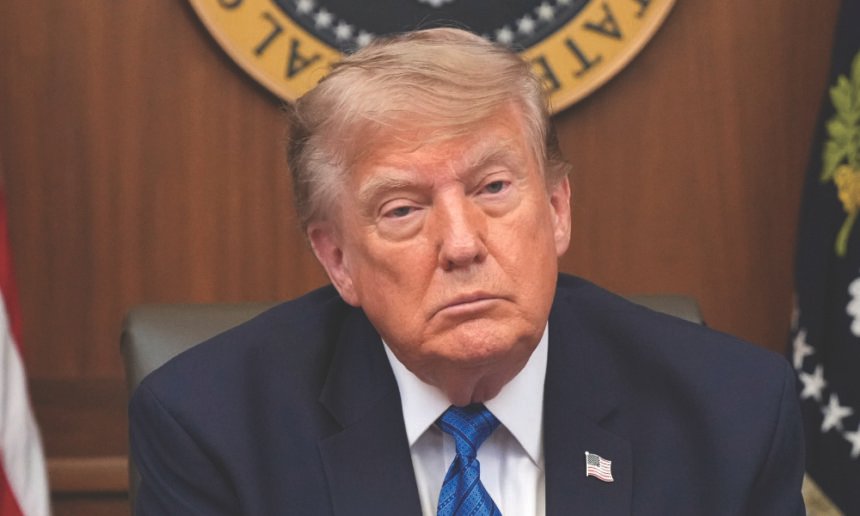
Donald Trump’s move to personally intervene in Nvidia’s leadership crisis is turning into another political headache, and this time, even some of his most loyal MAGA allies are questioning his judgment.
Laura Loomer, the far-right activist who has maintained unusually close access to Trump, is now warning that his push to bring back Nvidia CEO Jensen Huang could jeopardize U.S. national security.
Nvidia’s board reinstated Huang on Monday, just 11 days after he stepped down following reports of multiple affairs, including an alleged relationship with a woman accused of being a Chinese spy.
And Trump wasn’t just watching from the sidelines. He personally intervened.
“I’ve been speaking to the board directly and indirectly, and I felt very strongly about it,” Trump told CNBC on Monday.
That intervention didn’t sit well with Loomer.
“Reinstating Jensen Huang is going to blow back on our national security,” she wrote on X.
She went on to point out what she sees as a glaring double standard, comparing the allegations surrounding Huang to the controversy involving former Democratic Rep. Eric Swalwell, who faced scrutiny over his reported relationship with a suspected Chinese intelligence operative.
“People can like the guy personally,” Loomer wrote. “But why are we pretending like his relationship with an alleged Chinese spy isn’t the same thing (if not worse) that we all attacked [Swalwell] for?”
Swalwell, who left Congress in April, told FBI investigators he had a physical relationship with a suspected Chinese spy, according to documents released by the White House in August. His attorney has maintained that he did nothing wrong and that there was no basis to charge him with a crime.
Loomer wasn’t finished.
“Eventually there has to be accountability for jeopardizing U.S. national security,” she wrote. “China didn’t just get access to Nvidia chips by accident.”
The controversy goes beyond Huang’s personal life. Alice Huang, the woman reportedly linked to the Nvidia CEO, allegedly helped supply Nvidia chips to Chinese customers. U.S. officials are investigating whether the company’s powerful AI chips were illegally smuggled into China in violation of American export restrictions.
Huang, a Taiwanese-born American businessman, has acknowledged being unfaithful to his wife and said he was “deeply sorry.” But the national security questions surrounding the allegations are a separate matter.
And Trump reportedly knew about the concerns months ago.
According to The New York Times, the president was warned in May about Huang’s alleged connection to a suspected Chinese spy but was “not particularly moved.”
Trump has since claimed Huang told him he “had no idea that she was a spy.”
Loomer wasn’t buying the administration’s apparent willingness to move on.
“So much for being China hawks,” she wrote in another post Monday. “This will haunt the GOP in my opinion.”
The criticism is particularly awkward for Trump because Loomer isn’t exactly a political opponent. She is a longtime ally who has enjoyed direct access to the president, including meetings in the Oval Office and at Mar-a-Lago, as well as trips aboard Air Force One.
Still, Loomer’s criticism came with a qualification.
After reports suggested she had broken with Trump, she pushed back the following day, writing: “I can disagree with President Trump over Jensen Huang and still support Trump. The media is so dishonest.”
In other words, she’s criticizing the president’s decision, not abandoning him.
But Loomer isn’t the only one raising alarms. Democrats and some Republicans have also questioned the decision to restore Huang to the helm of one of America’s most strategically important technology companies.
Nvidia’s board, meanwhile, insists it is confident Huang’s return poses no national security threat, citing input from senior U.S. officials.
That hasn’t stopped the political fallout.
For an administration that routinely portrays Democrats as dangerously weak on China, Trump’s personal intervention to restore a CEO facing serious questions about alleged connections to a suspected Chinese spy is an uncomfortable contradiction.
And the optics are particularly damaging. Trump didn’t simply defend the company from the sidelines. He says he personally pressured its board.
Even some of the president’s own allies are now asking why national security concerns seem to matter so much less when a powerful businessman is involved.
That’s a question the White House still needs to answer.