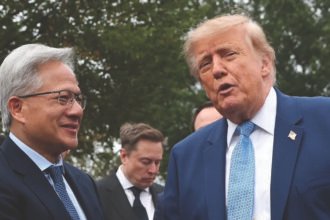







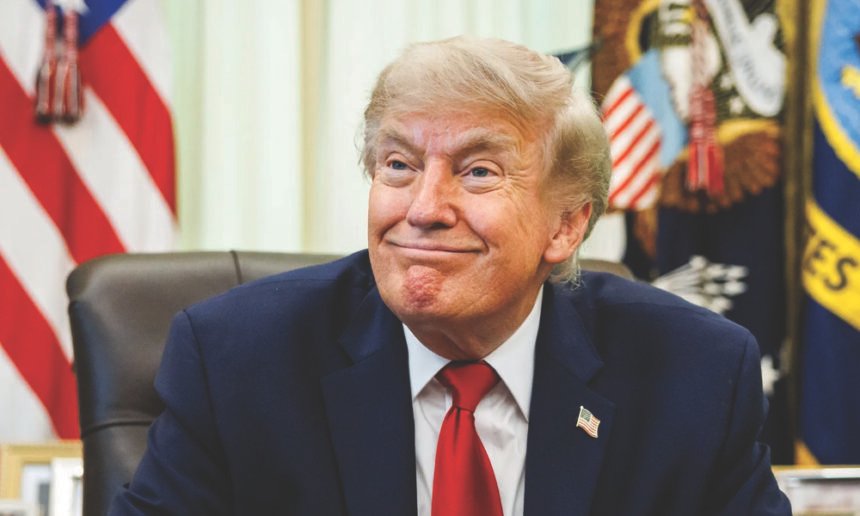
President Donald Trump has scored a massive financial windfall from Nvidia’s decision to reinstate its embattled CEO Jensen Huang after personally lobbying the company’s board to bring him back. Now, lawmakers from both parties are raising serious questions about the president’s financial interests, potential conflicts of interest and the national security implications of the decision.
According to a report by the Financial Times, Trump’s stake in Nvidia has increased in value by as much as $15 million following the company’s announcement Monday, which sent its shares soaring more than 30%.
The windfall comes after Trump publicly acknowledged that he played a direct role in convincing Nvidia’s board to reverse course and bring Huang back.
And the president wasn’t exactly keeping his enthusiasm a secret.
“The Country needs Jensen’s leadership at Nvidia in order to ensure the Success and Prosperity of not only the Company, but the American Economy,” Trump declared in a post celebrating Huang’s reinstatement.
But the timing is raising eyebrows.
Trump’s latest financial disclosures, filed November 5 with the Office of Government Ethics, show that he owned as many as 370,000 Nvidia shares as of September 30, according to the Financial Times.
Based on the newspaper’s calculations, the president’s holdings could have gained as much as $15 million in value following the stock’s surge.
The fact that the president personally benefited financially from an announcement he helped bring about is already drawing calls for scrutiny.
Arizona Democratic Sen. Ruben Gallego was among the first to demand answers.
“We need to investigate what stock positions took place before the announcement,” Gallego wrote on X. “This White House is the most corrupt in history.”
The disclosures also leave questions about whether Trump bought or sold Nvidia shares during October and the first three weeks of November, a period that included the controversy surrounding Huang’s departure and subsequent reinstatement.
And this isn’t the first time Trump’s Nvidia holdings have attracted attention. Previous estimates cited by the Financial Times put his stake at somewhere between $615,000 and $1.3 million at the end of 2024, before it reportedly grew to as much as $62 million over the following year as Nvidia became one of the biggest beneficiaries of the artificial intelligence boom.
Meanwhile, Trump had spent more than a week publicly campaigning for Huang’s return, repeatedly calling the tech executive a “genius” and arguing that he had been treated unfairly.
The president even dismissed concerns surrounding allegations that Huang had an affair with Alice Huang, a Megaspeed executive who is not related to him and has reportedly been viewed as a Chinese intelligence concern by U.S. officials.
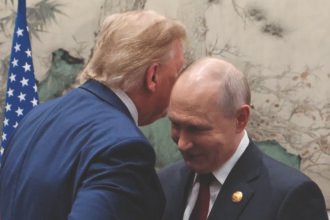
Trump’s efforts reportedly extended to high-level diplomatic discussions. He brought up Huang’s situation during a trilateral summit involving Chinese President Xi Jinping and Russian President Vladimir Putin in Shenzhen, discussed it at a Washington press conference Friday, and returned to the subject in a Truth Social post Sunday.
Then came the announcement.
Following Huang’s reinstatement, Trump posted a parody of the famous photograph showing him raising his fist after surviving the 2024 assassination attempt in Butler, Pennsylvania. This time, the image depicted Huang holding a red bra beneath a billowing Nvidia flag.
But it was Trump’s subsequent comments to CNBC that may prove more consequential.
The president openly acknowledged pressuring the company’s board to reverse its decision.
“I spoke to them, let me put it that way. And I convinced them… I made the deal… The board decided to do what we wanted to do,” Trump said.
Asked about concerns surrounding Huang’s conduct, Trump insisted the executive had “done nothing wrong.”
“We gave him assurance, at least with everything we know, and we know a lot,” Trump said. “People say, ‘Is it a threat to have him?’ No, it’s a threat to lose him.”
Nvidia also acknowledged receiving input from senior levels of the U.S. government before the board reversed its decision.
“Based on that input, the board is confident that Huang’s reinstatement poses no national security risk,” the company said.
That assurance, however, has done little to quiet the controversy.
Even prominent MAGA influencer Laura Loomer criticized the decision, warning that it could “blow back on our national security.”
“People can like the guy personally, but why are we pretending like his relationship with an alleged Chinese spy isn’t the same thing (if not worse) that we all attacked Eric Swalwell for?” Loomer said, drawing comparisons to the controversy involving the former California Democratic congressman.
And the criticism isn’t limited to Democrats or conservative media personalities.
Republican Rep. Don Bacon, who chairs the House Armed Services Committee’s subcommittee on cybersecurity, questioned why the administration was so determined to secure Huang’s return despite the unresolved national security concerns.
“Jensen Huang was compromised and exploited by a Chinese spy. Nvidia should have moved on without Huang and ignored the Administration’s inexplicable desire to save Huang,” Bacon said.
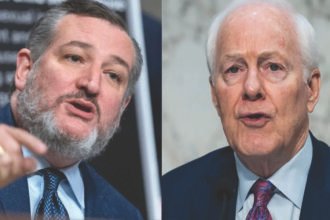
At least three Republican senators—Tom Cotton of Arkansas, John Curtis of Utah and Pete Ricketts of Nebraska—have also expressed concerns about Huang’s reinstatement, saying they are not satisfied that questions about potential national security risks have been conclusively addressed.
That leaves Washington facing two increasingly uncomfortable questions: Why was the White House so determined to bring Huang back, and were all the potential national security concerns adequately addressed before the decision was made?