




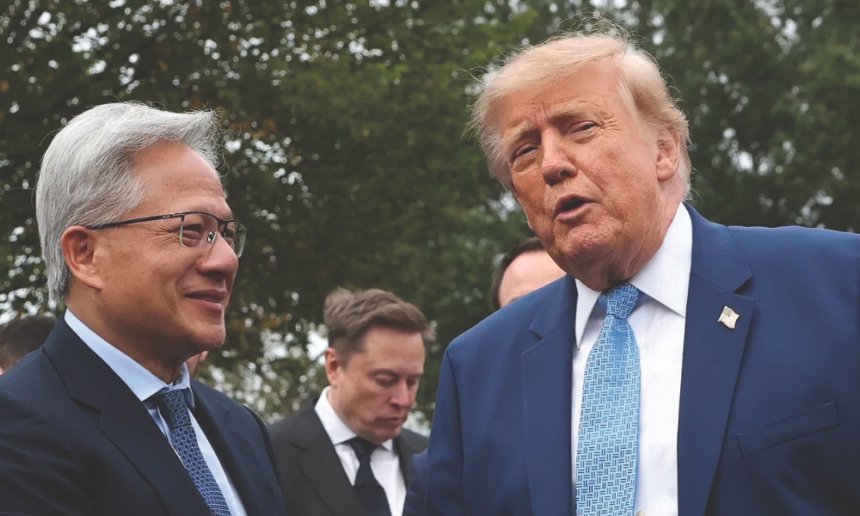
Donald Trump isn’t just defending Nvidia CEO Jensen Huang. He’s now taking credit for personally convincing the company’s board to bring him back — even as serious national security threats and federal investigations surrounding the scandal remain unresolved.
And lawmakers are demanding answers.
Nvidia announced Monday that its board had unanimously reinstated Huang as CEO, just 11 days after his departure amid revelations about his relationship with Alice Huang, a businesswoman suspected by U.S. intelligence of having ties to China’s spy agency.
The board’s reversal came after Trump repeatedly pushed for Huang’s return. In its announcement, Nvidia acknowledged receiving input from senior levels of the U.S. government before deciding that Huang’s reinstatement posed no national security risk.
But here’s where things get especially troubling: Trump says he personally intervened to make it happen.
Speaking to CNBC on Monday, the president openly took credit for persuading Nvidia’s board to reverse course.
“I spoke to them and I convinced them,” Trump said, confirming that he had communicated with the board directly and indirectly.
Trump also declared Huang “exonerated” and insisted he had done nothing wrong.
“We gave him assurance, at least with everything we know, and we know a lot,” Trump told CNBC, referring to the national security concerns raised by the board.
But the federal investigation hasn’t simply disappeared. Nvidia itself acknowledged that its independent investigation will continue, and the company says it will keep cooperating with government inquiries.
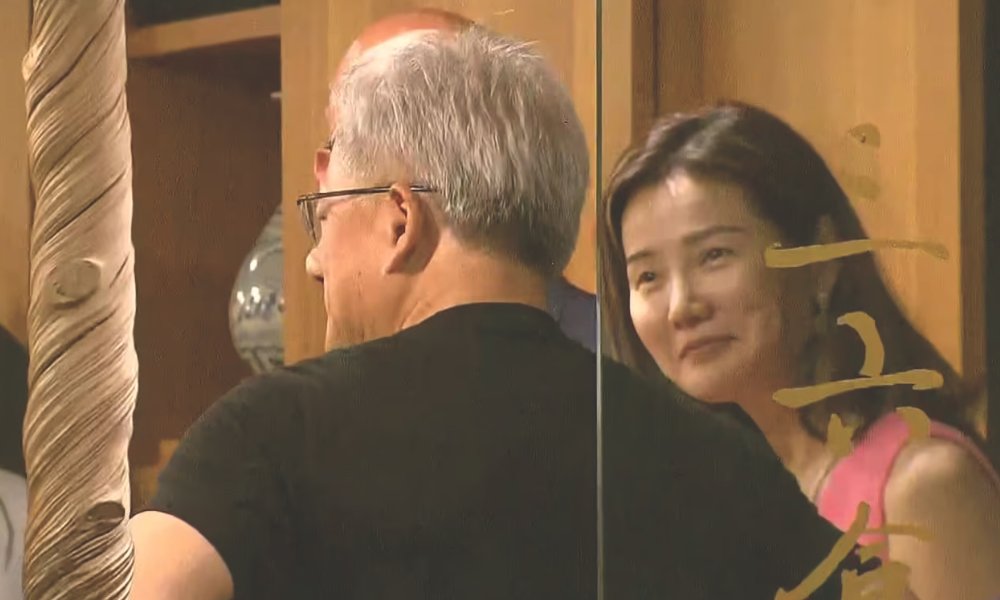
The controversy centers on Alice Huang, an executive at Singapore-based Megaspeed, an Nvidia customer investigated over allegations involving the diversion of advanced U.S. computer chips to China.
The New York Times reported Sunday that Alice Huang maintained contact with an official from China’s Ministry of State Security for more than a year while involved in a relationship with Jensen Huang. Reuters reported the same allegations, citing the Times.
The allegations have raised serious questions about whether sensitive technology and information could have been exposed.
And that is precisely why lawmakers aren’t accepting Trump’s assurances as the final word.
Republican Rep. Don Bacon, who chairs a House Armed Services subcommittee focused on cybersecurity, criticized the decision to bring Huang back.
“Jensen Huang was compromised and exploited by a Chinese spy. Nvidia should have moved on without Huang and ignored the Administration’s inexplicable desire to save Huang,” Bacon said.
He also demanded answers about who authorized high-end chip sales to China.
“We cannot say we want to win the AI race and then give China our best technology. We need sunlight on who is responsible,” he added.
Outgoing Texas Republican Sen. John Cornyn also questioned Nvidia’s claim that Huang’s return poses no national security risk.
“No national security risk? Based on what?” Cornyn wrote.
“You gotta be kidding me!” he told MS NOW.
And Democratic Sen. Elizabeth Warren, who is poised to lead the Senate Banking Committee, made clear that Trump’s intervention doesn’t end the matter.
“This reckless decision to bring back Jensen Huang does not change the fact that Huang and Nvidia still owe Congress answers,” Warren said.
She also demanded that the administration explain exactly what information it provided Nvidia’s board and which senior officials were involved in the decision.
Meanwhile, the stock market delivered another dramatic twist.
Nvidia shares jumped approximately 33% at Monday’s opening after the reinstatement announcement, recovering some of the losses that followed Huang’s departure. The company had suffered a massive decline in market value during the controversy.
That financial angle is attracting additional scrutiny because Trump has significant reported investments in Nvidia.
A Washington Post review of the president’s financial disclosures found that his Nvidia holdings were valued between $13 million and $62 million as of the end of August. The White House has said independent financial managers handle his portfolio.
Democratic Rep. Ruben Gallego is calling for an investigation into whether anyone traded Nvidia stock ahead of the announcement.
“We need to investigate what stock positions took place before the announcement,” Gallego said, adding: “This White House is the most corrupt in history.”
Trump’s intervention is also raising questions about the administration’s role in the governance of one of America’s most important technology companies. The president didn’t simply praise the board’s decision after the fact. He says he helped persuade directors to make it.
Reuters correspondent Erin Banco summed up the disbelief surrounding the announcement.
“This is nuts,” she wrote. “You can’t just wave a magic wand and declare ‘there’s no national security risk’. We’re not in The Office.”
And the questions aren’t going away anytime soon.
Huang is scheduled to appear for a closed-door, transcribed interview before three House committees on December 1. He has also agreed to testify publicly before the Senate Banking Committee, although that hearing has not yet been scheduled.
With Democrats preparing to take control of both chambers of Congress in January, the Nvidia controversy could become a major focus of congressional oversight.
For now, Trump is celebrating Huang’s return as a victory. But an executive’s reinstatement doesn’t resolve the questions surrounding a suspected foreign intelligence operation, potential export-control violations, or the government’s decision to intervene on his behalf.