



Donald Trump’s Justice Department just suffered another legal blow in its effort to prosecute one of the former White House aides whose testimony helped expose the chaos surrounding January 6.
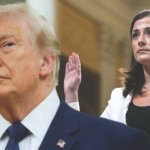
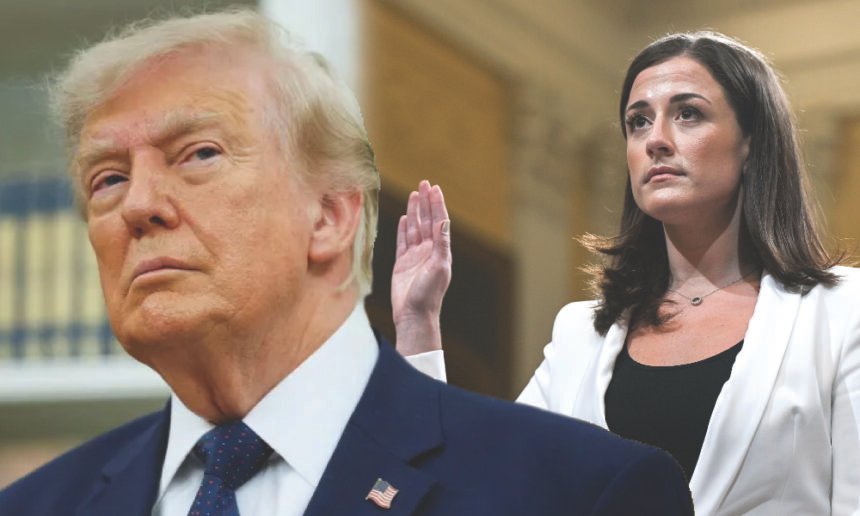
A federal grand jury in Washington, D.C., has refused to indict Cassidy Hutchinson, the former White House aide who delivered explosive testimony about Trump’s actions on the day his supporters stormed the U.S. Capitol. The decision, reported Tuesday by The Washington Post and other major news outlets, leaves prosecutors without the indictment they sought.
The case centered on allegations that Hutchinson lied under oath during her 2022 testimony to the House committee investigating January 6. Trump and his Republican allies have spent years attacking her account and pushing for legal consequences.
But when prosecutors brought the proposed case before a grand jury, they failed to secure an indictment.
In a court appearance Tuesday, Justice Department attorney Neville S. Hedley told U.S. Magistrate Judge Zia M. Faruqui that the grand jury had not agreed to the proposed indictment. Hedley did not name the person involved, but sources familiar with the matter identified Hutchinson as the intended defendant.
For the Trump administration, the outcome is another embarrassing obstacle in a series of politically sensitive prosecutions that have faced resistance from grand juries and the courts.
Hutchinson became a central figure in the January 6 investigation because of her proximity to Trump’s inner circle. She served as an aide to then-White House chief of staff Mark Meadows and testified publicly in June 2022 about what she said she witnessed and learned during the days surrounding the Capitol attack.
Her account portrayed Trump as angry and determined to reach the Capitol as his supporters gathered in Washington to protest his 2020 election loss.
Hutchinson testified that Trump knew some of his supporters were armed and wanted to join the crowd heading toward the Capitol despite security concerns.
One of the most explosive parts of her testimony involved an alleged confrontation inside the presidential SUV, known as “The Beast.” Hutchinson said another White House official told her Trump lunged toward the front of the vehicle and reached for the steering wheel after the Secret Service refused to take him to the Capitol.
That account was disputed. The agent who drove the vehicle later said he did not see Trump lunge toward the front seat and stated that Trump never grabbed the steering wheel. Hutchinson acknowledged during her testimony that she was relaying what another official had told her rather than describing an incident she witnessed firsthand.
She also testified about Trump’s reaction to chants of “Hang Mike Pence” as rioters threatened the vice president. Her account became a major part of the committee’s effort to document Trump’s conduct before and during the attack.
Trump rejected Hutchinson’s testimony and publicly attacked her credibility.
The investigation into Hutchinson followed referrals from Republican Reps. Barry Loudermilk and Jim Jordan, who accused her of providing false testimony to Congress.
Their efforts helped move the matter to the Justice Department, which ultimately sought an indictment. The specific allegations prosecutors intended to bring were not immediately made public in the reporting on the grand jury’s decision.
The case was handled by the Justice Department’s Civil Rights Division, an unusual choice for an investigation centered on allegedly false statements, according to The Washington Post.
Grand juries generally approve indictments when prosecutors present sufficient evidence to establish probable cause, making a rejection an unusual outcome.
The failed effort comes as the Trump administration pursues other high-profile cases involving figures the president has publicly criticized.
Among them is former FBI Director James Comey, who has faced another attempt by federal prosecutors to bring charges. Federal authorities have also searched the home of Democratic Rep. Ilhan Omar as part of a separate investigation.
These cases involve different allegations and legal circumstances, but the Hutchinson decision adds to scrutiny of the Justice Department’s pursuit of Trump’s perceived adversaries.
The grand jury’s rejection leaves the administration without the criminal case it sought against a witness whose testimony about Trump has continued to provoke the president’s anger.
After years of Trump and his allies demanding that Hutchinson face consequences, the latest development is a clear defeat for this prosecution effort — and another reminder that political pressure does not guarantee prosecutors will get the outcome they want.