






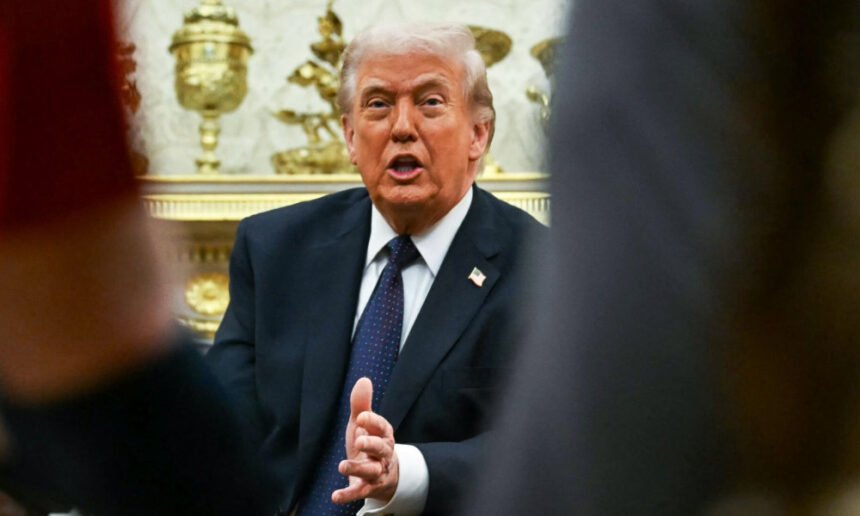
President Donald Trump is scrambling for a way to contain a fuel-price crisis that is quickly becoming a political headache for Republicans — and now he’s weighing an extraordinary move that could reshape the energy market while potentially making the crisis even worse just weeks before the midterms.
Trump has held emergency discussions with advisers over whether to restrict or outright ban U.S. diesel exports as soaring fuel prices threaten to hammer farmers, truckers and consumers ahead of the November 3 elections.
The discussions, reported by the Financial Times, included proposals ranging from an outright export ban to narrower restrictions on international diesel sales. U.S. officials have also warned allies, including the United Kingdom, that restrictions could disrupt fuel supplies.
The stakes are enormous.
Diesel prices have surged to record levels as the war involving Iran and disruptions around the Strait of Hormuz squeeze global fuel supplies. U.S. diesel prices recently climbed above $6.50 a gallon, adding another layer of economic pain for Americans already dealing with higher costs.
And that is exactly why the issue is becoming a political nightmare for the GOP.
Republicans control the White House and Congress, meaning voters angry about soaring fuel costs have an obvious target heading into November.
The White House, however, says Trump has not made a final decision.
“The president wants to see gas prices at the pump fall and is evaluating all the options on the table,” a White House official told the Daily Beast. “Ultimately, President Trump will make the decision that is best for the American people.”
But inside the administration, the panic is palpable.
People familiar with the discussions told the Financial Times that major oil companies have warned Trump that an export ban could actually make matters worse in some parts of the country by disrupting international fuel markets and potentially raising prices in regions that depend on imported diesel.
That puts Trump in a familiar political bind: do something dramatic about rising prices, or risk being blamed for doing too much.
Trump has nevertheless made clear that a diesel export ban is on his radar. On September 22, he said he supported the idea as Republicans in competitive races increasingly called for restrictions on exports.
According to the Financial Times, Trump was still “very seriously considering” an outright ban over the weekend.
“The debate goes on. We don’t have a firm sense of what he’s going to do,” one source told the news outlet. “White House staff are thoroughly opposed to it. But this is all about Trump, and does Trump want to do something big… So [a ban is] still in play.”
That uncertainty is adding to the anxiety among Republicans.
Lawmakers from agriculture-heavy states have been pressing Trump to restrict diesel exports, arguing that American farmers and truckers should not have to compete with foreign buyers for fuel during a domestic price surge.
Iowa Sen. Chuck Grassley has been among the loudest voices demanding action.
“If our govt can embargo chips to China it can embargo diesel to help American farmers & truckers,” Grassley wrote on X on September 20. He followed that up by declaring that high diesel prices “ARE KILLING FARMERS INCOME.”
Grassley renewed his call for a temporary diesel export ban on September 22, arguing that the measure could help lower costs for farmers and consumers.
Tennessee Rep. Tim Burchett has gone even further. He introduced legislation that would impose an export ban through January 2027, along with a separate proposal that would trigger restrictions if the national average diesel price reaches $5 per gallon.
And Burchett has openly acknowledged the political danger.
“We’re going to own it, whether we deserve to or not,” he told the Financial Times. “We’re the ones in power—it’s hard to escape that.”
That’s the problem Trump is desperately trying to solve. The problem? His next move could make the crisis even worse.