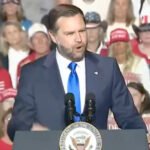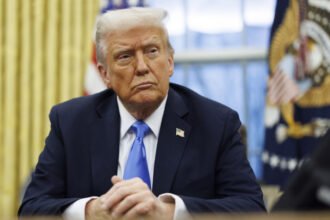






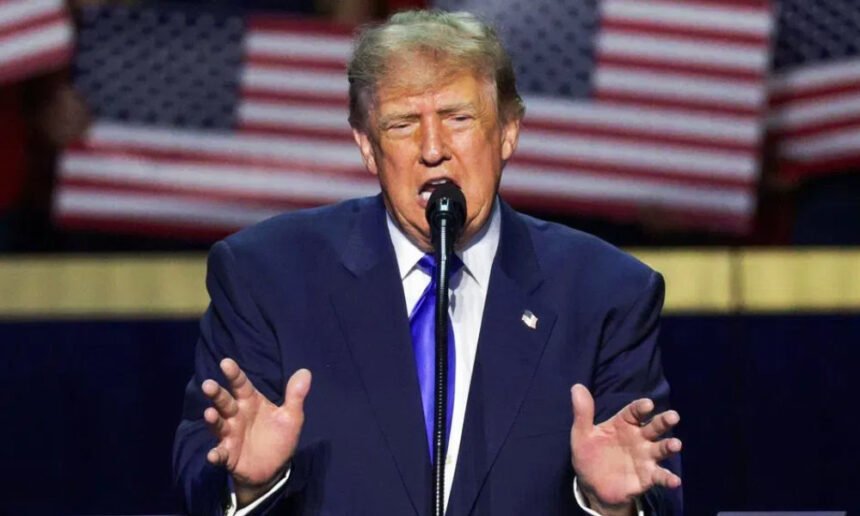
Donald Trump’s first-ever Republican midterm convention was supposed to be a giant shot of adrenaline for the GOP. Instead, the polling that followed showed Democrats opening a wider national lead.
The Dallas convention was designed to rally Republicans ahead of the November 3 midterms and put Trump at the center of the party’s effort to hold onto Congress. Trump declared it a “solidly sold out winner for Republicans” and predicted it would have a “big impact” on Election Day.
But the numbers afterward tell a more complicated story.
A Hill/Emerson poll conducted after the convention found that 68% of independent Texas voters said the event had no impact on their excitement to vote. Just 32% said it made them more eager to cast a ballot.
And here’s the awkward part for Republicans: the convention energized Democrats even more.
The poll doesn’t establish why Democrats became more enthusiastic, but the results suggest the convention was hardly an exclusive enthusiasm generator for the GOP.
Nationally, Democrats have been posting stronger numbers since the convention as well.
The September 23 PBS News/NPR/Marist poll found Democrats leading Republicans 53% to 41% among registered voters on the generic congressional ballot — a 12-point Democratic advantage.
Independent voters were even more lopsided, with Democrats holding a 25-point advantage among them, 57% to 32%.
The same survey found that Trump remains a major factor in the congressional vote. Forty-five percent of voters said their congressional vote was mainly a vote against Trump, compared with 24% who said it was mainly a vote for him.
That doesn’t prove the Dallas convention caused the Democratic advantage. But it does show the event failed to produce the broad-based enthusiasm Republicans were hoping to generate.
And Trump’s own standing isn’t exactly making that task easier.
A Reuters/Ipsos poll released September 21 put Trump’s overall approval rating at 32%, his lowest of his political career. His approval among Republicans was 73%, down from 82% the previous week. The same poll found Democrats leading Republicans by eight points on its congressional preference measure.
The convention was held in Dallas partly because Texas is central to the modern Republican coalition. But the state is also home to one of the country’s most closely watched Senate races, where Democrat James Talarico and Republican Ken Paxton are competing for an open seat.
A BIG DATA POLL conducted September 24–26 found Talarico ahead of Paxton 43.6% to 39.3% among registered voters. Among likely voters, Talarico led 44.6% to 41.6%. Both results were within the poll’s four-point margin of error.
The convention itself was anything but a low-key political gathering.
Trump and other Republican speakers spent much of the event attacking Democrats and portraying them as an extreme threat to the country. Treasury Secretary Scott Bessent, for example, warned that Democrats were trying to turn America into a “socialist hellscape.”
Trump also unveiled one of his biggest midterm promises: a proposed $5,000 “Trump Dividend” for American adults if Republicans retained control of both chambers of Congress.
The proposal would carry a price tag of roughly $1.25 trillion if every American adult received the payment.
But a Reuters/Ipsos survey found the idea had limited support. Sixty-three percent of respondents disapproved, including about four in 10 Republicans and nine in 10 Democrats.
The convention was also dominated by Trump’s promises about the economy and the war with Iran.
Trump said oil prices would come down “as soon as we win the war in Iran” and predicted the conflict would end shortly after Election Day.
But the war has continued to weigh on fuel prices and the broader cost-of-living debate. Reuters reported that Trump’s approval has been hit by voter dissatisfaction over the economy and the conflict, with economic concerns increasingly dominating the political landscape heading into November.
And that may be the bigger problem for Republicans.
The Dallas convention was built around the idea that putting Trump front and center could fire up the GOP and translate that enthusiasm into votes across the country.
Instead, the immediate polling picture showed Republicans still facing a significant Democratic advantage nationally, while Texas independents largely reported that the convention had made no difference to them.
The convention may have energized Trump’s core supporters. But if the goal was to broaden that enthusiasm beyond the Republican base, the early numbers provide little evidence that it happened.
In fact, the most striking post-convention reality may be the one Republicans probably didn’t want to see: A vast majority of Texas Democrats said the convention made them more excited to vote.
The big question now is whether that enthusiasm lasts until November 3 — and whether Trump’s unprecedented midterm spectacle ultimately produces the broader Republican turnout boost it was designed to create.