









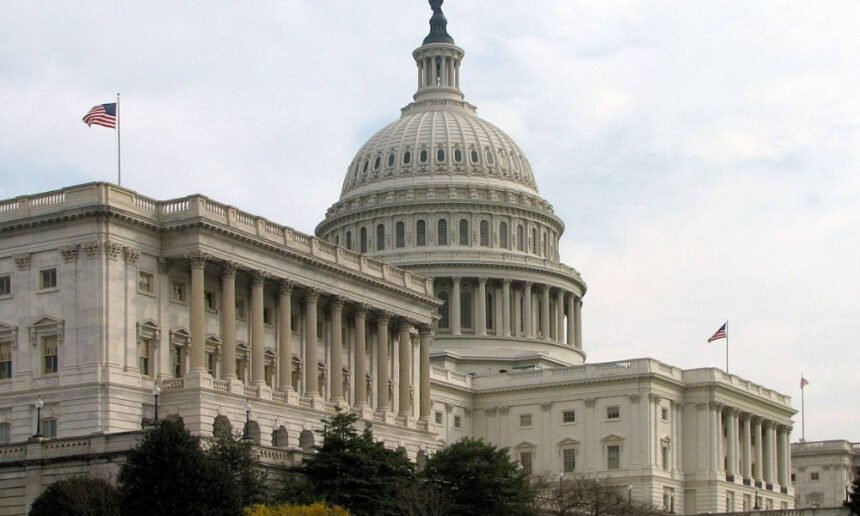
The Senate majority is officially up for grabs.
With less than six weeks until Election Day, the Cook Political Report says control of the chamber is now a “true coin flip” after three Senate races shifted in Democrats’ direction.
Cook has moved races in Georgia, Kansas and South Carolina in Democrats’ favor in its latest update. And the stakes are enormous.
Democrats currently need to gain a net four Senate seats to take back the majority. Cook says Democrats have a range of possible outcomes between a one-seat gain and a five-seat gain, while Republicans still have a path to retain control.
The biggest change came in Georgia, where Cook moved the Senate race from “Lean Democrat” to “Likely Democrat.”
That may sound like a move in Democrats’ favor, but it doesn’t mean the race has become more competitive. Under Cook’s rating system, “Likely” races are considered less competitive than “Lean” races. Instead, the shift reflects Cook’s assessment that Democrat Jon Ossoff’s position has strengthened.
Kansas moved in the other direction on the rating scale—but toward Democrats.
Sen. Roger Marshall’s race against Democrat Adam Hamilton shifted from “Likely Republican” to “Lean Republican,” putting the contest into Cook’s competitive category.
Agriculture is a major issue in Kansas, particularly high fuel and fertilizer costs and trade affecting the beef industry. Cook also pointed to concerns surrounding President Donald Trump’s decision to stop purchasing aircraft from Canadian aerospace company Bombardier, which operates a major facility in Wichita.
Republican sources have acknowledged weaknesses for Marshall, according to Cook Senate editor Jessica Taylor, while polling has shown a closer contest than Kansas’ recent political history might suggest.
Kansas has not elected a Democrat to the U.S. Senate since 1932, making the race an unusual test for the party in a deeply Republican state.
South Carolina also moved toward Democrats.
Cook shifted the race between Republican Sen. Darline Graham and Democrat Annie Andrews from “Solid Republican” to “Likely Republican.”
Graham became the Republican nominee after defeating Rep. Ralph Norman in the GOP primary and later took office following the death of her brother, Sen. Lindsey Graham.
Cook cited concerns about Graham’s debate performance and questions about the transition from candidate to incumbent. Taylor also noted that Norman did not immediately offer the kind of endorsement Graham might have wanted after losing the primary.
A grassroots effort is now encouraging conservative voters to write in Norman’s name on the November ballot. People close to Graham have dismissed the effort as unlikely to have much impact.
Andrews has remained around the mid-40s in polling, while Democratic group Fresh Start South Carolina has launched a $2.5 million advertising campaign.
Cook says some South Carolina Republicans are sufficiently concerned about Graham’s numbers and the possibility of weak turnout that the race no longer belongs in the “Solid Republican” category.
The three changes come after Cook previously moved the Texas and Iowa Senate races into the Toss Up category in August, expanding the number of competitive Republican-held seats.
That doesn’t mean Democrats are suddenly guaranteed a Senate majority. The map remains difficult for them, and Cook specifically notes that Democrats still need to win several states that have historically favored Republicans. Republicans also retain a substantial financial advantage, according to Cook.
But the overall picture has changed.
A month ago, Cook described the Senate race as a Toss Up with fundamentals still slightly favoring Republicans. Its latest assessment says those fundamentals have shifted enough that the chamber is now a genuine toss-up, with viable paths for both parties to win or retain the majority.
And with November 3 approaching and three more races moving toward Democrats, the fight for the Senate just got even more interesting.