







The Trump administration is facing a lawsuit accusing it of doing something that sounds almost tailor-made for a dystopian military academy: ordering West Point professors to stop teaching cadets the scientific evidence behind human-caused climate change.
Dr. Adam Kalkstein, a tenured geography professor and reportedly the only climate scientist on the U.S. Military Academy’s faculty, says he was punished after objecting to the directive and warning that complying would force professors to mislead their students.
According to a federal lawsuit filed Monday, Kalkstein was explicitly told last September that he could no longer teach cadets that human activity is a major driver of current global warming.
That wasn’t a minor change to a syllabus.
Kalkstein says human-caused climate change was a fundamental part of his Climatology course, which he had taught for years. His complaint describes the underlying science as an “plainly established scientific fact.”
But, according to the lawsuit, West Point administrators told him the president had ordered them to suppress that information.
The stated goal, the complaint alleges, was to “chill and suppress speech and censor viewpoints contrary” to those promoted by the Trump administration.
Kalkstein wasn’t exactly thrilled.
“We’re only telling cadets part of the story,” he told his superiors, according to the lawsuit. “We’re lying to them, deceiving them.”
He compared the directive to teaching law without being allowed to mention the Constitution.
“The guiding principle of any school should be to the truth,” Kalkstein said. “I’m supposed to be an educator and a scientist upholding Army values, but… right now, I’m a liar and a fraud.”
And then, according to the lawsuit, things got considerably worse for him.
Push back—and lose your tenure
Kalkstein had been at West Point for roughly 17 years and had consistently received outstanding performance evaluations, according to the complaint.
He was also one of the academy’s biggest recipients of outside research funding.
Then in May 2025, he was told he was one of two professors being dismissed as part of a “reduction in force.”
Kalkstein didn’t buy the explanation.
Although administrators insisted his dismissal had nothing to do with his teaching of climate science, he was eventually offered a way to remain at West Point—as a contract employee funded through his existing research grants.
There was a catch. He had to give up his tenure.
“With no options and significant obligations, [he] accepted this offer,” the complaint states.
A few months later, the climate directive allegedly arrived.
In September, Kalkstein was called into an “emergency meeting” and told that faculty members were not to teach cadets about human-caused climate change.
According to the complaint, Lt. Col. Joel Radunzel also issued a warning that if anyone leaked the directive to the media, the entire department could be eliminated.
Kalkstein told his department head that the order had crossed “a red line” for him as a scientist.
He tried taking his concerns to the Department of Defense Inspector General.
That went nowhere, according to the lawsuit.
He then went to West Point’s legal department, which provided him with court cases that supposedly supported the legality of the directive.
Kalkstein studied them and concluded they actually supported the opposite position, the complaint says.
Despite his objections, he continued following the order.
Then came the confrontation
In November, Kalkstein presented his research to Brig. Gen. Shane Reeves, then dean of West Point’s Academic Board.
According to the lawsuit, Reeves praised the presentation.
But afterward, another professor presented a PowerPoint explaining how the department was complying with the directive by avoiding discussion of human causes of climate change.
Kalkstein again objected.
He told Reeves that the directive violated West Point’s mission because it required professors to hide scientific truth.
That’s when the meeting reportedly went off the rails.
Reeves allegedly became angry and reminded Kalkstein that the president sets West Point’s academic agenda.
Kalkstein responded that, while the president has authority, the president is still required to follow the Constitution.
According to the complaint, Reeves then suggested that Kalkstein resign.
Kalkstein said his personal responsibilities prevented him from doing so.
Reeves allegedly continued yelling, said he had “seen enough,” and stormed out—while again threatening the department if faculty members failed to comply.
Kalkstein’s attorney, Michael Sussman, emphasized that his client isn’t some stereotypical progressive activist.
“This is not someone who is a radical or a progressive or anything close to that,” Sussman told The Independent. “He is a scientist though, and he’s trying to inform the cadets on what is true.”
Sussman said Kalkstein even attempted to raise the issue directly with Defense Secretary Pete Hegseth, but the letter never reached him.
The attorney argued that suppressing information about climate change makes little sense from a military perspective, given the potential effects of climate-related disasters on national security and military operations.
“What’s going on there is a form of censorship, which is just shocking,” Sussman said.
The lawsuit points to an executive order Trump issued in January 2025, just one week after returning to the White House.
The order directed officials to “carefully review the leadership, curriculum and instructors” at the nation’s military academies and other defense academic institutions.
West Point describes its academic mission as preparing cadets to become highly educated officers capable of collecting and analyzing information, reaching evidence-based conclusions and evaluating outcomes.
That mission could make the alleged climate directive particularly awkward.
Kalkstein’s lawsuit argues that asking professors to conceal established scientific evidence is fundamentally incompatible with that educational mission.
The complaint also alleges that another civilian professor—the only other one laid off at the time—was a researcher whose work focused on bias.
West Point did not respond to a request for comment.
Now Kalkstein is fighting back
In May of this year, Kalkstein was informed that his contract would not be renewed when it expires in December.
According to the complaint, his department head attributed the decision to Kalkstein’s alleged “poor character and temperament.”
The lawsuit argues that explanation doesn’t square with nearly two decades of outstanding performance reviews.
Instead, Kalkstein alleges that he was effectively pushed out because he objected to the administration’s effort to suppress discussion of human-caused climate change.
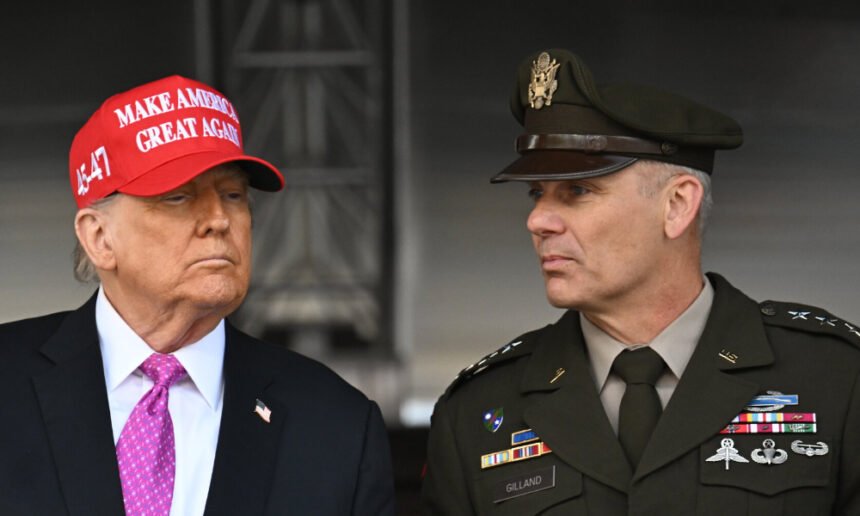
He is now suing West Point and several current and former officials, including Reeves, Col. Mark Read and retired Lt. Gen. Steven Gilland.
Kalkstein is asking the court to restore his tenured position, prohibit West Point from imposing restrictions on academic freedom and compensate him for financial losses and emotional distress.
The case follows another lawsuit filed by a West Point law professor who alleged that restrictions placed on lesson plans violated his First Amendment rights.
At its core, Kalkstein’s lawsuit presents a remarkably simple question: What exactly is a military academy supposed to teach its future officers—what the evidence shows, or what the commander in chief wants them to believe?
For a scientist who spent nearly two decades teaching at West Point, Kalkstein says he already knows where that line should be drawn.
At the truth.