





The Supreme Court has cleared a major legal hurdle for President Donald Trump’s effort to restrict mail-in voting ahead of the November midterm elections, putting the administration one step closer to imposing sweeping new rules on how millions of Americans cast their ballots.
The 6-3 decision Monday lifted a lower-court injunction that had blocked key parts of Trump’s executive order. But the ruling does not mean the Supreme Court has declared Trump’s voting restrictions lawful. The broader legal fight is still underway, and another court order continues to complicate implementation.
Still, the ruling gives the Trump administration room to move forward with parts of its plan as the midterms rapidly approach.
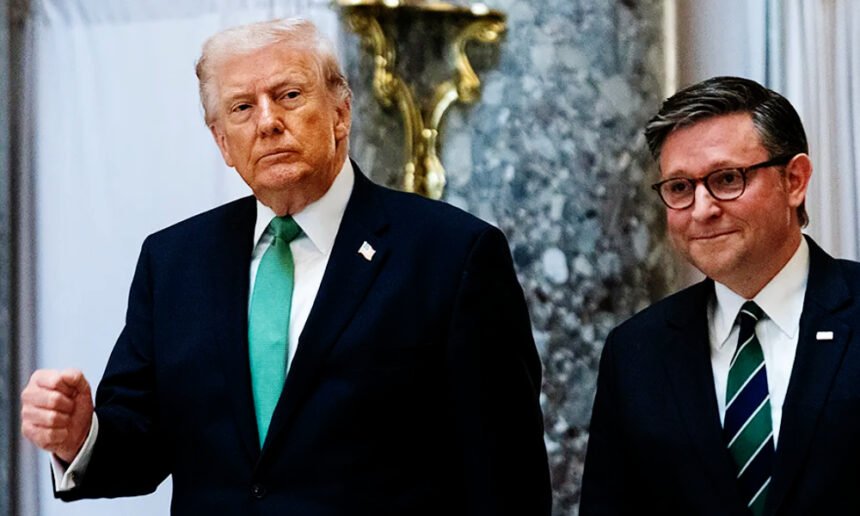
The ruling comes hours after House Speaker Mike Johnson confidently predicted that his party will hold onto its House majority in November, even if the war with Iran is still raging or inflation refuses to come down, claiming that Republicans have a “secret weapon” to secure victory.
Trump’s March executive order directs federal agencies to play a much larger role in determining who can receive mail-in ballots. It calls for the creation of state-level lists of eligible voters and directs the U.S. Postal Service to adopt new requirements for delivering mail ballots.
The administration has argued that the changes are necessary to protect election integrity.
Critics see something very different: an unprecedented attempt by the federal government to impose new restrictions on a voting process traditionally administered largely by states.
The Supreme Court’s unsigned order did not settle that larger constitutional question.
Instead, the conservative majority said that the states challenging Trump’s order had not shown sufficient harm from provisions that had not yet taken effect. The justices said the administration was likely to suffer irreparable harm if the lower-court freeze remained in place.
The court explicitly cautioned that Monday’s ruling does not mean everything the administration eventually does under Trump’s order will necessarily be lawful.
And with the election approaching fast, that uncertainty could become a serious problem.
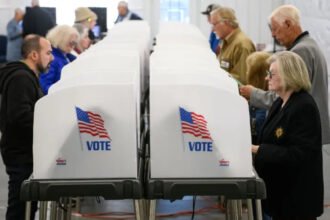
Some states are preparing to begin sending mail ballots to voters within weeks, meaning election officials could soon be forced to deal with new federal requirements while courts are still deciding whether those requirements are legal.
The Postal Service has already issued a final rule laying out major changes, including new ballot-envelope requirements and restrictions on delivering ballots in states that don’t comply with the administration’s standards. But those rules have also faced legal challenges and court-ordered restrictions.
The result is an election system heading toward the midterms with a giant legal question hanging over it.
Justice Ketanji Brown Jackson, joined by the court’s other two liberal justices in dissent, warned that the majority’s decision would “needlessly injects chaos and uncertainty into the upcoming midterm elections.”
That concern is hardly difficult to understand.
Election officials now have to prepare for a possible overhaul of mail-ballot procedures while lawsuits challenging the administration’s authority continue moving through the courts.
And the Supreme Court itself has essentially acknowledged that the story isn’t finished.
The majority said its decision was preliminary and did not determine whether the administration’s eventual implementation of the executive order would be lawful.
“On that score, time will tell,” the justices wrote.
So while Monday’s ruling gives Trump a major opening to pursue his mail-voting agenda, it leaves voters with something else: a whole lot of uncertainty about what the rules will actually be when they go to cast their ballots.