






A federal judge has dealt another blow to President Donald Trump’s effort to reshape mail voting, ruling that a key part of his executive order is “unconstitutional” and allowing a major legal challenge to move forward.
In a ruling issued Wednesday, U.S. District Judge Indira Talwani rejected the Trump administration’s bid to throw out a lawsuit filed by a coalition of voting rights organizations led by the League of Women Voters. Instead, she concluded that the plaintiffs had presented a valid case and warned that, if the order remains in effect, voters could face imminent disenfranchisement in the next election.
“Disenfranchisement as to the upcoming election is plausibly likely and imminent,” Talwani wrote.
The administration had argued that the lawsuit was premature and failed to present a legally actionable claim. Talwani wasn’t persuaded.
“Plaintiffs’ organizational and associational injuries are caused by the EO’s novel voting regulation mandates and enjoining the EO would cure those injuries,” she wrote.
The ruling also signals that the court may be inclined to grant the preliminary injunction the voting rights groups are seeking, finding they have shown the kind of irreparable harm required for that relief.
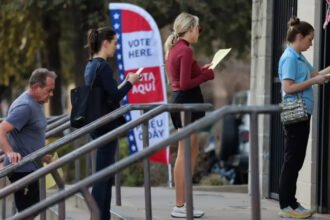
At the center of the lawsuit is Trump’s executive order directing states to provide the U.S. Postal Service with lists of voters who requested mail ballots and requiring new ballot envelopes with barcodes tied to those voters. Under the order, USPS would refuse to deliver ballots sent to voters not on those lists or ballots lacking the required barcode.
Talwani made clear she believes the president lacks the constitutional authority to impose those requirements.
“As this court has explained, Section 3 of the EO is unconstitutional,” she wrote. “The Constitution lodges power over congressional elections in state legislatures primarily and in Congress ultimately. The President plays no role in the regulation of elections.”
She also rejected the order’s attempt to involve the Postal Service in enforcing the new voting rules.
“Congress has not delegated authority to USPS to sort the mail, let alone to refuse to transmit mail ballots for certain voters,” Talwani wrote, adding that the executive order “directs the violation of several” legal obligations Congress imposed on the Postal Service.
The ruling builds on an earlier decision by Talwani that temporarily blocked enforcement of the executive order in 22 states and Washington, D.C., in a separate lawsuit brought by those jurisdictions.
Following a separate appeals court decision that paused a nationwide injunction in another case, the League of Women Voters returned to Talwani’s court seeking emergency relief. The judge has scheduled an Aug. 7 hearing to consider whether to block the order while the case moves forward.
The latest ruling marks another significant legal setback for Trump’s executive order as multiple challenges continue to work their way through the federal courts.