







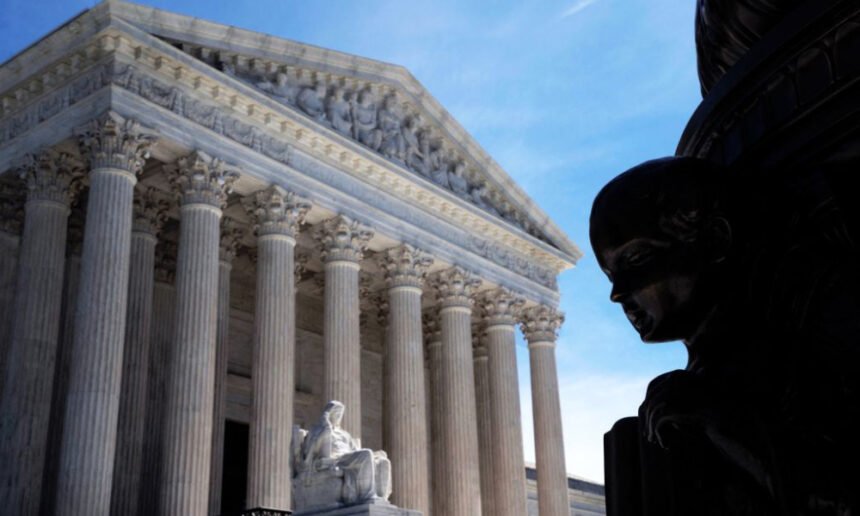
The Supreme Court just shut down the GOP’s latest attempt to put a Republican-friendly congressional map into effect in Missouri and capture a Democratic House seat, ending a bizarre legal tug-of-war that has bounced between state and federal courts for most of September.
The ruling was the second major Supreme Court decision involving the 2026 midterms on Friday, and unlike the Court’s ruling on the citizenship database, this one came with no noted dissents.
The issue was a single House seat. But the fight was much bigger than that.
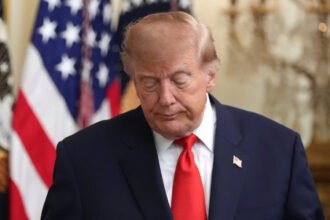
President Donald Trump had pushed Missouri to redraw its congressional districts in the middle of the decade, an unusual move aimed at helping Republicans preserve their House majority. The proposed map would have broken up the Democratic stronghold around Kansas City and turned Missouri’s current 6-2 congressional split into a 7-1 Republican-leaning map.
The target was obvious: Democratic Rep. Emanuel Cleaver’s 5th Congressional District.
Republicans wanted the new map. Missouri’s courts pushed back. Then the Supreme Court stepped in.
At this point, even Missouri election officials were warning that the constant legal whiplash was becoming a problem.
The Supreme Court’s message Friday was essentially: enough.
The justices pointed to a very practical problem. The 2022 congressional map had already been used for the August primary. Ballots using that map had been printed and mailed. Absentee voting had begun. Military and overseas voters were already casting ballots.
Changing the map again this late, the Court said, would create “electoral chaos.”
The Court repeatedly invoked the so-called Purcell principle, a doctrine warning federal courts against making last-minute changes to election rules.
And the justices made the timing unmistakable.
“The election is not merely upcoming; it has already started,” they wrote.
Whatever argument Republicans had for changing the map, the Supreme Court wasn’t willing to let them blow up the election process this late in the game.
The ruling specifically said lower courts should not require Missouri to use the 2025 map in the 2026 congressional election.
That appears to end the frantic legal battle over which map Missouri will use this November.
But getting here was anything but straightforward.
Missouri Republicans had pushed through a new map that targeted Cleaver’s district by breaking apart its Kansas City base and stretching the district into more rural, Republican-leaning territory.
Opponents challenged the map and eventually persuaded Missouri’s highest court to order the state back to the 2022 districts. That ruling was tied to a planned referendum that would have allowed Missouri voters to weigh in on the new map.
Then the federal courts entered the picture.
The 8th U.S. Circuit Court of Appeals later concluded that Missouri could not use one congressional map for the August primary and another for the November general election.
And then the Supreme Court got the case. Again.
Earlier in the month, Justice Brett Kavanaugh had already declined a request from Missouri Republicans to pause the state court’s decision.
Now the full Court has effectively put the matter to rest for the 2026 election.
Richard von Glahn, executive director of People Not Politicians Missouri, which challenged the map, celebrated the ruling and accused politicians of trying to force their preferred map through outside the process established by the Missouri Constitution.