









A reported order to restrict a satellite system critical to Ukraine’s military drones came from inside the White House, according to multiple officials, raising fresh questions about the Trump administration’s efforts to pressure Kyiv to change its strategy in the war against Russia.
Two U.S. officials and a Western official briefed on the matter told Reuters that leaders at the Defense Department received a message directing them to limit SpaceX’s Starshield service, which Ukraine relies on for battlefield communications and drone operations.
The officials did not identify who inside the White House issued the order or who was responsible for implementing it.
The reported restrictions had immediate consequences on the battlefield. Ukrainian officials said military-grade satellite receivers stopped working when mounted on fast-moving objects, disrupting drones that rely on satellite connectivity for guidance over Ukrainian territory.
By Thursday, a person in Ukraine’s Defense Ministry said the receivers were functioning again while in motion, but only at speeds of up to 100 miles per hour.
That limitation could significantly affect Ukrainian drone operations, including strikes against Russian forces and supply lines, as well as interceptor drones used to shoot down incoming Russian Shahed drones.
The report does not identify the official behind the order, leaving a critical question unanswered: Who inside the White House decided to restrict a system Ukraine depends on to fight Russian forces?
Trump has been pressuring Ukraine to halt attacks on Russian oil refineries.
The satellite restrictions came as President Donald Trump has pushed Kyiv to stop attacking Russian oil refineries, blaming those strikes for rising energy prices that threaten Republican prospects in November’s midterm elections.
But experts say the surge in energy costs is largely the result of the U.S.-Israeli war with Iran, which has triggered Iranian attacks on energy infrastructure and largely shut down the strategically vital Strait of Hormuz.
Asked about the order to limit Starshield, a senior U.S. official told Reuters: “No such request was ever made by the president.”
The White House did not respond to questions about whether another administration official might have made the request. SpaceX, the Pentagon and Ukraine’s embassy in Washington also did not respond to requests for comment.
Starshield was developed by SpaceX for government and national-security customers, particularly the U.S. Department of Defense. It uses the same satellite constellation that powers Starlink, but is designed for military and other sensitive government operations.
Elon Musk, SpaceX’s chief executive, said Wednesday that because Starshield systems are owned and controlled by the U.S. government, decisions about speed or usage restrictions rest with the U.S. military or the president.
White House meeting reportedly turned confrontational.
The satellite dispute is unfolding as relations between Washington and Kyiv deteriorate.
At an October 9 meeting in Miami involving representatives from the United States, Ukraine, Europe and the World Bank, Trump’s son-in-law Jared Kushner and Steve Witkoff, the administration’s Middle East envoy, reportedly delivered a blunt message to Ukrainian officials.
According to a person familiar with the meeting, the U.S. representatives expressed frustration that Ukraine continued attacking Russian refineries despite repeated requests from Washington to stop.
The American delegation also defended the administration’s decision to pursue a diesel deal with Russia, saying the White House hoped the arrangement would soften Moscow’s position in peace negotiations.
Under the deal, Russia will supply more than 2.25 million barrels of diesel to U.S. and global markets. The agreement has drawn criticism from some U.S. lawmakers, who argue that it could funnel money to Moscow without requiring Russian President Vladimir Putin to make concessions to end the war.
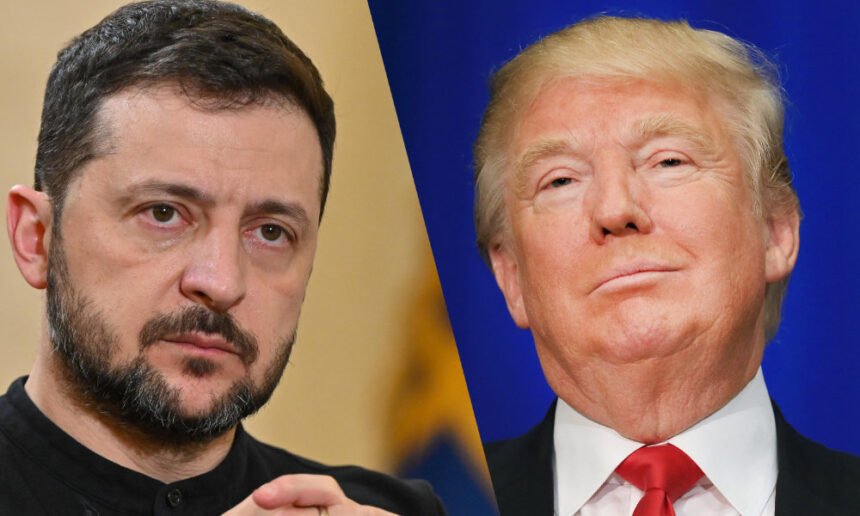
The dispute has spilled into public view. Ukrainian President Volodymyr Zelensky called the Russian diesel deal “weak,” while Trump called for elections in Ukraine and Zelensky’s removal.
Behind the scenes, the pressure has reportedly extended beyond satellite communications. Reuters previously reported that U.S. officials threatened to stop sharing intelligence about Russian missile launches that Ukraine uses to defend against attacks. Trump said Tuesday that Washington was still providing intelligence to Kyiv.
Ukraine was told the decision came from the White House.
After the satellite restrictions took effect, Ukrainian officials scrambled to find out who was responsible.
A senior Ukrainian official told Reuters that Kyiv contacted senior officials at the White House, State Department and Pentagon on Tuesday and Wednesday seeking answers.
Ukraine was told that the decision came from the White House, the official said.
The Pentagon has spent billions of dollars on Starlink and Starshield services. It has also purchased dedicated Starshield satellites for national-security missions, including missile-warning communications and a spy satellite constellation for the National Reconnaissance Office, Reuters reported in 2024.
For Ukraine, the stakes are immediate. Satellite connectivity helps its forces coordinate battlefield operations and guide drones used to strike Russian military targets and intercept incoming attacks.
Restricting that capability threatens to complicate those operations at a time when the Trump administration is pressing Kyiv to curb attacks on Russian energy infrastructure.
The officials who spoke to Reuters have not identified who ordered the restrictions, and the White House has denied that Trump personally requested them.
But the report places the decision inside the White House—and leaves open whether the restrictions were part of a broader effort to force Ukraine to change how it fights the war.