








A federal judge just handed the Trump Justice Department a choice it clearly wasn’t hoping for: stop hiding behind black marker, or explain, in detail, why so much of the Jeffrey Epstein file dump is still being kept from the public.
In a major ruling Thursday, U.S. District Judge Emmet Sullivan ordered the Justice Department to either release less-redacted versions of several key Epstein documents or justify every redaction by next week.
For months, the Trump administration has insisted it has been transparent about the Epstein files. The court just signaled it isn’t convinced.
The judge wants answers
Judge Sullivan’s order covers several documents that have fueled growing public suspicion over how the Justice Department has handled the Epstein records.
Among them: Eight emails with either the sender or recipient blacked out. A draft indictment of Jeffrey Epstein with the names of potential co-conspirators redacted. A 2019 email referring to multiple alleged co-conspirators whose identities were also concealed. FBI interview notes tied to documents summarizing allegations involving Donald Trump.
Sullivan also ordered the DOJ to produce something it should arguably have released in the first place: a detailed log explaining every redaction it made to the Epstein files.
In other words, the court isn’t simply asking what was hidden. It’s asking why.
The Justice Department has spent months defending its handling of the massive Epstein document release, arguing that many redactions were necessary to protect victims’ identities, personal privacy, or legally privileged information.
Officials have also said only about half of the roughly six million pages collected during the Epstein investigation will ever become public, claiming the remaining records are duplicates, unrelated, or otherwise protected.
But critics, including lawmakers, journalists, and Epstein survivors, have questioned whether the department has gone far beyond protecting victims and instead shielded politically sensitive information.
Thursday’s ruling suggests the court believes those concerns deserve a closer look.
The case stems from a lawsuit filed by journalist and legal commentator Katie Phang, who argued the Justice Department was violating federal law by releasing heavily censored documents while withholding key information from the public.
The DOJ tried to get the case thrown out, arguing Phang should simply file Freedom of Information Act requests instead.
Judge Sullivan wasn’t buying it.
In a sweeping 48-page opinion, he ruled that Phang likely has the legal right to challenge the government’s actions and concluded that FOIA was not an adequate remedy under the circumstances.
The department even asked the judge to delay any order while it considered an appeal.
Sullivan rejected that request, too.
One of the documents at the center of the dispute involves an email in which Epstein referenced a so-called “torture video.”
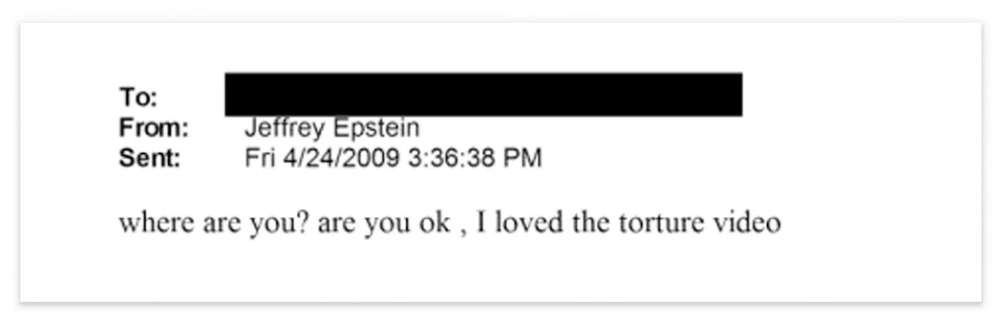
The recipient’s identity was blacked out in the public release, prompting bipartisan questions from both Democratic Rep. Ro Khanna and Republican Rep. Thomas Massie.
Later, Acting Attorney General Todd Blanche suggested on social media that the recipient was Sultan Ahmed bin Sulayem, the former CEO of DP World.
That only intensified questions about why the identity had been redacted in the first place if senior administration officials were later willing to discuss it publicly.
Instead of simply releasing records required by law, the DOJ has been accused of heavily censoring key documents, resisting court challenges, and attempting to steer the public toward a slower FOIA process that could delay disclosure for years.
Now, the judge is demanding more than broad assurances. He’s demanding explanations.
The Justice Department now has until July 2 to either produce more complete versions of the documents or explain, line by line, why each redaction should remain.