








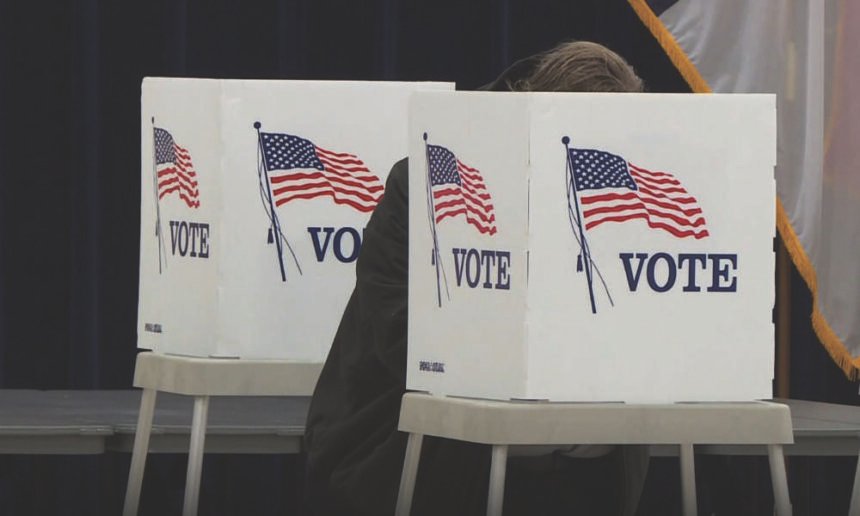
There’s a new number floating around Washington that should make Republicans nervous: most Americans are done with the Electoral College.
A fresh Economist/YouGov poll finds that 56% of Americans support amending the Constitution to ditch the Electoral College entirely and pick presidents by national popular vote. Only 23% oppose it. The rest aren’t sure, which feels fitting for a system most people only think about every four years when everything gets weird again.
That’s a solid majority. By a 2-to-1 margin, Americans want to scrap a system that has defined U.S. presidential elections for centuries.
And it’s not subtle why. Under the Electoral College, presidents aren’t actually chosen by the national vote. Instead, states get electors based on congressional representation, and most of them are awarded on a winner-take-all basis. It’s a setup that can — and has — produced presidents who didn’t win the most votes nationwide.
Most recently, it happened in 2016, when Donald Trump won the presidency despite losing the popular vote. Before that, it happened in 2000. It’s rare, but it’s not theoretical. It’s real enough that it keeps resurfacing as a national argument every time it happens.
Supporters of reform have been pushing for a constitutional amendment — the only way to permanently change the system — but that requires overwhelming agreement in Congress and the states. In other words: structurally difficult by design.
Still, the polling suggests public opinion has been drifting in one direction for a while. Outside of the 2016 election cycle, support for a national popular vote has generally hovered at or above a majority.
And now even some Republicans voters are shifting. The poll finds 43% of GOP-leaning voters support moving to a popular vote system, with 40% opposed — a surprisingly tight split for a party that has historically benefited from the current structure in key elections.
There’s also a deeper irony baked into all of this.
Donald Trump himself has not always been a fan of the Electoral College. Back in 2012, after Barack Obama won re-election while the Electoral College outcome looked uncertain on election night, Trump called it “a disaster for a democracy.”
In 2016, even after winning under the system, he reportedly told interviewers he preferred a popular vote model, saying he liked the idea of “simple votes” deciding elections.
That position didn’t last long.
After benefiting from the Electoral College, Trump became one of its most vocal defenders — a reversal that has become familiar in a political system where rules are often judged by who they help at the moment.
Meanwhile, the same poll also tested attitudes toward the 22nd Amendment, which limits presidents to two terms in office. That answer was far less ambiguous.
Roughly 70% of Americans oppose changing or removing term limits. Only 16% support lifting them, and even among Trump voters in 2024, a majority — 56% — say they want to keep the restriction in place.
So while Americans may be increasingly open to changing how presidents are chosen, they seem far less interested in changing how long they can stay.