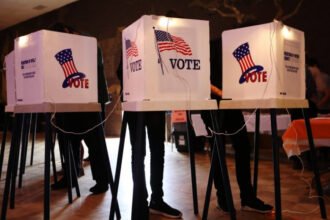









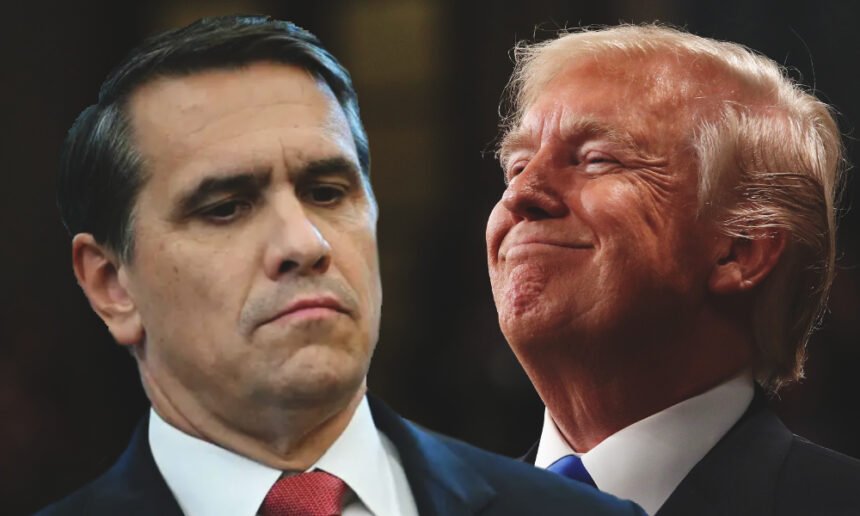
This is the kind of story that would trigger a full-blown Republican meltdown and dominate conservative outrage cycles for days if the parties were reversed.
For years, Donald Trump has warned Americans that elections are vulnerable to fraud, manipulation, and “cheating.” He has repeatedly portrayed election integrity as one of the biggest issues facing the country.
So naturally, many people assumed his administration would be strengthening election oversight ahead of the 2026 midterms.
Instead, according to a new report, Trump’s Justice Department appears to be doing the opposite.
According to a new report from NOTUS, the Department of Justice decided not to establish its traditional Election Day “command center,” a long-standing operation that has historically served as a central hub where election officials, law enforcement, and the public could report voting irregularities, election-related crimes, and other concerns as they emerged.
And that’s not all.The department has also canceled election integrity training sessions for prosecutors and FBI agents, removed a 281-page election crimes manual from its website, and left a key election enforcement leadership position vacant following the resignation of Election Crimes Branch chief Rob Heberle earlier this year.
Taken together, they raise a much bigger question.
Why are the safeguards disappearing at the same time election fraud remains one of the administration’s most frequently cited concerns?
The command center wasn’t some obscure bureaucratic office.
Historically, it operated around the clock on Election Day, staffed by prosecutors and investigators who could help coordinate responses to reports of voting problems and potential criminal activity. It gave election officials, law enforcement, and the public a clear place to raise concerns if something went wrong.
Now, according to the report, that centralized operation is being shut down.
Current and former DOJ personnel reportedly told NOTUS they are alarmed by what they’re seeing.
Ryan Crosswell, a former public corruption prosecutor, put it bluntly.
“Obviously, the command center and training are something that anybody who wants to protect election integrity would want.”
That’s what makes the situation so striking.
The administration’s public message is that elections must be protected.
Its operational decisions appear to be moving in the opposite direction.
The DOJ insists there is no cause for concern.
A department spokesperson said election integrity remains a top priority and noted that election officers have been assigned to U.S. Attorney’s Offices around the country to handle complaints involving voter intimidation, election fraud, voting rights concerns, and threats of violence.
The department also says prosecutors and agents in the field can communicate directly with headquarters without needing a centralized command center.
But critics aren’t convinced.
Because when reporting systems are removed, training programs are canceled, election enforcement leadership positions sit vacant, and election resources disappear from public view, people naturally start asking questions.
Questions become even harder to ignore when they come against the backdrop of Trump’s own election rhetoric.
Just this week, Trump claimed California elections were “crooked” and alleged Republican candidates were being cheated without providing evidence. Days later, he stormed out of an NBC interview after being pressed to produce evidence supporting his long-running election fraud claims.
That’s the contradiction hanging over all of this.
If election integrity is such an urgent concern, why is Trump’s Justice Department reportedly dismantling some of the very systems designed to monitor it? Why make it harder to train investigators, coordinate responses, and provide clear channels for reporting problems?
The administration says election integrity remains a priority. But as November approaches, critics are increasingly asking whether the infrastructure needed to protect that integrity is quietly being dismantled in plain sight.