




Donald Trump is taking credit for ordering the Justice Department to sue Alaska in an extraordinary attempt to stop the state from certifying its U.S. Senate election results if the Republican incumbent loses.
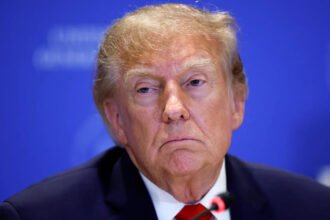
“I’m the one that said do it,” Trump told reporters Friday, openly acknowledging his role in the lawsuit.
The administration claims that having two candidates named Daniel Sullivan on the ballot could confuse voters and potentially hurt Republican Sen. Dan Sullivan’s chances against Democratic challenger Mary Peltola.
But the remedy the DOJ is seeking goes far beyond raising concerns about ballot confusion. The department wants a court order preventing Alaska from certifying the election results if the Republican incumbent does not win.
The Justice Department argues that voters might accidentally cast ballots for Daniel J. Sullivan instead of the sitting senator, Daniel S. Sullivan. Government attorneys claim that if votes cast for the second candidate had instead gone to the incumbent, Alaska’s ranked-choice voting system would have produced a Republican victory.
The DOJ has described the rival candidate’s campaign as “frivolous” and argued that Alaska should not certify results potentially affected by voter confusion.
But there is a major problem with that argument: Alaska’s courts have already examined the claim that the second Sullivan was running to confuse voters.
In June, the Alaska Division of Elections removed Daniel J. Sullivan from the primary ballot, saying his candidacy was intended to mislead voters. He appealed, and an Anchorage Superior Court judge overturned the decision, finding that the claim was not supported by a preponderance of the evidence. The ruling was upheld on appeal, and the state did not take the case to the U.S. Supreme Court.
The primary results showed Mary Peltola finishing first with 49.5% of the vote, followed by incumbent Dan S. Sullivan with 41.4% and Daniel J. Sullivan with 2.5%.
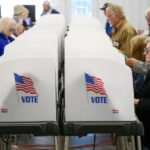
Now, with Peltola polling closely alongside the Republican incumbent, the Trump administration is asking a federal court to intervene in the election before November’s voting is even over.
Trump made no effort to distance himself from the move.
“I’m the one that said do it,” he said proudly in remarks reported Friday.
That public admission is especially striking because the lawsuit comes amid broader concerns about the administration’s willingness to intervene in election administration ahead of the midterms.
The lawsuit follows a warning from Trump’s attorney general.
Just one day before the Alaska lawsuit was filed, Attorney General Todd Blanche refused to rule out the Justice Department intervening to stop states from certifying election results.
Blanche described hypothetical scenarios in which federal intervention might occur, while insisting that the department had no plan to improperly interfere with elections.
But he also declined to promise that the DOJ would never intervene under any circumstances.
Days earlier, Blanche — Trump’s former criminal defense lawyer — had openly rejected the idea that the Justice Department should operate independently of the White House.
“There was this misperception that there’s this separation and independence between the Department of Justice and the White House,” Blanche told a New York Post podcast. “I don’t.”
Now, Trump’s own admission that he ordered the Alaska lawsuit is adding fuel to questions about the relationship between the White House and the nation’s top law enforcement agency.
David Becker, executive director of the nonpartisan Center for Election Innovation & Research, called the lawsuit an “unprecedented intervention by the federal government.”
“This is purely a matter of state law, and the administration has absolutely no authority to tell Alaska when or how to certify the results of its Senate election,” Becker said.
Becker added that the DOJ’s intervention so close to Election Day raises serious concerns about political interference.
Former Alaska state elections attorney Libby Bakalar called the government’s argument “laughably bad,” while Notre Dame election law professor Derek Muller described it as one of the worst arguments he had seen.
The campaign of Democratic candidate Mary Peltola also condemned the lawsuit. Harry Child, a spokesperson for Alaskans for Mary, called it a “despicable political threat to overturn an election.”
The campaign accused allies of Sen. Sullivan of trying to suppress Alaskans’ votes because the Republican faces a competitive race. Those are the campaign’s allegations, not established findings about the lawsuit’s motives.
A spokesperson for Sen. Sullivan’s campaign said it would “let the DOJ complaint run its course,” adding that Alaskans could judge the senator on his record.
With control of the Senate at stake, the fight over Alaska’s election is becoming a test of how far the Trump administration is willing to go when a competitive race threatens a Republican incumbent.