








The Trump administration’s aggressive immigration crackdown is facing a new challenge from inside its own ranks.
Senior ICE officials are warning that President Donald Trump’s push for mass arrests has created dangerous conditions in the field, with one official saying agents are being pushed “to the breaking point” and that the pressure to meet daily quotas is contributing to deadly confrontations.
The accusations come after two people were killed by federal immigration agents in less than a week.
On July 7, 52-year-old Lorenzo Salgado Araujo, a Mexican immigrant and father, was shot and killed by ICE agents in Houston while driving to work. Days later, a 26-year-old Colombian man identified by a neighbor as Joan Sebastian Guerrero was shot and killed during an ICE operation in Biddeford, Maine.
Now, some senior officials inside the agency are blaming the administration’s demand for record numbers of arrests for creating what they describe as an increasingly unsafe environment for both agents and civilians.
“They are being forced to have quotas again. They are being pushed for numbers and quotas,” one senior ICE official told PunchUp, The Daily Beast’s investigative outlet. “There is a demand for 2,000 arrests a day. Leaders are being fired for bad numbers.”
The official described an agency under intense pressure, with agents working longer hours, losing time off, and being sent into the field despite concerns over staffing and safety.
“They are canceling leave. Stretching the field thin. Pushing them to the extremes. It’s a very bad, toxic environment. Morale is horrible,” the official said.
The pressure has reportedly reached the point where even holidays have been affected.
“Eighty percent of the office has to be in the field. Made them work on July 4th,” the official said. “It’s not sustainable. And it’s not safe.”
The Trump administration has made a dramatic expansion of immigration enforcement a central part of its second term, with officials pushing ICE to carry out thousands of arrests every day.
But critics have warned that the aggressive approach has increased the risk of confrontations — especially during vehicle stops, which have become a major part of enforcement operations.
“Traffic stops are the only way to get them. But every stop folks are running. Or ramming,” the ICE official said.
The official argued that the agency should temporarily scale back aggressive tactics until leadership can address the growing problems.
“I would shut down ops until we got a handle on [things],” the official said. “Not doing traffic stops. Not blocking the vehicles. If they run. They run. Find them later. Don’t force a bad position.”
The comments come as federal officials face mounting questions over the circumstances surrounding recent ICE shootings.
In Houston, the Department of Homeland Security claimed Salgado Araujo “weaponized his vehicle” during an encounter with agents. But ICE leadership later acknowledged that he was not the original target of the operation, and none of the agents involved were wearing body cameras.
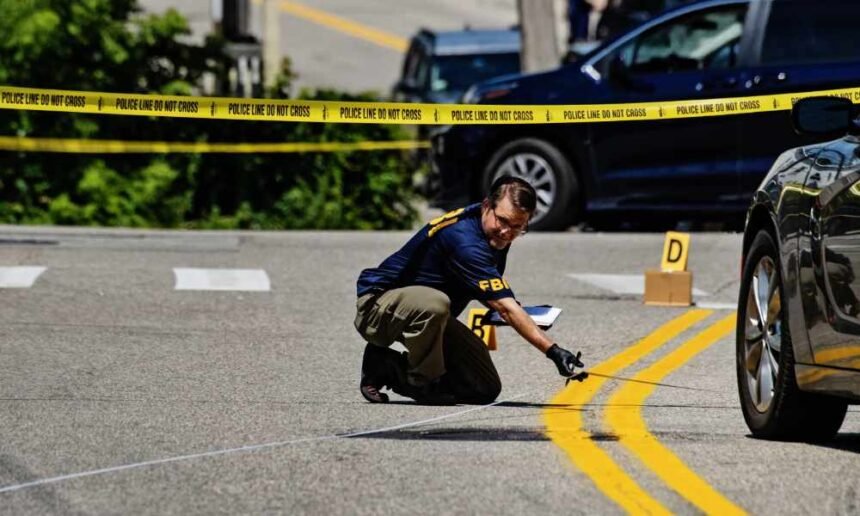
In Maine, agents were reportedly attempting to locate another person when they encountered Guerrero. Witnesses said he was driving when the confrontation unfolded, and images from the scene showed multiple bullet holes in his vehicle’s windshield.
DHS has provided limited details about the shooting, saying only that an officer fired after “fearing for public safety.”
The incidents have revived scrutiny over previous deadly encounters involving federal immigration agents.
Earlier this year, ICE agents killed two Minnesota residents: Renee Good, a 37-year-old mother of three, and Alex Pretti, a 37-year-old intensive care nurse. In both cases, the administration’s initial descriptions of the shootings faced criticism from witnesses and officials who questioned the government’s version of events.
The controversy has intensified calls for greater transparency and accountability as ICE continues carrying out the administration’s sweeping immigration agenda.
For some senior officials inside the agency, the message is becoming increasingly clear: the pressure to hit Trump’s arrest targets is creating a dangerous situation that could lead to more deadly encounters.