









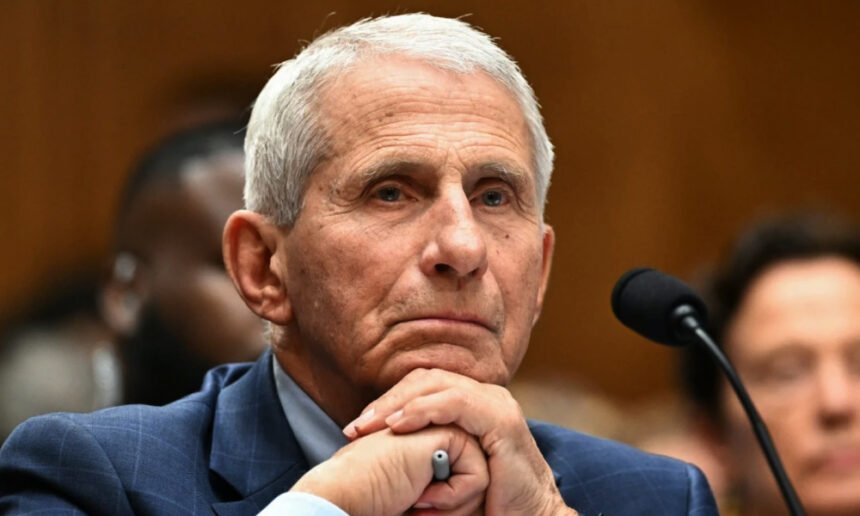
Republicans are once again trying to turn Dr. Anthony Fauci into public enemy No. 1. This time, they’re threatening to hold the longtime infectious disease expert in contempt of Congress, not because he skipped a hearing, but because he invoked his Fifth Amendment right against self-incrimination.
The big question is whether they can actually make that stick.
Sen. Rand Paul, who has spent years trying to pin responsibility for the COVID-19 pandemic on Fauci, announced that the Senate Homeland Security Committee will vote next week on a resolution to hold the former public health official in contempt.
“It’s against the law to obstruct an investigation of Congress,” Paul told Fauci during Wednesday’s hearing. “There will be repercussions for your refusal to testify.”
The problem? Even Paul admits the law isn’t on his side.
Before leaving office, former President Joe Biden issued Fauci a broad preemptive pardon covering his official conduct from 2014 through 2025. Republicans argue that because Fauci has already been pardoned, he no longer has a valid Fifth Amendment privilege against self-incrimination and should have answered every question.
Fauci’s attorneys disagree.
They argue that invoking the Fifth was still appropriate because answering questions under oath could expose Fauci to other legal risks, including allegations of perjury if prosecutors later claimed any answer was false. Democratic senators accused Republicans of trying to lure Fauci into exactly that trap.
Paul himself acknowledged the issue will likely have to be settled by the courts.
“The courts will have to figure out whether you have a complete pardon, whether you have liability against incrimination,” he told reporters after the hearing.
He later admitted he isn’t even sure Fauci can legally be held in contempt.
“I’m not the final word on that,” Paul said. “That’s for a court to decide.”
Even if Republicans succeed in passing a contempt resolution through the Homeland Security Committee, they’re still a long way from securing a conviction.
The measure would need 60 votes in the Senate, meaning Republicans would almost certainly need Democratic support, a highly unlikely scenario.
Even then, the referral would go to the Justice Department, which would decide whether criminal charges are appropriate.
Republicans are also trying to undermine Biden’s pardon itself.
Rep. James Comer and other Trump allies claim the pardon is invalid because it was signed using an autopen—a mechanical signature device that has been used by presidents of both parties for decades.
Comer argued Fauci invoked the Fifth because he knows the pardon may not survive legal scrutiny.
Fauci’s attorney, David Schertler, dismissed the hearing as a political spectacle after Sen. Paul ordered him removed from the room while he attempted to defend his client.
“It proves the baseless and vindictive nature of this proceeding and Rand Paul’s personal vendetta against Dr. Fauci,” Schertler said afterward.
Before refusing to answer questions, Fauci delivered an unusually blunt opening statement accusing Paul of having an “obvious obsession” with prosecuting him and using congressional hearings to intimidate and smear him.
“Although it pains me to say so… under the advice of my attorneys, I will invoke my right to the Fifth Amendment,” Fauci said.
Republicans responded by ridiculing him.
Sen. Josh Hawley peppered Fauci with sarcastic questions before calling him “a narcissist and a megalomaniac and a liar.”
Still, history suggests Republicans face an uphill battle.
In 2013, former IRS official Lois Lerner also invoked the Fifth Amendment after giving an opening statement before Congress. House Republicans voted to hold her in contempt, arguing she had waived her constitutional protection.
The Justice Department ultimately refused to prosecute, concluding that Lerner had not waived her Fifth Amendment rights simply by making a general statement before declining to answer questions.
That precedent doesn’t automatically decide Fauci’s case, but it highlights the biggest problem with Republicans’ latest effort: threatening someone with contempt is one thing. Convincing the courts that invoking the Fifth was actually a crime is something else entirely.