








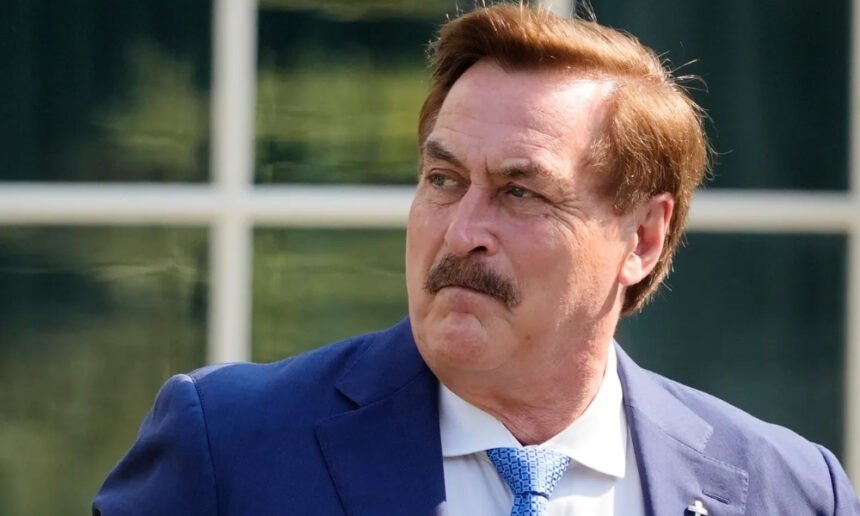
Mike Lindell isn’t getting another shot at reopening his defamation case against Smartmatic.
A federal judge in Minnesota has rejected Lindell’s attempt to reconsider and relitigate the extent of his liability for spreading claims that Smartmatic’s voting technology manipulated the 2020 presidential election.
Lindell tried to revive the case by pointing to a newly declassified intelligence report that he argued constituted new evidence supporting his claims about election technology and alleged manipulation.
The judge wasn’t buying it.
U.S. District Judge Jeffrey M. Bryan rejected Lindell’s request Thursday, saying he had “not offered new evidence” that would change the court’s previous analysis.
The ruling is the latest setback for the MyPillow CEO, who has spent years promoting false claims that the 2020 election was stolen.
The case had already gone badly for Lindell
In September 2025, Bryan ruled that Lindell had made multiple defamatory statements about Smartmatic and its voting machines in 2020 and 2021.
In a 63-page summary judgment ruling, the judge concluded that “no reasonable juror could conclude” that any of the 51 statements at issue was true.
That ruling focused specifically on Smartmatic’s technology and its alleged role in changing the outcome of the 2020 election.
Lindell wasn’t willing to leave it there.
According to Law and Crime, He returned to court arguing that a newly declassified CIA report released in July had changed the picture.
Lindell argued that the report showed voting technology could be hacked and was “demonstrably manipulatable.”
He also argued that the report described techniques allegedly developed to conceal election manipulation.
In Lindell’s view, the newly released material created factual disputes that should allow him another opportunity to challenge the court’s previous ruling.
There was just one major problem.
The report Lindell cited concerned allegations and intelligence about election manipulation in Venezuela, while Smartmatic’s machines at issue in this case were used in Los Angeles County during the 2020 U.S. election.
And that’s where the judge’s response becomes particularly important.
Bryan noted that Lindell’s own argument effectively conceded that the intelligence report undermined the idea that Smartmatic or the Venezuelan government could manipulate an election outside Venezuela.
But Lindell argued that the report nevertheless demonstrated that voting technology could be manipulated.
The judge said that still doesn’t address the evidence in the Smartmatic case.
According to Bryan’s previous ruling, the evidence showed that it was mathematically impossible for the Smartmatic machines used in Los Angeles County to have changed the overall result of the 2020 presidential election.
The court also found that the machines used in Los Angeles County were not connected to the internet.
And there was no evidence that Smartmatic designed its machines for the purpose of manipulating election results.
Those findings are central to why Lindell’s new argument failed.
The judge wasn’t deciding whether every piece of intelligence in the declassified report was true or false.
Instead, he was asking a much narrower question:
Does the report provide new evidence that changes the factual conclusions already reached in this case?
His answer was no.
Bryan wrote that Lindell had failed to establish the kind of “compelling circumstances” necessary to reopen the matter.
The judge noted that motions for reconsideration are generally viewed skeptically and are intended for situations involving significant legal or factual errors or genuinely new evidence.
According to Bryan, Lindell’s submission didn’t meet that standard.
The judge specifically rejected the argument that the declassified report created a genuine dispute about whether Smartmatic’s Los Angeles County machines could have changed the election’s outcome.
The report also didn’t undermine the court’s other findings about Smartmatic’s equipment.
In short, Lindell found something new.
But according to the judge, he didn’t find something relevant enough to change the case.
### Lindell’s latest attempt is over—for now
The court denied Lindell’s request for permission to file a motion for reconsideration.
That leaves the previous ruling intact.
And it underscores the central problem Lindell continues to face in the Smartmatic case: Claims about what might theoretically be possible with voting technology are not enough to establish that Smartmatic’s machines actually manipulated the 2020 election.
The judge’s ruling was blunt.
The newly declassified intelligence report, he concluded, “does not create genuine issues of material fact” concerning whether Smartmatic’s Los Angeles County machines could have changed the election outcome.
For Lindell, that means the attempt to use the newly released report to reopen the case has hit another dead end.