









A Nevada man who spent months threatening judges, prosecutors, and public officials with violent death threats has been sentenced to five years in federal prison after trying a remarkable last-minute defense: arguing that the kind of rhetoric he used has become normal in today’s political climate.
He essentially told the court that threatening public officials shouldn’t land him behind bars because powerful political figures like Donald Trump say similar things all the time.
The argument didn’t work.
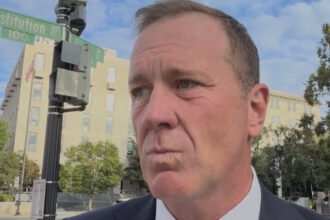
On Monday, U.S. District Judge Jennifer Dorsey sentenced 34-year-old Spencer Gear of Las Vegas to 60 months in prison after a jury convicted him earlier this year of threatening federal officials, judges, and state employees over a seven-month campaign of intimidation.
According to federal prosecutors, Gear repeatedly targeted judges involved in cases connected to Donald Trump and Jan. 6 defendants, leaving profanity-filled voicemails and messages that promised violence against public officials carrying out their duties.
His threats were not vague.
According to Las Vegas Review Journal, Gear told one target, “I’ll spill your blood.” In another message aimed at New York Judge Juan Merchan and Manhattan District Attorney Alvin Bragg following Trump’s criminal conviction, he declared: “The Constitution will reign supreme when we start executing filth like you. You are a dead man.”
Federal authorities said the threats were intended to intimidate officials and retaliate against them for decisions involving Trump and his supporters.
The list of targets included multiple federal judges in Washington, D.C., Judge Lewis Kaplan, who oversaw E. Jean Carroll’s defamation case against Trump, and officials connected to Trump’s New York criminal prosecution.
Prosecutors described Gear as a “far-right extremist” and warned early in the case that he represented a serious danger.
During a previous detention hearing, prosecutors reportedly called him a “ticking time bomb” whose threats went far beyond political venting and entered the territory of targeted intimidation.
Yet when sentencing arrived, Gear struck a dramatically different tone.
“I’m embarrassed that I ever talked to people in such a manner,” he told the court, according to the Las Vegas Review-Journal.
His attorney argued that Gear deserved leniency and pointed to broader political rhetoric as context for his statements. Court filings claimed that public figures and political activists increasingly describe opponents as traitors and invoke death as a punishment for treason.
The implication was difficult to miss: if the president routinely use inflammatory language, why should Gear be treated differently?
The jury had already answered that question.
After a six-day trial, jurors convicted him on multiple counts related to threatening federal officials and transmitting violent threats.
The case highlights a growing problem confronting courts and law enforcement: the normalization of violent political rhetoric and what happens when supporters decide to take that rhetoric literally.
For years, judges, election officials, prosecutors, and public servants involved in politically sensitive cases have faced a surge of threats. Many have reported increased security concerns, harassment campaigns, and death threats tied to high-profile political disputes.
Gear’s defense effectively boiled down to a claim that such language has become part of the political landscape.
The court’s response was equally clear.
Threats are still threats.
And promising to execute judges remains a crime, no matter how common the rhetoric may have become.