









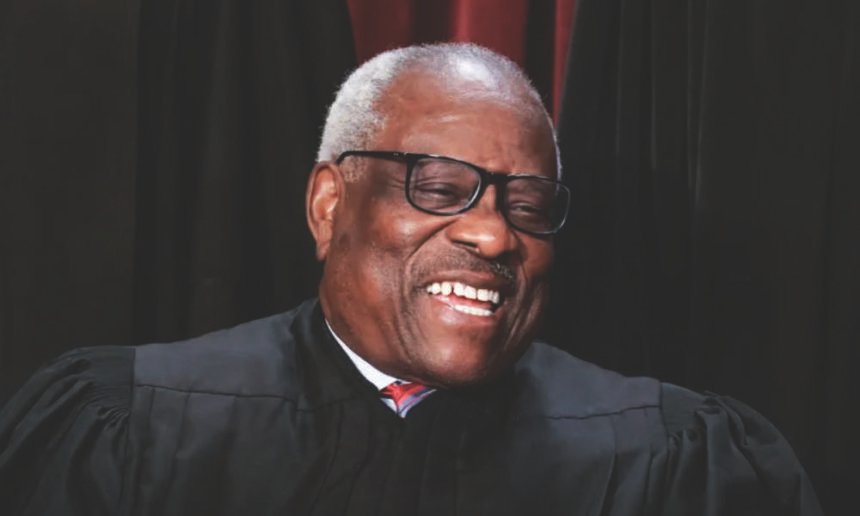
For years, Supreme Court Justice Clarence Thomas has lived a life that would make most billionaires jealous.
Private jet flights. Luxury vacations. Superyacht trips. Exclusive resort stays. Private-school tuition for a child he was raising. A quarter-million-dollar RV reportedly financed by a wealthy friend.
And somehow, according to Thomas, none of it was income. Just gifts. Lots and lots of gifts.
The problem is that at some point, the distinction starts to look less obvious.
When a politically connected billionaire spends decades showering a Supreme Court justice with expensive perks, critics naturally ask a simple question: Are these really gifts, or are they something else?
That’s the question now fueling growing scrutiny of Thomas and his relationship with billionaire Republican megadonor Harlan Crow.
The controversy has already generated ethics complaints, congressional investigations, and a steady stream of damaging headlines. But some legal observers argue the issue could extend far beyond ethics.
They point to a more basic question: Were valuable benefits received by Thomas properly reported for tax purposes?
Under Virginia law, filing a tax return that contains false information with intent to defraud the state can be charged as a felony. Because Thomas lives in Virginia and files Virginia income tax returns, some legal analysts believe the issue deserves closer examination.
The argument centers on whether certain benefits Thomas received over the years would legally qualify as gifts or whether they should have been treated as taxable income.
That’s not just a philosophical debate. It’s a legal one.
Federal tax law generally excludes genuine gifts from taxation. But courts have long held that not every transfer of value automatically qualifies as a gift. The key question often comes down to intent.
Was something given out of pure generosity? Or was it given because the recipient occupied a powerful position?
For Thomas, law experts argue the circumstances raise obvious questions.
Crow’s generosity didn’t begin when Thomas was a struggling law student or a young attorney trying to make ends meet. It began after he became one of the most powerful judges in the country.
According to an investigative report by journalist Christopher Armitage, the benefits continued for years. And many were not publicly disclosed until journalists and congressional investigators uncovered them.
That history has fueled accusations that Thomas treated disclosure requirements as optional until someone else discovered the information first.
Critics point to a pattern: revelations emerge, public scrutiny follows, and only then do corrections appear.
Whether that pattern reflects innocent mistakes or something more serious is ultimately a question investigators would have to answer.
But the broader frustration goes beyond tax law. It touches a deeper concern that has become increasingly common in American politics: the perception that powerful people operate under a different set of rules than everyone else.
If an ordinary taxpayer failed to report years’ worth of valuable benefits, many Americans suspect authorities would not spend years debating whether to look into it.
They’d already be looking.
That’s why the controversy surrounding Thomas continues to resonate.
It’s not simply about one justice.
It’s about whether accountability applies equally to people at the very top of the system.
Because regardless of where someone falls politically, one principle is supposed to be non-negotiable: The law is supposed to apply to everyone.
Including the people who spend their careers interpreting it.