









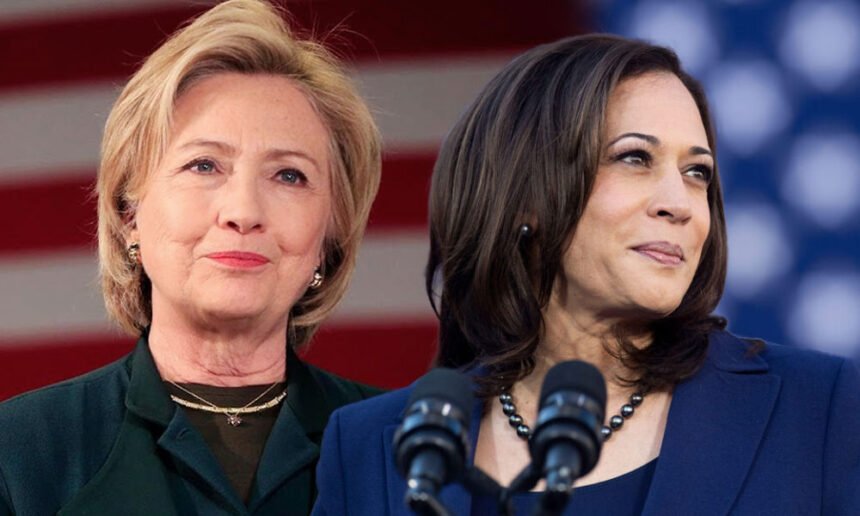
For nearly a decade, questions have lingered around the outcomes of two of the most consequential elections in modern U.S. history: 2016 and 2024. Now, a growing number of analysts say strange statistical patterns, unexplained vote anomalies, and even the appearance of so-called “ghost counties” in reporting feeds deserve serious investigation.
While these claims remain hotly debated, researchers and election analysts argue that several pieces of data simply don’t add up—and they believe the discrepancies warrant deeper scrutiny by lawmakers and election officials.
The 2016 Election: Narrow Margins and Statistical Anomalies
The 2016 presidential election remains one of the closest and most controversial in modern American history. Although Hillary Clinton won the national popular vote by nearly three million ballots, Donald Trump captured the presidency after extremely narrow victories in several swing states.
In Wisconsin, Trump’s margin was about 22,748 votes, while in Michigan the difference was roughly 10,702 votes —razor-thin gaps that ultimately decided the Electoral College outcome.
After the election, a group of computer scientists and election experts began examining the results. Some researchers noted statistical irregularities in counties that used electronic voting machines versus paper ballots. In some cases, Clinton’s vote share was significantly lower in jurisdictions relying solely on electronic tabulation systems.
Other anomalies raised questions as well. Detroit experienced widespread voting machine problems on Election Day, and later recount efforts found that a large share of precincts could not be fully recounted because ballot totals did not match machine reports.
Election-forensics experts say patterns like these can signal the need for deeper analysis. Election forensics is a field that uses statistical tools to identify unusual patterns in voting data that may indicate counting errors, security problems, or even fraud.
The 2024 Election: A “Ghost County” Appears
Questions about the integrity of vote reporting resurfaced again in the 2024 election, particularly in Florida, where analysts say something even stranger appeared in the election-night data feed.
According to independent researchers analyzing election reporting systems, a county labeled “Burke County, Florida” appeared in some reporting streams shortly after polls closed—even though no such county exists in the state.
The mysterious entry reportedly contained millions of votes.
Researchers examining the data claim the numbers associated with the supposed county totaled 6,371,645 votes, which they say matches the combined total of early votes cast by registered Republicans and Democrats in Florida’s presidential race.
Some analysts argue the dataset may have functioned as a kind of “vote bank” used in election-night reporting systems—essentially a temporary data container for aggregated vote totals. Others believe the coincidence raises questions about how vote totals are transmitted and reported through election management systems.
Election-night reporting often involves multiple layers of data handling—from precinct tabulators to central counting systems and finally to media reporting databases. Errors or misconfigured reporting pipelines can sometimes produce confusing or misleading data displays before final results are certified.
Still, critics say the appearance of millions of votes tied to a nonexistent county deserves explanation.
Mathematical Oddities in Florida’s Ballot Measures
Analysts also point to unusual mathematical relationships in Florida’s final vote totals for a 2024 ballot measure on reproductive rights known as Amendment 4.
The measure received 6,070,758 “yes” votes, or 57.2 percent, falling short of the 60 percent threshold required for passage.
But researchers say the number of votes required to reach the 60 percent threshold — 6,371,645 votes — is exactly the same as the combined total of early votes cast by registered Democrats and Republicans in the presidential race.
That numerical overlap has led some analysts to argue that the totals may have been calculated using predetermined figures rather than purely organic vote counts.
Election experts caution that coincidences in large datasets can happen naturally, but they acknowledge that unusual statistical alignments should be examined carefully.
Broader Concerns About Election Infrastructure
Concerns about election security are not new. In 2016, cybersecurity experts warned that many U.S. jurisdictions relied on electronic voting systems that lacked a verifiable paper trail, making independent audits difficult.
These vulnerabilities have led many election security advocates to push for paper ballots, routine audits, and more transparent reporting systems.
Calls for Investigation
The analysts raising these concerns argue that the issue isn’t partisan—it’s about transparency.
They say unusual statistical patterns, unexplained reporting anomalies, and inconsistent vote data should trigger independent investigations to ensure the integrity of the democratic process.
At the same time, many election experts emphasize that extraordinary claims require strong evidence, and that statistical anomalies alone do not prove an election was stolen.
Still, the lingering questions come down to a simple principle: when the numbers don’t seem to make sense, the public deserves clear answers.
More details in the links below:
How Did 6 Million People Vote In Burke County, Florida—When It Doesn’t Exist?
How Epstein and Peter Thiel Colluded With Russia to Rig the 2016 Election