







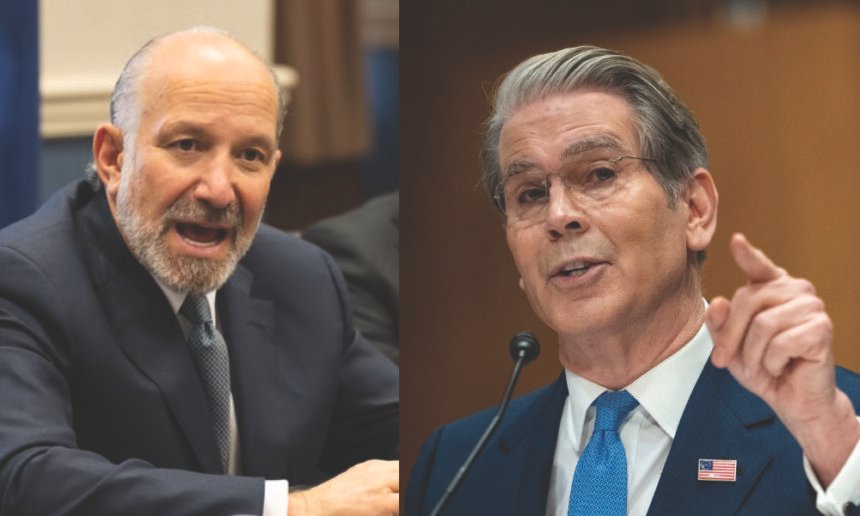
A major confrontation is brewing inside Donald Trump’s administration after Treasury Secretary Scott Bessent publicly threw Commerce Secretary Howard Lutnick under the bus for failing to stop sensitive Nvidia artificial intelligence chips from reaching China — despite repeated national security warnings.
Bessent isn’t just expressing frustration behind closed doors. He’s openly blaming Lutnick, while a reported clash between the two officials has exposed growing divisions inside Trump’s Cabinet.
Bessent made little effort to shield Lutnick when discussing the controversy with CNBC on Friday. Instead, he pointed directly to the Commerce Department as the agency responsible for failing to take action against Singapore-based Nvidia customer Megaspeed, which is suspected of diverting advanced chips to China.
“Treasury, War, USTR, and State — they were in favor of putting Megaspeed on the entity list for months, but Commerce has the pen,” Bessent said.
Translation: Several major federal agencies wanted restrictions imposed, but Lutnick’s department had the authority to make it happen.
And apparently, it didn’t.
Bessent expressed frustration that the administration’s efforts to restrict China’s access to advanced American technology had seemingly fallen short.
“Any leakage is very frustrating because it hurts our great companies,” he said, warning that allowing China to obtain advanced AI chips could give Beijing a significant advantage in the global artificial intelligence race.
But the public finger-pointing was reportedly only part of the story.
According to Axios, tensions boiled over during a White House Situation Room meeting, where Bessent confronted Lutnick and demanded to know why Megaspeed had not been placed on the government’s entity list.
Lutnick reportedly promised to look into the matter. The Commerce Department, however, denied that the confrontation took place.
The reported clash highlights an increasingly strained relationship between the two Cabinet secretaries, whose disagreements over tariffs and economic policy have been building since the early months of Trump’s second administration.
According to Axios, Trump had repeatedly authorized tougher restrictions on advanced chip exports, but Lutnick allegedly delayed implementing them because of concerns that doing so could provoke a trade war with China.
That makes Bessent’s public criticism particularly significant. If multiple agencies supported restrictions and Trump had authorized tougher action, why was the Commerce Department apparently holding things up?
The controversy has also become more complicated following revelations involving Nvidia’s former CEO Jensen Huang and his reported relationship with Alice Huang, a former Megaspeed executive whom U.S. intelligence officials suspect of having connections to Chinese intelligence. Megaspeed has disputed allegations of illegal chip transfers.
Meanwhile, Lutnick is facing additional scrutiny over his family’s business connections, raising fresh questions about potential conflicts of interest and whether his department’s handling of the matter deserves closer examination.
For an administration that has repeatedly portrayed China as America’s greatest technological and national security rival, the allegations are difficult to explain away.
Trump has aggressively pursued trade restrictions against other countries, including Canada, while his administration has warned repeatedly about the dangers of allowing Beijing access to advanced American technology.
Yet now, one of his own top economic officials is publicly suggesting that the agency responsible for enforcing those restrictions failed to act.
And rather than presenting a united front, Trump’s Cabinet appears to be turning on itself.
The question now is whether Trump will demand answers from Lutnick — or whether the administration will once again try to shift the blame when its own policies appear to have fallen apart.