







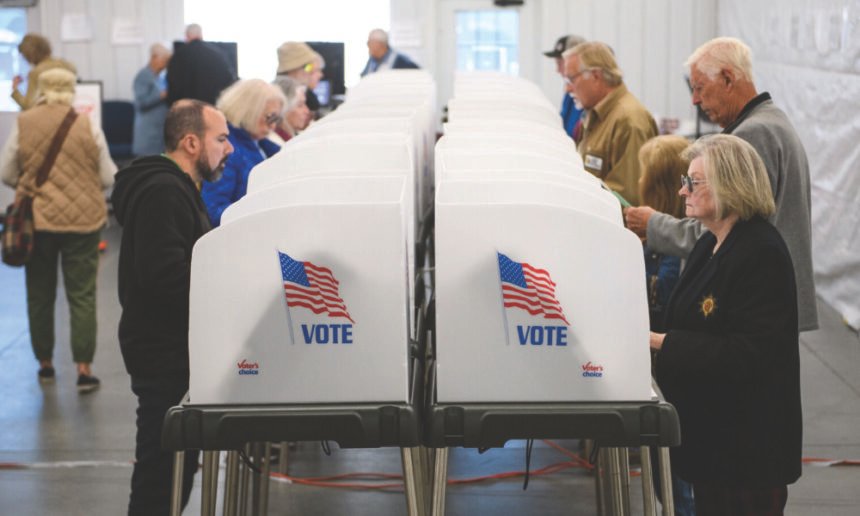
Election Day is here, and Democrats are heading into the final hours with something Republicans would rather not see: a growing possibility of taking control of the U.S. Senate.
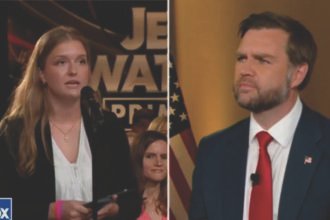
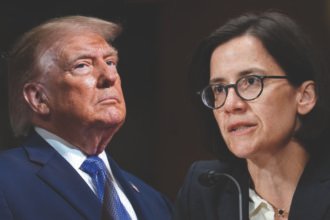
Polls suggest a blue wave could be building, potentially flipping as many as eight Republican-held seats. If those numbers hold, the consequences for the GOP could be enormous — and President Donald Trump’s political standing may be a major reason why.
Trump’s sliding approval ratings, voter frustration over rising prices, the war with Iran and growing concerns about AI-driven data centers have created serious headwinds for Republican candidates. Even in traditionally conservative states, some GOP incumbents and challengers are facing races that looked far less competitive just months ago.
But Democrats shouldn’t start celebrating just yet. Republicans and their allies have dramatically outspent Democrats in several battlegrounds, and many of these states have historically favored the GOP. Democrats also have their own problems, including party divisions in Michigan and a public corruption scandal in Minnesota that could put two Democratic-held seats at risk.
Several races remain close enough that small shifts in turnout could make the difference. Still, the momentum heading into Election Day has Democrats eyeing a potentially historic night.
Here are 10 Senate races that could turn election night upside down.
1. North Carolina: Roy Cooper Gives Democrats Their Best Pickup Opportunity.
Everything appears to be breaking Democrats’ way in North Carolina.
The party landed its top recruit, former Democratic Gov. Roy Cooper, while Republican Sen. Thom Tillis’s retirement opened the door to a competitive race. Tillis announced he would not seek reelection after clashing with Trump over major Medicaid cuts.
Republican nominee Michael Whatley, the former chair of the North Carolina Republican Party, has struggled to match Cooper’s statewide name recognition and popularity.
The warning signs for Republicans became increasingly difficult to ignore over the summer. By September, Senate GOP super PACs had canceled millions of dollars in television advertising reservations, suggesting party strategists were growing less confident about their chances.
Trump carried North Carolina by slightly more than three percentage points in 2024, but the nonpartisan Cook Political Report rates the Senate race as “likely Democratic.”
Cooper is in a strong position to deliver Democrats a major pickup — and potentially provide the first sign of a broader Republican problem on election night.
2. Ohio: Sherrod Brown Is Looking to Make a Comeback.
Ohio has moved toward Republicans in recent elections, but Democrats believe former Sen. Sherrod Brown could pull off a comeback against Republican incumbent Jon Husted.
Senate Democratic Leader Chuck Schumer scored a major recruiting victory by persuading Brown, a three-term senator who narrowly lost reelection in 2024, to enter the race.
Trump carried Ohio by 11.2 percentage points that year, but Brown remains a formidable candidate with an established political base.
One of the central issues has been the rapid expansion of data centers and who should pay the resulting electricity costs.
Brown and Democratic allies have hammered Husted over his previous support for data center development. The attacks helped push Husted to become the lead sponsor of the Ratepayer Protection Act, which would encourage states to adopt protections for taxpayers facing costs associated with data centers.
The issue has given Brown an opening to connect a complicated technology debate to something voters understand immediately: their electricity bills.
According to a compilation of recent polls by Decision Desk HQ, Brown holds an average lead of two percentage points.
That’s hardly a comfortable margin, but it puts Ohio firmly in play.
3. Alaska: Mary Peltola Could Knock Off a Republican Incumbent.
Alaska isn’t exactly the first state Democrats usually put on their Senate pickup wish list. But former Democratic Rep. Mary Peltola has made this race far more competitive than Republicans would like.
Peltola has already demonstrated that she can win statewide. After longtime Republican Rep. Don Young died in 2022, she won the special election to replace him, defeating former Alaska Gov. Sarah Palin before securing a full term later that year.
Now she’s challenging Republican Sen. Dan Sullivan.
Rising gas and diesel prices have become a major vulnerability for Sullivan. Alaskans face particularly high costs for diesel and home heating oil, while Democrats have also attacked Republicans over rising health insurance costs and Medicaid changes.
Peltola leads Sullivan by roughly 1.5 percentage points in the recent polling average compiled by Decision Desk HQ.
But the race has also been shaken by a controversy. The New York Times published an investigative report alleging that Peltola’s campaign knew about a Democratic operative’s efforts to recruit a little-known candidate named Daniel J. Sullivan — sharing the Republican incumbent’s name — in an apparent attempt to siphon away votes.
Peltola has denied involvement in the alleged scheme.
The controversy could complicate an already tight race, but Democrats still see Alaska as a genuine pickup opportunity.
4. Maine: Susan Collins Is Fighting for Political Survival.
Maine has repeatedly voted Democratic in presidential elections, but Republican Sen. Susan Collins has managed to survive one difficult reelection campaign after another.
That makes this race particularly frustrating for Democrats, who have spent years trying to unseat her.
Collins has a reputation for outperforming polls. In 2020, surveys showed Democrat Sara Gideon comfortably ahead in the final weeks, only for Collins to win by nearly 10 percentage points.
This time, Collins is facing Democrat Troy Jackson, a former president of the Maine state Senate.
Democrats had to regroup after progressive candidate Graham Platner dropped out in July following sexual assault allegations. Platner denied the allegations, and the party ultimately rallied behind Jackson.
Collins has worked to distinguish herself from Trump, voting against his One Big Beautiful Bill Act and some of his most controversial Cabinet nominees. She has also highlighted her work as chair of the powerful Senate Appropriations Committee, including efforts to secure exemptions for Maine businesses from Trump’s tariff policies.
But Jackson has built a substantial polling advantage. The latest average compiled by Decision Desk HQ puts him nearly six points ahead.
Still, Collins is widely viewed as one of the strongest Republican candidates in this year’s battleground races. Democrats may have the momentum, but counting her out would be a mistake.
5. Texas: James Talarico Has Republicans Nervous.
Texas is perhaps the most intriguing Senate race on the map.
Democrat James Talarico is attempting something his party hasn’t accomplished since 1988: winning a U.S. Senate seat in Texas.
His campaign has benefited from Republican infighting, enthusiasm among Democratic voters and signs of shifting support among Hispanic voters. Those trends have put Republican Attorney General Ken Paxton in a surprisingly vulnerable position.
Talarico leads Paxton by an average of 3.5 percentage points in recent polls compiled by Decision Desk HQ.
Republican leaders had warned for months that Paxton could struggle in a general election because of the baggage surrounding his candidacy. Now, with the race tightening, wealthy GOP donors have poured enormous sums into trying to keep Texas red.
An estimated $300 million has been spent to support Paxton, including nearly $170 million from billionaire Elon Musk alone, according to The Dallas Morning News.
Yet the money hasn’t eliminated Republican concerns.
Trump carried Texas by nearly 14 percentage points in 2024, making the current polling especially alarming for the GOP. Republican Sen. Ted Cruz has even warned that Democrats could win every statewide race in Texas.
“Texas is excruciatingly close. Understand we could lose Texas,” Cruz said on his podcast.
If Talarico pulls off the upset, it would be one of the biggest political shocks of the night — and a devastating blow to Republicans’ hopes of holding the Senate.
6. Michigan: Party Divisions Could Decide the Race.
Michigan should be fertile ground for Democrats, but the party has spent much of the campaign dealing with internal divisions.
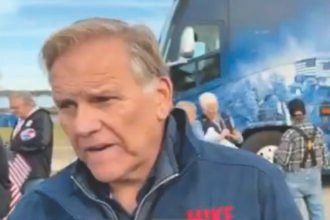
Democratic nominee Abdul El-Sayed is facing Republican Mike Rogers in a race that has attracted intense national attention.
Republicans have tried to make El-Sayed’s religion and alleged links to the Muslim Brotherhood a central issue. His criticism of Israel and support from pro-Palestinian figures have also made him a divisive candidate among some centrist Jewish Democrats.
Then came an unexpected development: Rep. Haley Stevens, who lost the Democratic primary to El-Sayed, endorsed Rogers on Sunday.
The move triggered an angry response from Democratic leadership. Schumer called the endorsement a “despicable betrayal.”
But it remains unclear how much impact Stevens’s decision will have so close to Election Day. Most Democrats have rallied behind El-Sayed, who leads Rogers by an average of 3.5 percentage points, according to Decision Desk HQ.
Republicans see an opening, but El-Sayed enters election night as the favorite.
7. Iowa: Trump’s Trade Policies Could Cost Republicans a Senate Seat.
Iowa has become another unexpected battleground for Democrats, largely because of economic pressure on the state’s agricultural communities.
Farmers have been hit by Trump’s trade policies, which have squeezed export markets for major crops such as corn and soybeans. High diesel and fertilizer prices have added to the frustration.
That economic pressure could create an opening for Democrat Josh Turek, a two-time Paralympic gold medalist and state legislator, who is challenging Republican Rep. Ashley Hinson.
Hinson is well regarded by Republican strategists, but she has also been trying to distance herself from Trump as voters express frustration over fuel and food prices.
Democrats were encouraged when Turek defeated more progressive candidate Zach Wahls in the primary. His candidacy gives the party an opportunity to compete in a state Trump carried by 13.2 percentage points in 2024.
Iowa was a swing state not long ago. Barack Obama carried it in both 2008 and 2012, and Democrat Tom Harkin represented the state in the Senate for three decades.
The state has since moved toward Republicans, but the economic pressures facing farmers could make this race much more competitive than expected.
8. Kansas: A Traditionally Red State Is Suddenly in Play.
Kansas is another state Republicans would normally expect to win without much trouble. Democrats haven’t elected a U.S. senator there since 1932, and Trump carried the state by 16 percentage points in 2024.
But Republican Sen. Roger Marshall is facing a surprisingly competitive challenge from Democrat Adam Hamilton, a megachurch pastor who has built a campaign around working with centrists and delivering results.
Marshall has struggled with his standing among independent and Democratic voters, and even some Republicans have expressed reservations about his reelection prospects.
He has also faced negative publicity following a New York Times report that his medical practice sued approximately 700 patients over medical debts.
Meanwhile, Kansas’s agriculture-dependent economy has been squeezed by Trump’s trade policies and rising fertilizer and diesel costs.
Hamilton has attempted to present himself as a practical alternative, even pledging not to support Schumer for Democratic leader.
The Cook Political Report rates the race a “toss-up,” while Hamilton holds an average lead of about two percentage points in recent polling compiled by Decision Desk HQ.
For Democrats, simply making Kansas competitive is an achievement. Actually winning it would be a major upset.
9. South Carolina: A Republican Stronghold Faces an Unexpected Test.
South Carolina was expected to be a safe Republican hold. Then the sudden death of longtime Sen. Lindsey Graham changed the political landscape.
The resulting Republican primary became a contentious fight between Graham’s sister, Darline Graham, who had Trump’s backing, and conservative Rep. Ralph Norman.
The battle left bruised feelings within the party. Norman criticized Graham, telling CNN she had been “propped up by special interest groups.”
Graham also struggled to convince voters that she was prepared for the job. At an August debate, she acknowledged, “I’m not that informed on national security” — an especially damaging admission given her late brother’s prominence on defense issues.
Democratic nominee Annie Andrews, a pediatrician, is hoping to capitalize on those concerns by focusing on healthcare costs, the expiration of expanded Affordable Care Act subsidies and cuts to Medicaid.
A recent New York Times/Siena poll of 707 South Carolina voters showed the race tied, with Graham and Andrews each receiving 48 percent support.
The Cook Political Report still rates the race “lean Republican,” but a contest that once looked like an easy GOP win has suddenly become one to watch.
10. Minnesota: A Democratic Stronghold Could Become a Republican Surprise.
Minnesota is perhaps the biggest long shot on this list for Republicans, but the party believes it has an opening.
The state has reliably elected Democrats to the Senate for years. The last Republican to win a Minnesota Senate election was Norm Coleman in 2002.
Republicans are backing former journalist and sportscaster Michele Tafoya, who is challenging Democratic Lt. Gov. Peggy Flanagan for the seat being vacated by retiring Sen. Tina Smith.
Democrats had to regroup after a competitive primary between Flanagan and Rep. Angie Craig. Some Democratic sources said party officials initially considered Craig the stronger general-election candidate.
Republicans, meanwhile, are hoping to capitalize on the fallout from a public benefits fraud scandal estimated to involve between $250 million and $350 million during Democratic Gov. Tim Walz’s administration.
The scandal could give Tafoya an opening, but Minnesota remains a difficult state for Republicans.
A recent KSTP/Survey USA poll put Trump’s job approval at just 37 percent, with 62 percent disapproving. The Cook Political Report continues to rate the Senate race “lean Democrat.”
A Republican victory here would be a major upset. But with control of the Senate potentially on the line, even a long-shot race deserves attention.