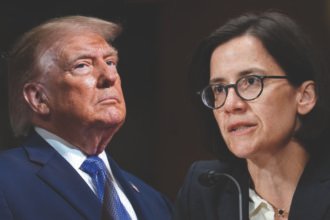









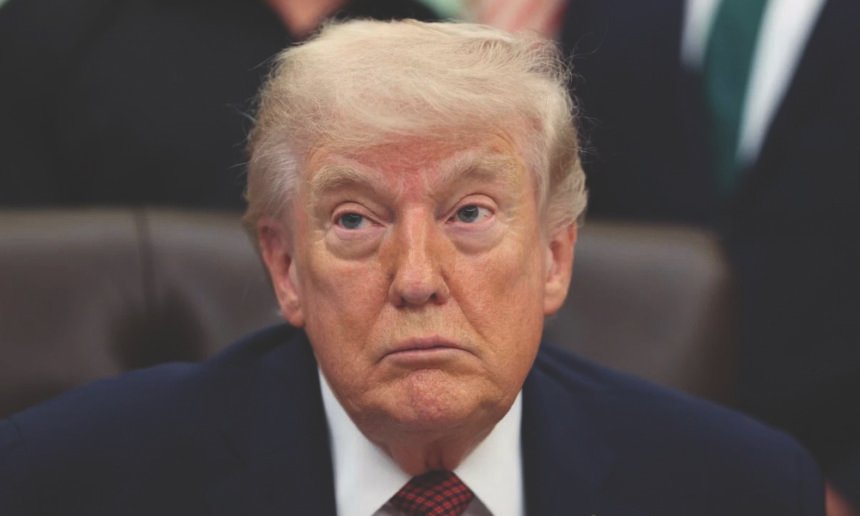
The Trump administration has spent months defending its plan to shut down the Kennedy Center for two years, claiming the historic venue is dangerously deteriorated and needs a massive renovation. But newly filed court documents paint a troubling picture of an institution struggling financially, questionable renovation estimates, and a push to shut down the historic venue that may not have been as necessary as the administration claimed.
One of the most striking revelations comes from text messages describing a September conversation between Kennedy Center Vice Chair Jennifer Fischer and Commerce Secretary Howard Lutnick, a key figure in Trump’s efforts to reshape the institution.
According to the messages, Fischer said the center was so financially strapped that it had borrowed money just to cover its bills.
“She told him we need to get shut and need a unanimous vote,” one message describing their conversation reads. “She said we are broke and borrowed money to pay the bills.”
That admission is particularly significant given the financial challenges that have emerged since Trump took control of the Kennedy Center’s board about 18 months ago. His takeover brought sweeping changes, including the controversial decision to add his name to the building.
According to CNN, the new documents were filed Friday by attorneys for Democratic Rep. Joyce Beatty of Ohio, an ex-officio member of the center’s board of trustees. Beatty is challenging the administration’s plan to close the Kennedy Center for two years, arguing that trustees were kept in the dark about important information before approving the shutdown.
And the filing directly challenges the administration’s explanation for why the closure is necessary.
Trump and his allies have portrayed the Kennedy Center as dangerously dilapidated, arguing that a $200 million renovation is necessary. But Beatty’s attorneys say the board was never shown a revised contractor estimate that undermined one of the administration’s central arguments for shutting the entire facility rather than completing the work in phases.
Kennedy Center Director Matt Floca reportedly told trustees that renovating the venue in phases would double construction costs. That claim was based on a contractor’s preliminary estimate.
But a revised estimate put the additional cost of a phased approach at roughly $41 million, according to the court filing.
That’s a significant difference from the financial picture presented to trustees.
Beatty’s attorneys argue that Kennedy Center officials knew the earlier estimate was wrong but failed to provide the updated figures before the board voted to approve the closure.
“The record now confirms that they knew that estimate was wrong,” the attorneys wrote.
The filing also challenges another justification presented to the board. Kennedy Center officials reportedly claimed that the $257 million Congress appropriated for renovations had to be spent by the end of fiscal year 2029.
Beatty’s attorneys say that’s incorrect. The money can actually be spent through fiscal year 2034, giving the institution five additional years.
Taken together, the revelations raise questions about whether trustees were given an accurate account of the renovation costs and funding deadlines before approving a two-year shutdown.
Beatty accused Trump and his handpicked management team of withholding information and failing to follow the law.
“The court told this Board to do its job. As a trustee, I have a duty to be accountable,” she said in a statement accompanying the filing. She added that she would continue fighting to protect the Kennedy Center as a living memorial to President John F. Kennedy.
The legal battle has already forced the administration to keep the institution operating, at least in part. A judge issued a temporary restraining order requiring the Kennedy Center to remain open while the lawsuit proceeds. Officials have continued programming in a section of the campus known as the REACH, while the Trump administration is asking the court to lift the order.
The center’s financial difficulties are also unfolding against a backdrop of cancellations and uncertainty. CNN previously reported that a wave of performers canceled appearances following Trump’s takeover, adding to the institution’s financial challenges. The annual Kennedy Center Honors was even moved to Capital One Arena in downtown Washington.