


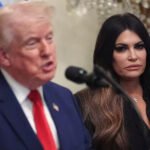

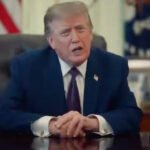


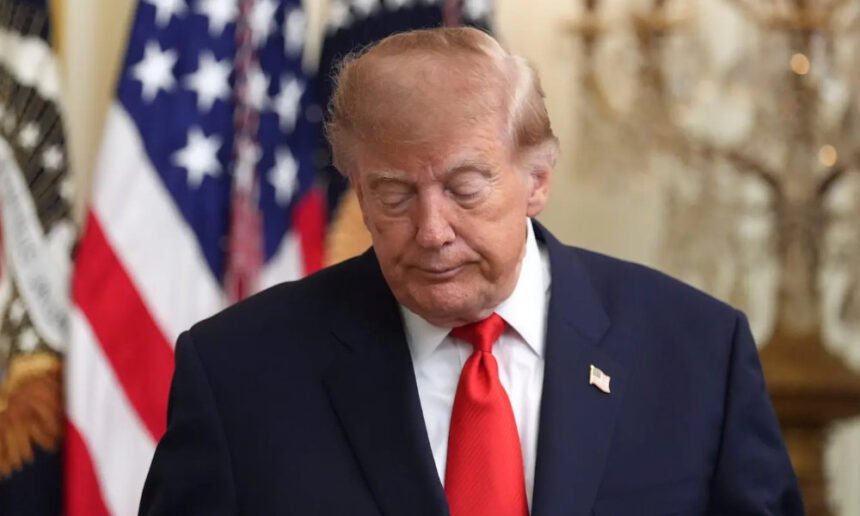
A federal judge has pulled the plug on Donald Trump’s taxpayer-funded TV ad campaign, ruling that the government cannot use public money to bankroll what watchdog groups describe as political propaganda.
U.S. District Judge Jennifer L. Rochon issued a restraining order Sunday night, directing the administration to cancel any remaining commercials, including ads scheduled to air that evening.
The ruling came in a lawsuit brought by a coalition that includes Common Cause, a nonpartisan government watchdog group, challenging the administration’s use of public funds for the campaign.
Rochon’s order prohibits the government from entering into, renewing or expanding any agreement to produce, distribute or air the challenged advertisements during the two-week period covered by the order.
The Justice Department had argued just a day earlier that a court order wasn’t necessary because the campaign was supposedly ending on its own.
That argument apparently wasn’t enough to persuade the judge.
The Department of Homeland Security set aside $20 million in taxpayer money for the ads, which began airing in late September.
The administration has defended the spending as a public service campaign, comparing it to advertisements used by previous administrations to promote government policies. But critics argue these commercials are different: rather than helping people access government services, they heavily feature Trump and echo his political talking points ahead of the midterm elections.
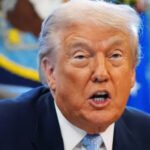
The ads include Trump discussing the supposed threat of communism, footage recycled from his previous presidential campaign, and a more recent commercial highlighting the administration’s reported capture of Venezuelan leader Nicolás Maduro.
Legal experts have questioned whether the spending violates a federal law prohibiting the use of congressionally appropriated funds for “publicity or propaganda,” along with other potential legal restrictions.
In a court filing, senior DHS official Holly Mehringer defended the funding, saying the congressional appropriations could be used for purposes including commemorating efforts and events related to border security.
But the fact that money was allocated for border security does not, by itself, settle whether using it for these particular ads was lawful.
The controversy intensified after Trump faced criticism over the taxpayer-funded campaign.
In an Oct. 5 social media post, he described the ads as “rather standard” while saying he would cover their cost through political fundraising.
There’s one problem: the administration has no immediate plans to reimburse taxpayers for the money already spent. A White House official confirmed that point, leaving the public on the hook for the expenditures already made.
The lawsuit’s plaintiffs welcomed the judge’s intervention.
“We are pleased the court acted swiftly to prevent more taxpayer dollars from being used for such blatantly unlawful political propaganda,” Democracy Forward, the nonprofit legal organization representing the plaintiffs, said in a statement.
The group argued that the president cannot use government resources and money appropriated by Congress to advance his own political agenda or influence electoral outcomes.
Even Republicans have raised concerns. Senate Majority Leader John Thune (R-S.D.) told reporters the commercials shouldn’t be paid for with taxpayer dollars.
The Democratic National Committee has also filed a separate lawsuit challenging the administration’s spending on the ads.
For now, the judge’s order blocks the administration from continuing the challenged advertising arrangements during the two-week period. The broader legal fight over whether the campaign unlawfully used public money is still to come.
Trump may have promised to pay for the ads himself, but that promise has not yet translated into a plan to repay the taxpayers whose money funded them in the first place.