










Russian bot traffic has reportedly collapsed after a series of Ukrainian drone strikes knocked major data centers operated by Yandex, Russia’s answer to Google, offline. The attacks have disrupted the country’s digital infrastructure, and may have dealt a major blow to the networks used to spread Russian disinformation online.
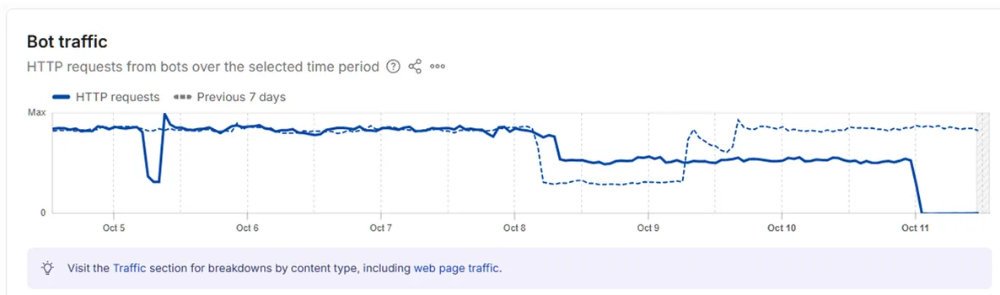
According to the report, Cloudflare data show that bot traffic from the Yandex network plunged to just 0.4% of the peak number of HTTP requests recorded over the preceding two weeks. The decline followed a series of attacks on the company’s facilities, including a third reported strike on Sunday.
The dramatic drop is a striking development in a war increasingly fought through technology, with Ukraine targeting infrastructure far beyond the front lines.
There is an important caveat, however: the cited traffic measurements track activity from Yandex’s network. They do not independently establish what proportion of that activity was dedicated to disinformation. Still, the reported collapse raises questions about how much automated activity has been disrupted.
The attacks began on October 8, when Ukrainian drones struck a Yandex data center in Sasovo, in Russia’s Ryazan region, roughly 195 miles southeast of Moscow. The facility reportedly houses two of the company’s three supercomputers, which are used for artificial intelligence development.
Following the strike, bot traffic from the Yandex network fell to around 57% of its previous peak, according to the figures reported online.
The damage didn’t stop there.
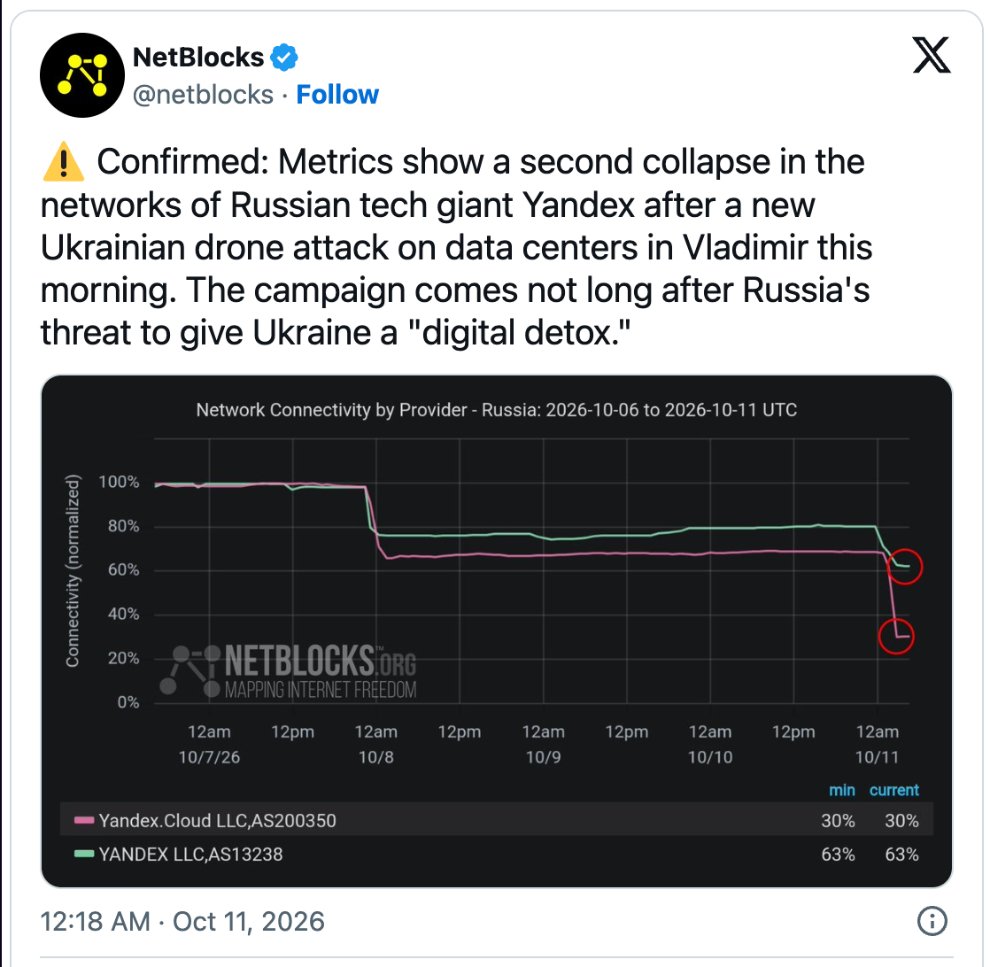
A second major Yandex facility in the Kaluga region was hit on October 9, disrupting additional infrastructure. On October 11, Yandex confirmed that another data center, this time in the Vladimir region, had been shut down following a drone attack. Reuters reported that the latest incident marked the third major disruption to Yandex facilities in just a few days.
The successive attacks appear to have compounded the disruption. Yandex Cloud’s service-status page reportedly listed at least 84 services as offline, while internet monitoring organization NetBlocks reported substantial declines in traffic associated with Yandex Cloud and Yandex LLC.
The consequences extend beyond bots. Yandex provides a wide range of services used by Russian businesses and consumers, and outages can affect websites, applications, cloud computing and other online services.
For ordinary Russians, the result may be slower connections, unavailable services and interruptions to businesses that rely on Yandex’s infrastructure.
The strikes appear to be part of an escalating exchange over technology infrastructure between Russia and Ukraine.
Since late September, Russian attacks have damaged or destroyed data centers belonging to multiple Ukrainian companies. Some of those disruptions reportedly took popular websites offline, including torrent trackers 1337x and NordicQuality.
Russia has defended its attacks by claiming that Ukrainian military and intelligence organizations use civilian digital infrastructure. Moscow’s Defense Ministry has even described its campaign as a “forced digital detox.”
Ukraine has responded in kind, targeting Yandex facilities that support some of Russia’s most important internet and AI services.
Yandex is one of Russia’s most important technology companies, operating the country’s leading search engine alongside cloud computing and other online services.
Its facilities also support advanced AI development. The Sasovo site reportedly housed two of the company’s three supercomputers, making the strike potentially significant for Russia’s already constrained AI industry.
The damage could have consequences beyond individual outages. Modern cloud systems distribute data and computing workloads across multiple facilities, but redundancy cannot guarantee uninterrupted service when several important sites are hit in quick succession.
Russia also has limited alternatives for high-speed satellite internet. Starlink does not operate as a service for ordinary users inside Russia, while the country’s competing Rassvet satellite project has faced setbacks, including reports of satellites falling back to Earth after launch.
The full impact on disinformation remains unclear. But the reported numbers show just how quickly a series of physical strikes can disrupt the digital systems on which modern information operations depend.