








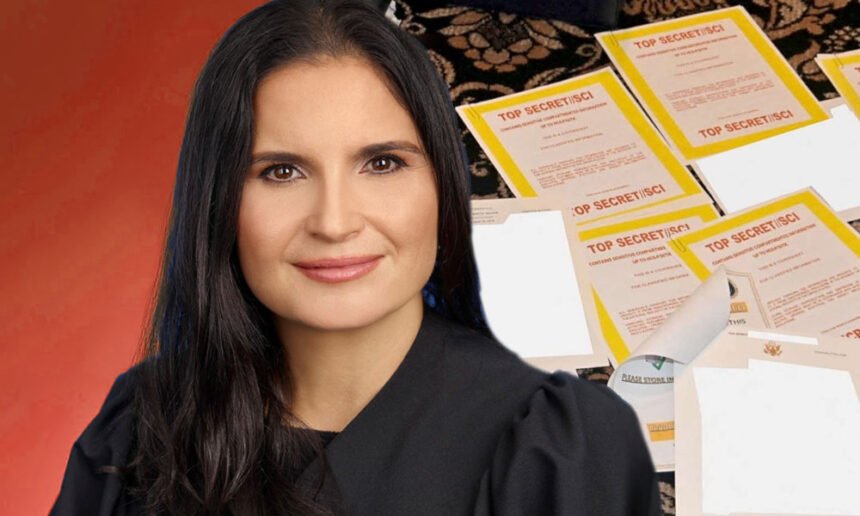
Aileen Cannon’s decision to bury the evidence from Donald Trump’s classified documents case is creating a legal headache for the FBI agents who investigated it — and now they’re asking the Trump-appointed judge to clean up the confusion her own orders have created.
A group of current and former FBI agents who specialize in handling classified information have returned to Cannon with a request for what they call “necessary” clarification. They want to know exactly what they can say about the investigation without risking punishment for violating her court orders.
The agents aren’t asking for a free pass. They want clear answers about whether they can testify before a grand jury about nonpublic information covered by Cannon’s orders, participate in voluntary Justice Department interviews with their lawyers present, speak publicly about those discussions, and consult their attorneys about Volume II of former special counsel Jack Smith’s report on the Mar-a-Lago investigation.
Their lawyers argue that the Justice Department’s assurances are not enough. Even if prosecutors grant the agents immunity, that would not shield them from sanctions imposed by Cannon herself — including the possibility of being held in contempt of court.
“A grant of immunity does nothing to resolve this dilemma,” the filing states, according to Law and Crime.
In other words, the agents are caught between a Justice Department investigation that may need their testimony and a judge whose sweeping restrictions leave them uncertain about what they’re legally allowed to disclose.
And the problem traces directly back to Cannon’s handling of the case.
The Trump-appointed judge dismissed the classified documents prosecution after ruling that Smith had been unlawfully appointed as special counsel. She subsequently blocked the release of Volume II of his report, which details the investigation into Trump’s alleged mishandling and retention of classified documents at his Mar-a-Lago estate.
Cannon also prohibited disclosures of information covered by her orders and sharply criticized Smith’s preparation of the report, describing it as a “brazen” violation of at least the spirit of her restrictions.
Now, those restrictions are complicating efforts by federal investigators to gather testimony for a Justice Department probe described in the filing as a “grand conspiracy” investigation.
The agents say the Trump DOJ has offered conflicting explanations about what its own officials are permitted to discuss. They also complain that prosecutors have refused to provide them with a copy of an opinion explaining the department’s interpretation of Cannon’s orders before the agents testify.
The filing points to Smith’s own testimony as another reason for concern. Because of Cannon’s order, Smith couldn’t discuss Volume II during his appearances before Congress, leaving the agents without a clear precedent for what they can safely say.
The agents’ attorneys argue that they cannot simply take the Justice Department’s word for it.
“DOJ, as a party subject to the Order, cannot unilaterally amend or supersede the terms of that Order,” the filing states.
That is the heart of their dilemma: even if federal prosecutors believe the agents can speak, Cannon’s restrictions remain in place unless the court clarifies or changes them. The DOJ cannot simply declare those restrictions irrelevant.
The stakes are personal for some of the agents, too. The filing says many were “abruptly and unlawfully fired” by FBI Director Kash Patel after he returned from the Olympic Games. Their request for clarification comes as they seek assurances that cooperating with investigators will not expose them to further legal or professional consequences.
There may be a way out. The 11th U.S. Circuit Court of Appeals could consider an appeal challenging Cannon’s injunction as soon as November, potentially opening the door to a reversal. But that outcome is not guaranteed, and the timing remains uncertain.
Until then, the agents say they need Cannon to spell out what her orders actually allow.
The irony is difficult to miss. Cannon’s restrictions were imposed in the aftermath of her decision to dismiss the prosecution and prevent the public release of Smith’s report. Now, the same restrictions are leaving the investigators who built the case uncertain about whether they can discuss what they uncovered with federal prosecutors.
For agents who handled some of the most sensitive evidence in the investigation, the question is no longer simply what they know. It is whether they can reveal what they know without risking punishment from the judge whose orders created the problem in the first place.