


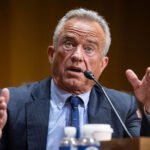

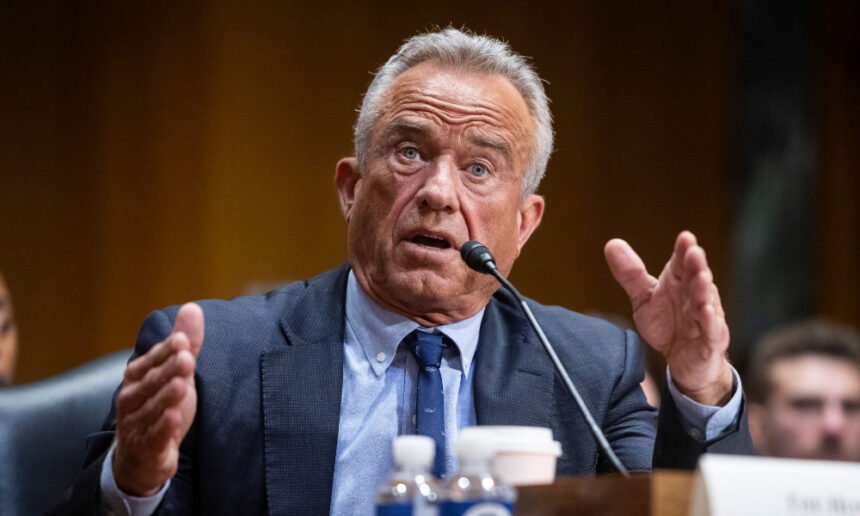
Newly released documents are contradicting Robert F. Kennedy Jr.’s testimony before the Senate, raising serious questions about whether the health secretary misled lawmakers during his confirmation hearings.
Kennedy repeatedly told senators that his controversial 2019 trip to Samoa had “nothing to do with vaccines.”
But a letter Kennedy sent to Samoa’s prime minister before the trip tells a very different story.
In the letter, first reported by The Guardian, Kennedy explicitly said he wanted to study the country’s MMR vaccination program—and mentioned vaccines or vaccination eight times.
That creates a striking contradiction between what Kennedy said before the trip and what he later told the senators whose votes he needed to become the nation’s top health official.
And the deeper the documents are examined, the harder it becomes to reconcile Kennedy’s Senate testimony with his own words from 2019.
The newly obtained letter, dated Jan. 20, 2019, was sent by Kennedy to then-Samoan Prime Minister Tuilaepa Sailele Malielegaoi.
According to The Guardian, Kennedy wrote the letter on the letterhead of Children’s Health Defense, the anti-vaccine organization he chaired and served as chief legal counsel for at the time.
He told the prime minister that he wanted to investigate what had happened with Samoa’s MMR vaccines after two infants died following improperly prepared vaccinations in 2018.
Kennedy even speculated that the deaths could have been related to problems involving different vaccine lots.
He proposed that his team conduct a “detailed health informatics assessment” of Samoa’s MMR vaccination program.
Kennedy also wrote about the difficulty of investigating adverse health events associated with vaccines and said health information systems were rarely designed to quickly examine possible connections between diagnoses and specific vaccination events.
In other words, Kennedy’s own letter describes a planned trip involving an examination of vaccines.
That’s a pretty big problem for someone who later told senators the trip had “nothing to do with vaccines.”
And Samoa’s prime minister apparently understood Kennedy’s proposal exactly the same way.
In his response, the prime minister welcomed Kennedy’s proposed independent assessment of Samoa’s MMR vaccines.
Then Kennedy told the Senate something very different
During his 2025 confirmation hearings, Kennedy was questioned repeatedly about the Samoa trip.
Democratic Sen. Ron Wyden of Oregon asked him directly about the purpose of the visit.
Kennedy replied: “I went there, nothing to do with vaccines.”
The following day, Democratic Sen. Edward Markey of Massachusetts raised the issue again.
Kennedy again insisted: “My purpose in going down there had nothing to do with vaccines.”
When pressed further, Kennedy said he had gone to Samoa to introduce a medical informatics system that would digitize health records and make health care delivery more efficient.
He continued to deny that vaccines were the purpose of the trip.
But the letter to the prime minister was written before Kennedy ever arrived in Samoa.
And it doesn’t merely mention vaccines in passing.
It discusses investigating the country’s MMR vaccines, possible vaccine-related adverse events and potential connections between vaccinations and health outcomes.
That makes Kennedy’s repeated Senate denials difficult to square with the documentary record.
The letter isn’t the only piece of evidence.
In a separate email sent to Samoan officials in May 2019, Kennedy’s Children’s Health Defense colleague Dr. Michael Graven described the group’s upcoming visit as a vaccine-related “mission.”
Kennedy, his wife Cheryl Hines and Graven traveled to Samoa in May and June of that year.
By then, vaccinations had resumed after Samoa suspended its vaccination program for roughly 10 months following the deaths of the two infants.
Vaccination rates had collapsed during the suspension.
Samoa’s top health official had also publicly concluded that human error—not a problem with the MMR vaccine—was responsible for the children’s deaths.
Yet Kennedy’s organization had already been working with Samoan officials on the vaccine issue.
And Kennedy’s own letter had explicitly proposed investigating the MMR program.
Then came the devastating measles outbreak
The controversy surrounding Kennedy’s trip doesn’t end with his Senate testimony.
Months after the visit, Samoa was hit by a devastating measles outbreak.
Thousands of people became sick. Eighty-three people died, most of them children under five.
Public health experts have said anti-vaccine activism hampered efforts to respond to the outbreak. Some have also argued that Kennedy’s presence in Samoa helped embolden vaccine skeptics.
During his confirmation hearings, he insisted that his visit had not influenced anyone’s decision about whether to vaccinate.
“I never gave any public statement about vaccines,” Kennedy told senators.
He challenged lawmakers to find a single Samoan who would say they chose not to get vaccinated because of him.
But that’s a separate question from whether vaccines were part of the purpose of his trip.
The documents suggest they clearly were.
The Department of Health and Human Services has pushed back forcefully against the allegations.
An HHS spokesperson said Kennedy’s 2019 visit to Samoa was “unrelated to vaccines” and called any claim that the documents show he lied to Congress “false” and “defamatory.”
There is also an important legal distinction: Kennedy was **not under oath** during his confirmation hearings.
So while contradictory testimony can raise serious ethical and political questions, it does not automatically amount to perjury.
But the fact that he wasn’t under oath doesn’t make the contradiction disappear.
Kennedy was asked about the Samoa trip.
He repeatedly told senators it had nothing to do with vaccines.
His own pre-trip letter says he wanted to study Samoa’s MMR vaccines.
The contradiction is especially awkward for Kennedy
Kennedy has spent years making accusations about the honesty and integrity of other public officials.
He has also signaled that he believes congressional witnesses who provide false information should face serious consequences.
Last month, Kennedy suggested former federal health official Dr. Anthony Fauci could face perjury charges over his congressional testimony concerning COVID-19.
Now Kennedy’s own congressional testimony is under scrutiny.
The federal statute of limitations for making false statements to Congress is five years, meaning a future Justice Department could theoretically investigate the matter.
If Democrats regain control of Congress in November, Kennedy could also face increased scrutiny from lawmakers.
Attorneys familiar with Senate procedure told The Guardian that the statements and newly obtained documents could potentially become grounds for congressional hearings, an impeachment inquiry or other efforts to challenge the administration.
Kennedy has since offered another explanation for the Samoa trip.
In a 2021 post published on the Children’s Health Defense website, he said he traveled to Samoa for an Independence Day celebration and to discuss introducing a medical informatics system to track drug safety.
He also said Samoan officials were interested in measuring health outcomes after the country’s suspension of vaccinations.
But that explanation still leaves the central contradiction sitting in plain sight.
Before traveling to Samoa, Kennedy wrote to the country’s prime minister about studying its MMR vaccines.
He proposed a health assessment specifically focused on what had happened with those vaccines.
The prime minister welcomed the proposal.
Kennedy’s colleague later called the trip a vaccine-related mission.
Then, years later, Kennedy told senators: “Nothing to do with vaccines.”
That’s not a minor discrepancy. It’s a direct collision between Kennedy’s own words before the trip and his testimony about it years later.
And for the man now overseeing the nation’s health agencies, that’s a credibility problem that could be much harder to explain away than the administration would like.
Kennedy wasn’t under oath, but that doesn’t necessarily mean he’s in the clear. If investigators determine that he knowingly misled Congress, the health secretary could potentially find himself facing a criminal investigation over his testimony.
The White House did not respond to a request for comment.