







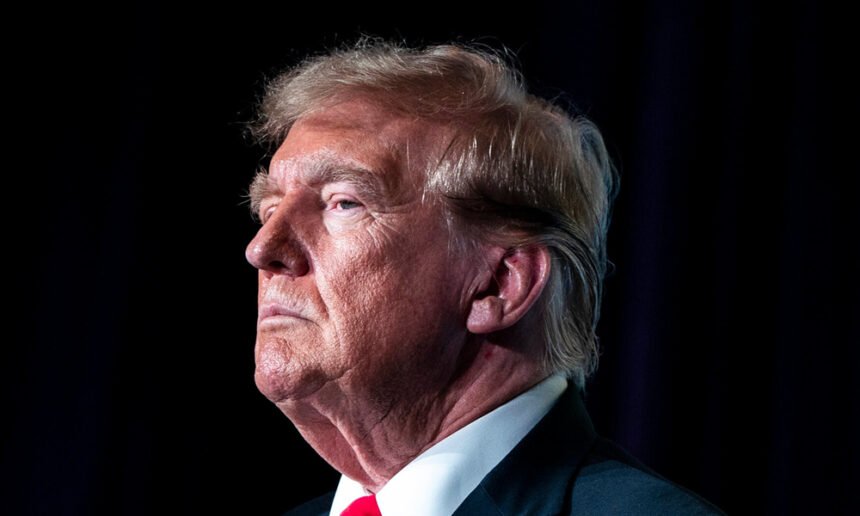
A striking admission from inside Donald Trump’s own Justice Department is raising fresh questions about just how close the former president came to facing prison time, and how much of that outcome may have hinged on the 2024 election.
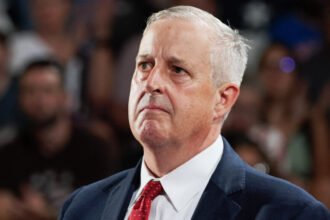
Acting Attorney General Todd Blanche, who previously served as Trump’s personal defense lawyer, acknowledged in a recent interview that Trump’s legal exposure heading into the election wasn’t just serious—it was potentially career-ending in the most literal sense.
“Is it an accurate statement to say he either wins in ‘24, wins the White House — it’s either the White House or the big house?” Fox News host Sean Hannity asked Blanche.
“Oh yeah, absolutely,” Blanche responded.
It was a blunt answer, and one that effectively reframes the 2024 race as something far more than a typical political contest. According to the nation’s top law enforcement official, Trump wasn’t just running for office—he was running out of legal runway.
Blanche pointed to the extraordinary legal pressure surrounding Trump during the campaign, including multiple federal cases led by Special Counsel Jack Smith, state-level prosecutions in New York, and ongoing legal fallout from the former president’s conviction in his hush money case.
“Don’t forget he had a D.C. case breathing down his neck,” Blanche said. “He had the Florida case which had been dismissed, but they were appealing it, and then he had a judge in New York who… there’s no scenario in which he wasn’t going to send Trump to prison.”
The picture he paints is unusually stark: a former president facing overlapping criminal cases across multiple jurisdictions, any one of which could have resulted in incarceration had the political outcome been different.
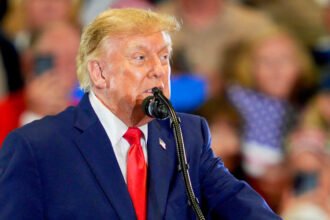
Trump ultimately avoided that possibility after winning the 2024 election. Following his victory, federal prosecutors moved to drop the cases, citing longstanding Justice Department policy against prosecuting a sitting president.
But even as the legal proceedings were paused or dismissed, the underlying claims did not disappear.
In congressional testimony last year, Special Counsel Jack Smith said he remained confident in the strength of the evidence gathered during the investigations into Trump’s efforts surrounding the 2024 election.
“The timing and speed of our work reflects the strength of the evidence and our confidence that we would have secured convictions at trial,” Smith told the House Judiciary Committee. He added that the evidence would have warranted prosecution regardless of political affiliation.
Meanwhile, Trump continues to challenge his New York conviction in multiple legal venues, even as he returns to the White House with control over the Justice Department now firmly in his administration’s hands.
Since taking office again, Trump has also escalated his long-running claims that he was the victim of political “weaponization” by federal agencies. His administration has signaled investigations into what it describes as a broader “grand conspiracy” involving officials who pursued cases against him.
At the same time, Trump has pushed forward proposals tied to a controversial settlement with the IRS lawsuit, including the creation of a proposed $1.8 billion “Anti-Weaponization Fund” intended to compensate individuals he claims were unfairly targeted by government actions.
Taken together, the remarks from Blanche underscore a central theme of Trump’s political comeback: that legal jeopardy and political power were not separate tracks, but competing outcomes of the same race.