








Donald Trump spent Monday posting about Iran’s “nuclear dust” and demanding oversight from a government agency that disappeared during the Watergate era.
In a Truth Social post Monday about Iran’s enriched uranium, which Trump repeatedly called “nuclear dust,” the president declared the material should be destroyed under the supervision of the “Atomic Energy Commission, or its equivalent.”
There’s just one problem. The Atomic Energy Commission hasn’t existed since 1974. Richard Nixon was still president when Congress abolished it.
And Trump made the comment while U.S. warplanes were actively carrying out new strikes inside Iran after negotiations with Tehran started falling apart again.
According to CENTCOM, American forces launched “self-defense” attacks targeting Iranian missile sites and vessels near Bandar Abbas after escalating tensions in the Strait of Hormuz.
Only hours earlier, Trump was still bragging online that negotiations with Iran were “proceeding nicely.”
Then the bombing resumed. Then came the “nuclear dust” post. Then came the reference to a Cold War agency that vanished before disco hit its peak.
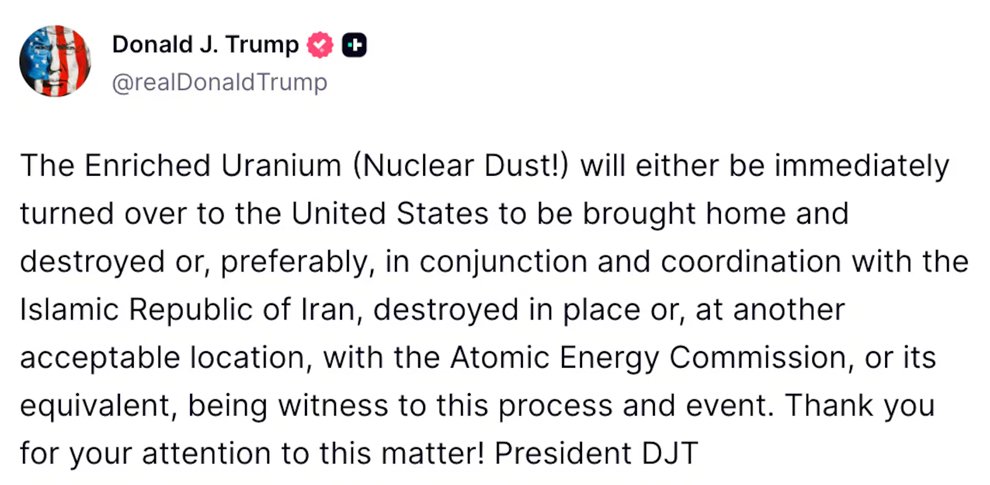
Technically, Trump added the phrase “or its equivalent,” but that only made the post sound more like someone vaguely remembering an old government office from television reruns.
The actual international body that monitors Iran’s nuclear program is the International Atomic Energy Agency — not a defunct U.S. commission dissolved half a century ago.
The Atomic Energy Commission itself was broken apart by the Energy Reorganization Act of 1974 and replaced with what eventually became the Nuclear Regulatory Commission and parts of the Department of Energy.
The internet immediately noticed.
Reddit threads mocking Trump’s reference to the dead agency started circulating within hours, with users joking that the president was trying to solve a 2026 nuclear crisis using a bureaucracy from the Truman administration.
The moment fed into growing criticism that Trump increasingly governs like a man permanently trapped in a 1970s media ecosystem.
He still obsesses over: TV ratings. Time magazine covers. Professional wrestling celebrities. And now apparently, Cold War nuclear bureaucracy.