






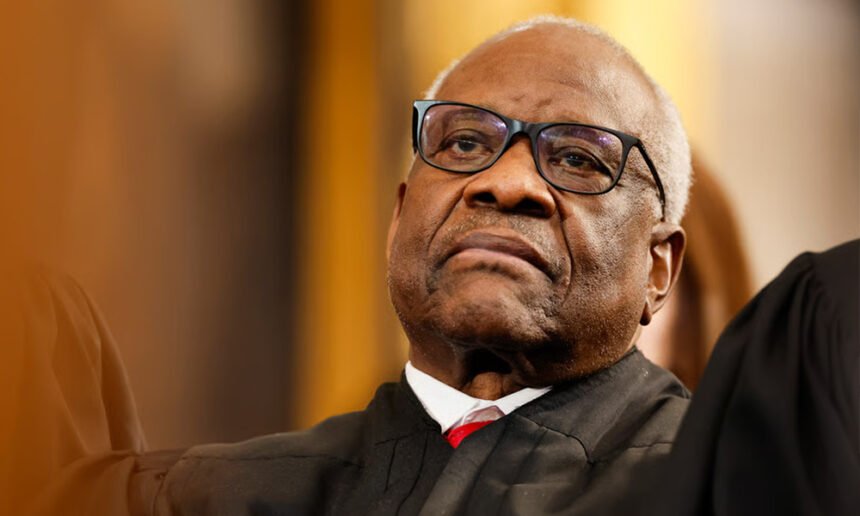
For years, Supreme Court Justice Clarence Thomas accepted a stunning stream of luxury gifts from billionaire Republican donor Harlan Crow — private jet flights, lavish vacations, yacht trips, elite resort stays, tuition payments, and even a quarter-million-dollar RV.
Now, legal experts say those gifts may have exposed Thomas to something far more serious than an ethics scandal: felony tax fraud charges in Virginia.
According to attorneys familiar with the issue, the public evidence already available could support criminal charges under Virginia law for filing false state income tax returns.
And prosecutors could technically bring the case as soon as Monday, reported Christopher Armitage.
The issue isn’t simply whether the gifts influenced Thomas’ decisions on the Supreme Court. It’s whether the justice illegally failed to report taxable income.
Under Virginia law, knowingly filing a false state tax return with intent to defraud the Commonwealth is a felony punishable by up to five years in prison per count.
Thomas resides in Fairfax County, Virginia, and files Virginia resident tax returns there.
The controversy centers on whether the gifts from Crow legally qualified as “gifts” at all.
Federal law allows truly personal gifts to remain untaxed. But the Supreme Court itself ruled decades ago that tax-free gifts must come from what the Court called “detached and disinterested generosity.”
That standard becomes difficult to defend when the benefactor is a politically connected billionaire with major ideological interests before the Court — and when the benefits flowed continuously for decades after Thomas joined the bench.
If prosecutors determine even some of those luxury trips and benefits should have been classified as taxable income, then failing to report them could become the basis for criminal tax charges.
Critics argue the evidence of intent is especially troubling.
Thomas reportedly disclosed one private flight from Crow in the 1990s, then stopped reporting similar trips for years while continuing to accept them. When investigative journalists later uncovered individual trips, Thomas amended disclosure forms only for the travel that had already become public.
Legal analysts say that pattern could help prosecutors argue the omissions were deliberate rather than accidental.
The scandal has drawn comparisons to former federal judge Harry Claiborne, who was convicted of filing false tax returns in the 1980s, sent to prison, and ultimately removed from the bench by Congress.
But unlike Claiborne, Thomas remains protected by the political realities of Washington.
That’s why some legal observers believe the real pressure point is Virginia — not Congress.
The potential case would fall under the jurisdiction of Steve Descano, the Fairfax County Commonwealth’s Attorney and a former federal prosecutor who previously worked in the Justice Department’s Criminal Tax Division.
Supporters of an investigation are also urging Abigail Spanberger and Jay Jones to push for state-level action.
The statute of limitations reportedly remains open for tax years 2020 through 2024.
No charges have been filed. But legal experts say the question is no longer whether sufficient evidence exists to justify scrutiny.
The question is whether anyone is willing to apply the law to one of the most powerful men in America.