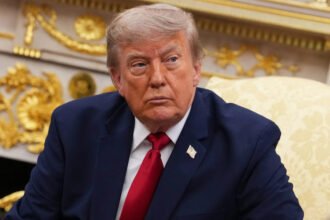









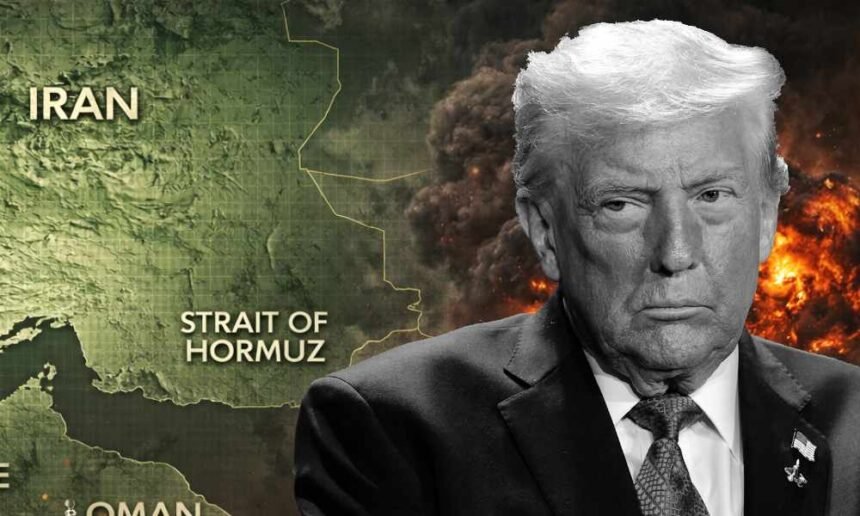
Donald Trump arrived at the G7 in France trying to sell a story of control. A peace deal with Iran. A diplomatic breakthrough. A clean exit from a messy war.
But strip away the spin, and what’s left is harder to disguise: a conflict that failed to meet its stated objectives, and a deal that reads less like victory and more like a quiet, carefully packaged admission of defeat.
Not the kind anyone in Washington likes to say out loud. So they don’t. They just rebrand it.
A “deal” that restores what was already there
The US and Iran have agreed to stop fighting and reopen the Strait of Hormuz, with everything else kicked into a 60-day negotiating window.
On paper, that sounds like momentum. In reality, it looks a lot closer to a reset after strategic defeat.
Because the Strait of Hormuz, the key leverage point in this entire conflict, was already open before the war escalated. Reopening it isn’t a breakthrough. It’s a return to baseline after an extremely expensive detour.
And that’s the uncomfortable core of this agreement: it stabilizes what was destabilized, then calls the result progress.
The scoreboard doesn’t hide the defeat
Supporters will point to degraded Iranian infrastructure and claim success. But wars aren’t measured by press releases — they’re measured by objectives. And on that front, the list is brutal.
Nuclear program: not dismantled
Iran’s enriched uranium stockpile remains inside the country. Its enrichment capacity is intact. Everything central to the original war justification has been deferred — not destroyed. That’s not victory. That’s managed defeat dressed up as diplomacy.
Regime change: explicitly failed
Despite targeted strikes and leadership losses, Iran’s government did not collapse. It adapted. It hardened. The leadership structure remains intact — and arguably more consolidated than before. If regime change was the goal, the result is unmistakable: defeat.
“Supporting the Iranian people”: backfired
Instead of internal fracture, the war appears to have strengthened the ruling apparatus. External pressure didn’t produce liberation. It produced consolidation. Another stated objective — another quiet defeat.
Missile capability: still operational
Claims that Iran’s ballistic arsenal was neutralized don’t align with intelligence assessments suggesting most systems remain functional. The gap between rhetoric and reality is where this defeat becomes harder to ignore.
Regional proxies: untouched in any meaningful way
Iran’s network of aligned forces remains outside the scope of any binding agreement. The regional architecture that was supposed to be disrupted is still intact.
Put together, the pattern is hard to miss: the war degraded assets, but it failed to achieve outcomes. That’s what strategic defeat looks like when it’s dressed in technical language.
Damage is not the same as victory
Yes, Iran took hits. Infrastructure was damaged. Military sites were struck. Personnel were lost.
But none of that translated into strategic collapse.
Instead, Iran absorbed the damage and retained the one thing that matters most in the long game: leverage over critical global chokepoints like the Strait of Hormuz.
That leverage didn’t disappear. It survived the war. And now it shapes the negotiations that follow.
If anything, Iran enters this “peace” phase with more bargaining power than it had before — a detail that sits uncomfortably close to the definition of defeat for the side that started the escalation.
The comparison no one in the room wants to make
What makes this even harder to spin is that the outcome doesn’t even clearly surpass what came before it.
The 2015 nuclear framework associated with Barack Obama constrained enrichment, imposed monitoring, and froze key parts of Iran’s program.
It was imperfect, controversial, and politically divisive.
But compared to the current situation?
Iran still holds enriched uranium. eEnrichment capacity remains intact. Long-term limits remain undefined
If this new agreement is an improvement, it’s difficult to see where. If it’s a replacement, it’s missing the parts that mattered most.
Which is why critics are increasingly landing on the same word: defeat.
From escalation to managed exit
Donald Trump arrived in Evian-les-Bains declaring satisfaction with the deal and signaling the end of active conflict.
The signing is expected in Switzerland, with JD Vance representing the United States. But the diplomatic reality underneath the ceremony is less tidy.
Iran did not collapse. It did not concede its core nuclear position. Iran did not lose its regional leverage. It absorbed the war and walked into negotiations with its structure intact.
This is where the gap between messaging and reality becomes impossible to ignore.
You can call a ceasefire a “deal.” You can frame a withdrawal from escalation as “progress.” You can highlight battlefield damage and declare success. But you can’t easily reconcile those talking points with an outcome where most core objectives were not achieved.
That’s why the framing keeps circling back to the same uncomfortable truth: Not diplomacy. Not triumph.
Defeat, softened, delayed, and carefully repackaged for public consumption.
And no matter how hard it’s spun, that doesn’t change what it is.