





Donald Trump doesn’t often lose votes in a Republican-controlled House. He just did.
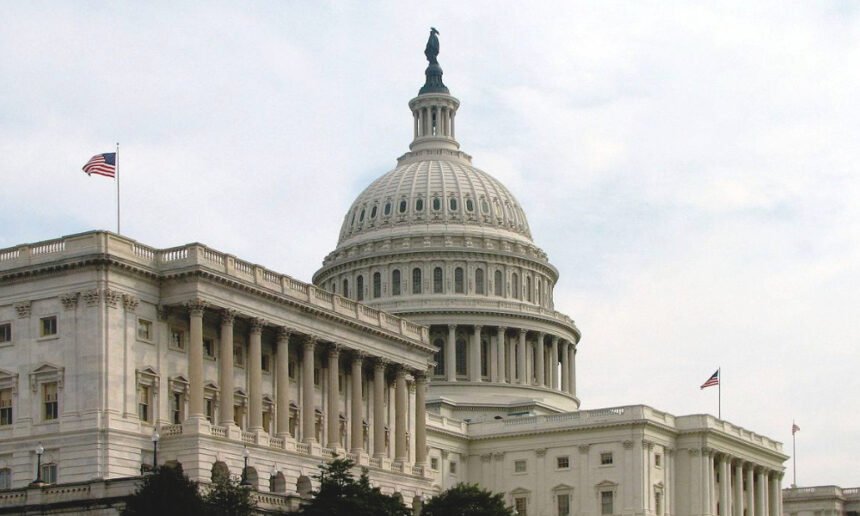
In a rare bipartisan rejection of the president’s wishes, House lawmakers voted Thursday to block an extension of one of the government’s most controversial surveillance programs, delivering an embarrassing setback to Trump and raising fresh concerns about his effort to place loyalists in key national security positions.
The measure would have temporarily extended Section 702 of the Foreign Intelligence Surveillance Act, a powerful surveillance authority that allows U.S. intelligence agencies to collect communications involving foreign targets overseas. The program has long been criticized by civil liberties advocates because Americans’ communications can be swept up in the process.
The extension failed by a vote of 218-198.
And the reason for its collapse wasn’t just the usual fight over surveillance powers.
This time, lawmakers from both parties were increasingly alarmed by Trump’s decision to elevate loyalist Bill Pulte to oversee the nation’s intelligence apparatus.
Pulte, a former real estate executive with no national security experience, has become known primarily for his fierce loyalty to Trump and his willingness to attack the president’s critics.
That was apparently a bridge too far for many lawmakers.
“Bill Pulte doesn’t get one day with this authority because we know he’ll abuse it,” said Rep. Jim Himes of Connecticut, the top Democrat on the House Intelligence Committee and one of the program’s longtime defenders.
That’s what makes the vote so remarkable.
For years, surveillance reform advocates have struggled to build enough opposition to Section 702. National security hawks in both parties typically rallied to extend it, often warning that failure to do so could expose the country to terrorist threats.
But Trump’s personnel choices appear to have changed the equation.
Lawmakers who once supported the program are now openly questioning whether they trust the people who would be running it.
Think about that for a moment.
Congress isn’t just debating surveillance powers anymore. It’s debating whether Donald Trump can be trusted with them.
Rep. Jamie Raskin of Maryland suggested as much before the vote, arguing that lawmakers have repeatedly raised concerns only to watch them get ignored.
“Maybe the threat that we’re not going to support you will finally get you guys serious about it,” Raskin said.
The resistance wasn’t limited to Democrats.
Several Republicans also expressed frustration with Trump’s decision to install Pulte in such a powerful position, particularly with the surveillance law nearing expiration.
Rep. Don Bacon of Nebraska summed up the frustration bluntly.
“It would be nice if he got some feedback before he does something,” Bacon said.
That’s about as close as many Republicans get to openly criticizing Trump these days.
The White House has tried to frame the issue as a temporary administrative matter, with Trump arguing that he simply needs more time to select a permanent intelligence chief.
But critics aren’t buying it.
Many see the fight as part of a larger pattern: Trump continuing to place personal loyalty above expertise, even in positions that oversee some of the government’s most sensitive intelligence operations.
The result was a stunning coalition that doesn’t form very often in Washington: progressive Democrats, civil-liberties advocates, national-security Democrats, and a group of uneasy Republicans all finding themselves on the same side.
Not because they suddenly agree on surveillance policy. But because they don’t trust who Trump wants holding the keys.
That’s a problem the White House didn’t see coming.
And for once, it was enough to stop Congress in its tracks.