






In northwest Montana, amid the thick forests of the Flathead National Forest and the quiet hum of small-town life, a political fault line is emerging — and it cuts through the heart of Trump country. Rural Montanans, long reliable Republican voters, are waking up to a reality they didn’t sign up for.
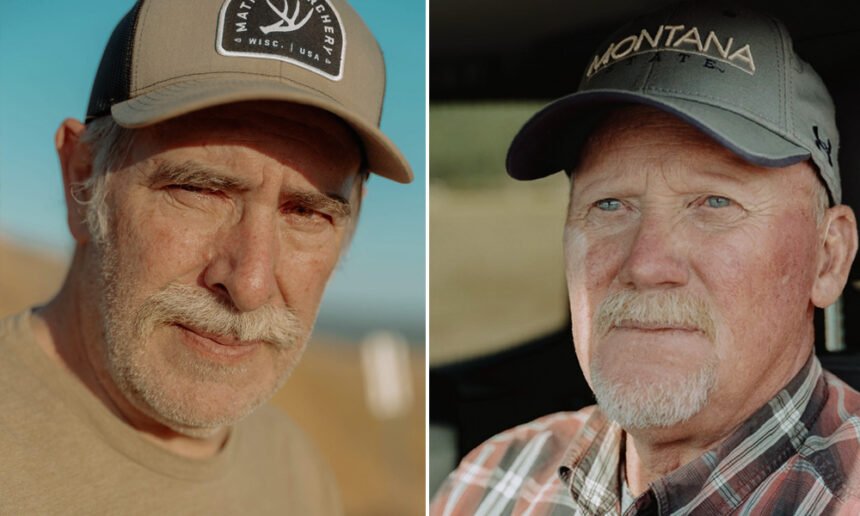
At the Hilltop Hitching Post, one of the town’s few gathering spots, hunter Terry Zink, 57, leaned against a diner counter, wire-rimmed glasses perched on his nose. “You won’t meet anyone more conservative than me, and I didn’t vote for this,” he said.
Zink is a third-generation houndsman whose life revolves around public lands. He hunts bears, mountain lions, and manages an archery business — a business, and a lifestyle, now under siege. “We have to listen to our wildlife biologists. We have to be strong advocates for those people,” he said. But the Trump administration’s Department of Government Efficiency (DOGE) has cut funding and staff from federal public lands agencies, leaving trails overgrown, wildlife monitoring halted, and hunters like Zink struggling to keep their traditions alive.
“You cannot fire our firefighters. You cannot fire our trail crews. You have to have selective logging, and water restoration, and healthy forests,” Zink said. “People in Washington, D.C., on the West Coast, East Coast — they don’t understand what that means to us out here.”
Since February, roughly 5,200 employees have been terminated from agencies managing 640 million acres of federal public lands. Thousands more are threatened under Trump’s 2026 budget proposals. In Montana — a state that voted for Trump by nearly 20 points and sent novice MAGA Republican Tim Sheehy to the Senate — these cuts are shaking the very communities that built the Republican base.
This reporting comes from Politico writer Cassidy Randall’s recent essay, which traces how Trump-era public lands policies are fueling anger in conservative Montana communities. Randall documents the lives of hunters, ranchers, and outfitters directly affected by cuts, illustrating the tension between party loyalty and local survival.
Public lands here are far more than scenic escapes. They are employers, lifelines, and economic engines. Ranchers rely on them for grazing allotments. Outfitters like Jack Rich bring in nearly $314 million a year by guiding tourists on hikes, hunts, and horseback trips. Timber workers, wildfire crews, and conservationists all depend on federal support. “Outfitters play an incredible, vital role, which is sometimes underappreciated, in making sure that those people who don’t have the skills and equipment can still enjoy America’s great outdoors — and in the process, become advocates for it in their own right,” Rich said.
Rancher Denny Iverson, 67, drives past his drought-stricken fields in the Blackfoot River Valley. “We’re trying to keep enough water in the river to keep the fish alive,” he said, watching the low river from his pickup. Federal funds for irrigation, weed management, and conservation projects were frozen earlier this year. “I’m worried about what this means in the long term, what it’s going to look like in the future,” Iverson said.
The cuts aren’t just hurting livelihoods—they’re eroding a way of life. Hunters and anglers like Zink help manage wildlife populations and fund habitat restoration through licenses and taxes. Outfitters maintain trails and habitats for public access. Ranchers steward grazing land and conserve water. Now, as staffing and funding vanish, so do these protections.
“Both the rich and the poor get to use public lands. I believe every piece of public land in the West should be able to be accessed by public land hunters. The wildlife belongs to we the people,” Zink told Politico. For Montanans like him, public lands are non-negotiable.
This is a conservative base confronting a paradox: loyal voters are furious at the very party they helped empower. In 2018, hunters and anglers in Idaho and Wyoming punished Republican candidates who attacked public lands. Montana, home to more hunters than any other Western state, could follow suit. “If we get poked too hard on this, they’re going to get primaried and voted out,” Zink said.
The tension here is more than political; it’s existential. For communities in Montana, public lands are not optional—they’re essential. And as the Trump administration presses forward with cuts, freezes, and proposed privatization schemes, it’s becoming increasingly clear that some of the president’s most loyal voters may no longer feel represented by the party they helped put in power — and they won’t stay quiet about it.