









Republicans are facing a political nightmare just days before the 2026 midterm elections: Democrats are flooding the airwaves with attack ads tying GOP candidates to convicted sex offenders, alleged child abusers, and the growing scandal surrounding Jeffrey Epstein.
And the attacks are hitting some of the country’s most competitive races.
In Iowa, Republican Rep. Ashley Hinson, who is running for the U.S. Senate, recently launched a direct-to-camera ad in which she told viewers she had to explain a troubling accusation to her own children.
“This week, I had to explain to my boys, ‘No, mom does not protect pedophiles,’” Hinson said.
The ad was a response to attacks from her Democratic opponent, Josh Turek, over an issue that has become increasingly damaging for Republicans: their handling of the Epstein files and their records on cases involving sexual abuse.
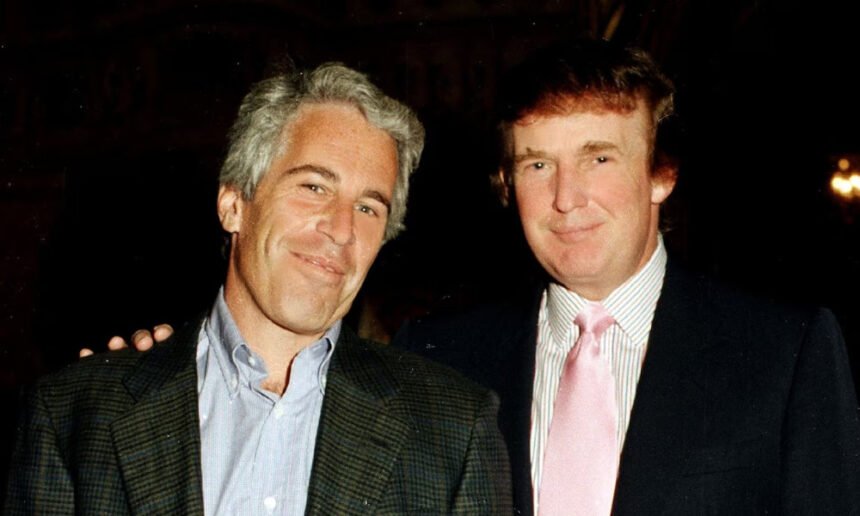
Across the country, Democratic campaigns and outside groups are hammering Republicans over votes, pardons, plea deals, and personal connections involving people accused or convicted of serious sexual crimes. Some ads focus on Jeffrey Epstein, the late convicted sex offender who maintained a friendship with President Donald Trump for years. Others spotlight specific actions by Republican candidates that benefited people accused or convicted of sexual abuse.
Adding to the controversy, Trump himself has faced sexual abuse allegations from multiple women, including one woman who accused him of raping her when she was 13.
The strategy is blunt, emotionally charged, and difficult for voters to ignore.
Political campaigns have always used negative advertising. But the willingness to put allegations involving pedophilia, rape, and child sexual abuse front and center on television marks a particularly ugly escalation.
And Democrats see an opportunity.
“It’s new in the sense that the amount of attention being paid to this particular sad topic is much more than normal,” said John Geer, a Vanderbilt University political scientist who studies attack ads.
The Epstein controversy, he explained, has helped push the issue into the center of the political debate.
Republican candidates face attacks over specific cases.
In Texas, Republican Senate candidate Ken Paxton is being targeted over a plea deal involving Adam Hoffman, who was accused of sexually abusing his son’s friend between the ages of 6 and 10.
According to the account cited in the ads, Hoffman was allowed to plead guilty to misdemeanors and received a sentence of 29 days in jail, including time served. The deal also kept him off the sex offender registry.
An ad from Senate Majority PAC, which supports Democratic Senate candidates, links the case to a lawyer who separately represented Nate Paul, one of Paxton’s major donors. The ad calls the arrangement an “Epstein-style deal to let a pedophile walk free.”
Paxton’s Democratic opponent, Texas state Rep. James Talarico, is also using the case in an ad declaring, “we don’t need any more pedophile protectors in Washington.”
Paxton’s office has defended the plea agreement, saying the victim did not want to testify again after the first trial ended with a hung jury.
The distinction matters: the attacks concern Paxton’s role in a controversial legal outcome, not a finding that Paxton committed a sex crime himself.
In Arizona, Democratic Gov. Katie Hobbs is targeting Republican Rep. Andy Biggs over his opposition, while serving in the state legislature, to legislation addressing alleged police corruption connected to Warren Jeffs, the fundamentalist preacher convicted of child sexual abuse in 2011.
Biggs has denied that his opposition had anything to do with Jeffs, saying it stemmed from objections raised by the Fraternal Order of Police.
Hobbs’ campaign has also linked Biggs’ record to the fight over releasing the Epstein files.
North Carolina Republicans are facing a different set of attacks involving Harvey Lee West, a former state Republican Party official who pleaded guilty to child sexual abuse in 2000.
Democratic Senate candidate Roy Cooper is criticizing Republican candidate Michael Whatley for appointing West to two party committees while Whatley chaired the state party. Democrats are also targeting Republican House candidate Laurie Buckhout over her past ties to West.
West maintains his innocence and says he pleaded guilty to avoid the possibility of a longer sentence.
In Nebraska, Republican Sen. Pete Ricketts is being attacked over a pardon he issued while governor to John Arias, who had pleaded guilty to raping his then-wife.
An ad from Nebraska Values PAC features Arias’ former wife, Jody Snogren, describing the rape and criticizing Ricketts’ decision to pardon him after he served his sentence.
“Because of Pete Ricketts, my attacker is now allowed to own a gun and had his name removed from the sex offender registry,” Snogren says in the ad. “I have no idea why Sen. Ricketts chose my rapist over me.”
Other Democratic ads target Texas Republican Rep. Monica De La Cruz over a court’s description of her treatment of her stepdaughter as “cruel and aggressive,” and Republican congressional candidate Eric Flores over his work as a defense attorney for a man accused of child sexual abuse.
In Virginia, former Democratic Rep. Tom Perriello is attacking Republican Rep. John McGuire over his vote to keep child marriage legal.
The issues vary from race to race, but the message is consistent: Democrats want voters to question whether Republican candidates have exercised sound judgment when dealing with sexual abuse cases and the people involved.
Epstein has turned into a political liability.
During Trump’s first term, the QAnon conspiracy movement promoted baseless claims that powerful Democrats operated child sex-trafficking rings and that Trump was secretly working to expose them. The movement grew out of conspiracy theories such as Pizzagate and helped turn the supposed protection of children into a potent rallying cry among some Trump supporters.
Republicans repeatedly promised to expose powerful people through the release of government files related to Epstein, who died in jail in 2019 in what authorities ruled a suicide.
Then Trump returned to the White House in 2025, and the issue became a problem for his own party.
Trump and Epstein had been friends for years, a relationship that has drawn renewed scrutiny. The administration’s handling of the files triggered accusations of a cover-up after Republicans failed to deliver the broad disclosure some of their supporters expected. Congress ultimately passed legislation requiring the release of records.
Even after that, lawmakers have complained about redactions and documents that remain withheld.
Those disputes have given Democrats an opening to turn Republicans’ own rhetoric against them.
Geer said the party’s handling of the controversy has helped make it more politically damaging.
“If they’d handled it a little differently, it probably wouldn’t be hurting them as much,” he said, while also noting concerns about what the records might reveal.
The political problem for Republicans is no longer limited to what the Epstein files might contain. It also involves why the public was promised answers, why disclosure became such a fight, and whether powerful people are being treated differently from everyone else.
Democrats have seized on those questions—and on individual cases involving Republican candidates—to build a broader narrative about accountability and political influence.
There is a precedent for this kind of political damage.
In 2006, a scandal involving Republican Rep. Mark Foley erupted after revelations about sexually suggestive communications he had with underage congressional pages. Foley resigned, and Republican leaders faced questions about what they knew and whether they had adequately responded.
Democrats used the scandal in campaign advertising as the GOP struggled with a wider narrative of corruption and misconduct. The party ultimately won control of both chambers of Congress in that year’s midterm elections.
The Epstein controversy carries some of the same political ingredients: allegations of powerful people receiving special treatment, questions about what officials knew, and public suspicion that political connections can shield people from accountability.
The comparison does not mean the cases are identical. But it illustrates how a scandal can become more damaging when voters see it as part of a larger pattern rather than an isolated incident.
The Epstein case is especially combustible because it concerns more than sexual abuse. It has also raised questions about how wealth, influence, and connections to powerful figures can be used to protect reputations and maintain access to elite circles.
That message could resonate in an election cycle where corruption and government accountability are already major concerns for voters.
A Quinnipiac poll conducted this summer found that 38% of voters considered the Epstein investigation important to their decision about whom to vote for in November.
And the advertising numbers show just how much campaigns believe the issue matters.
According to an Axios report, campaigns and outside groups from both parties have spent a combined $70 million on ads mentioning Epstein, sexual abuse, or pedophilia, with less than two weeks remaining before Election Day.
The allegations featured in these ads are not all equivalent: some concern political decisions, some involve disputed accusations, and others involve pardons or plea agreements that critics say benefited offenders.
But the political danger is clear. An issue Republicans once used to accuse Democrats of protecting predators has become a weapon Democrats are using against them.
With Election Day approaching, Republicans are being forced to defend their records on some of the most emotionally charged subjects in American politics—and their opponents are making sure voters see those controversies before they cast their ballots.