









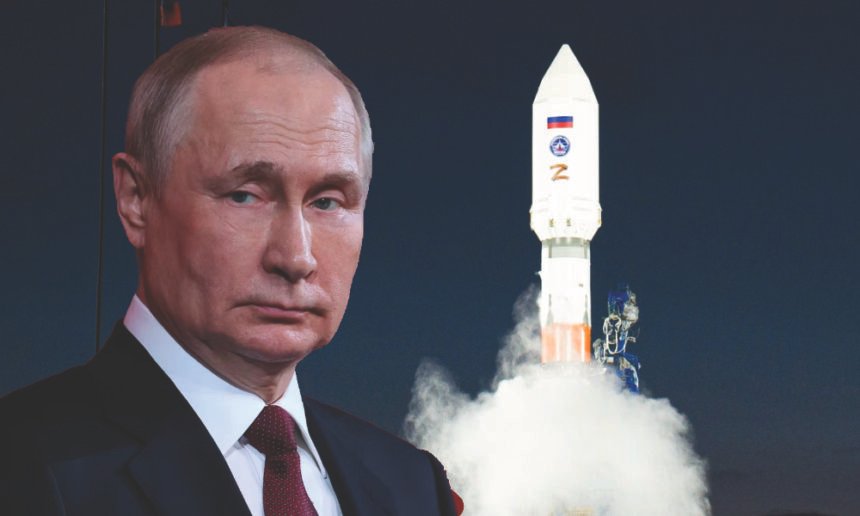
Germany is sounding the alarm over intelligence reports that Russia may be preparing to put a nuclear weapon into orbit, a move that could violate international treaties and threaten satellite networks relied upon by billions of people.
According to an investigation by German broadcasters NDR and WDR and newspaper Süddeutsche Zeitung, Western intelligence assessments indicate that Moscow may be preparing a satellite known as Sputnik-S for a nuclear weapons mission in space.
Germany’s foreign intelligence service (BND) and military have reportedly exchanged information indicating that the satellite was assembled and is currently stationed in the Moscow region.
Warnings circulated in early November reportedly suggested that the satellite could be launched within 60 days and become operational shortly afterward, The Guardian reports.
If confirmed, the deployment would mark a dangerous escalation in the militarization of space and could violate two major international agreements.
The 1967 Outer Space Treaty prohibits countries from placing nuclear weapons or other weapons of mass destruction in Earth’s orbit. Russia is a signatory. The 1963 Partial Nuclear Test Ban Treaty also prohibits nuclear explosions in space.
But the biggest concern isn’t simply another treaty violation. It’s what a nuclear detonation hundreds of miles above Earth could do to the world’s satellite infrastructure.
U.S. officials have warned for years that Russia has been developing a nuclear anti-satellite weapon capable of detonating in orbit and unleashing an electromagnetic pulse (EMP). Such an explosion could disable or destroy large numbers of satellites, disrupting communications, navigation, military operations and other critical services.
One system particularly vulnerable to such a scenario is SpaceX’s Starlink network, which has become a crucial communications lifeline for Ukrainian forces defending against Russia’s invasion.
A nuclear explosion in orbit could have consequences far beyond the battlefield, potentially affecting satellite systems used by governments, businesses and ordinary people around the world.
Germany has previously raised concerns about the possibility.
Earlier this year, Maj. Gen. Michael Traut, commander of Germany’s Space Command, warned that Russia could be working on technology to place a nuclear explosive device in orbit.
“At the very top end of escalation, there is the suspicion that Russia may be working on technology to place a nuclear explosive device in orbit,” Traut told Politico, according to The Guardian.
Asked whether he considered such a scenario realistic, Traut said he could not rule it out. He warned that a nuclear detonation could affect as many as a third of satellites in low Earth orbit, potentially making portions of space unusable for decades.
Washington has also sounded the alarm.
In 2024, then-President Joe Biden acknowledged concerns that Russia was developing the capability to deploy a potentially damaging system in space. His national security spokesman, John Kirby, described the suspected weapon as “troubling,” while clarifying that officials were not describing a weapon intended to attack people or cause physical destruction on Earth.
Russia, however, insists its space activities comply with international obligations and serve exclusively peaceful purposes.
Meanwhile, NATO Secretary General Mark Rutte sought to reassure European allies, saying the alliance continuously assesses its deterrence and defense posture.
“I can assure you, we will always make sure that we defend every inch of NATO territory,” Rutte said, adding that this includes ensuring the alliance is protected in the space domain.
The latest reports also revive questions surrounding Russia’s 2022 launch of the Kosmos 2553 satellite. U.S. intelligence officials have previously suggested that the spacecraft could be connected to Moscow’s broader anti-satellite weapons ambitions.
For now, the reported Sputnik-S deployment and its alleged nuclear payload remain unconfirmed. Russia denies the accusations.
But the possibility of a nuclear weapon being placed in orbit raises an extraordinary concern: A single detonation in space could threaten satellite networks across the globe, disrupt critical services and potentially leave parts of Earth’s orbit unusable for years.